Preparation before the first order
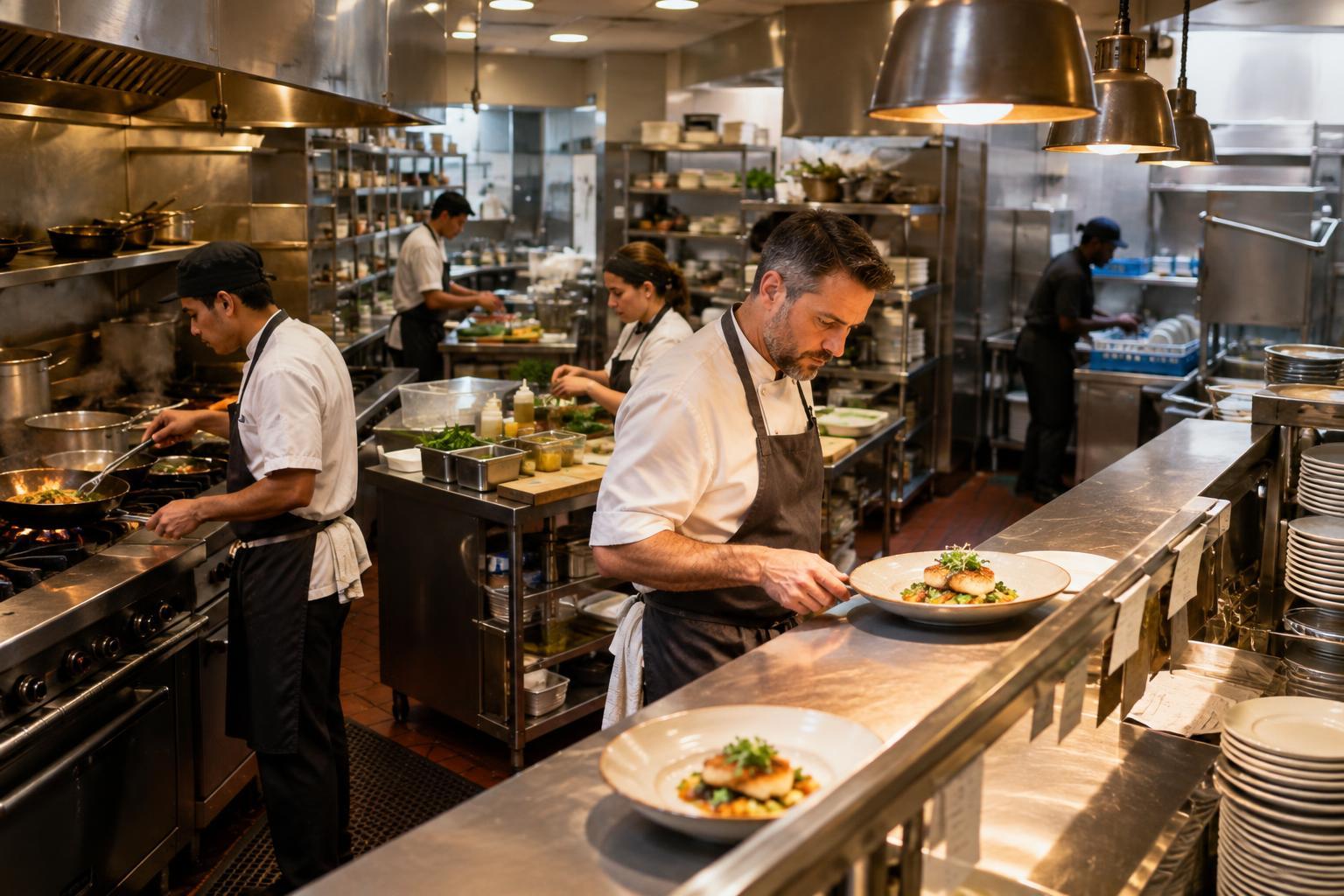
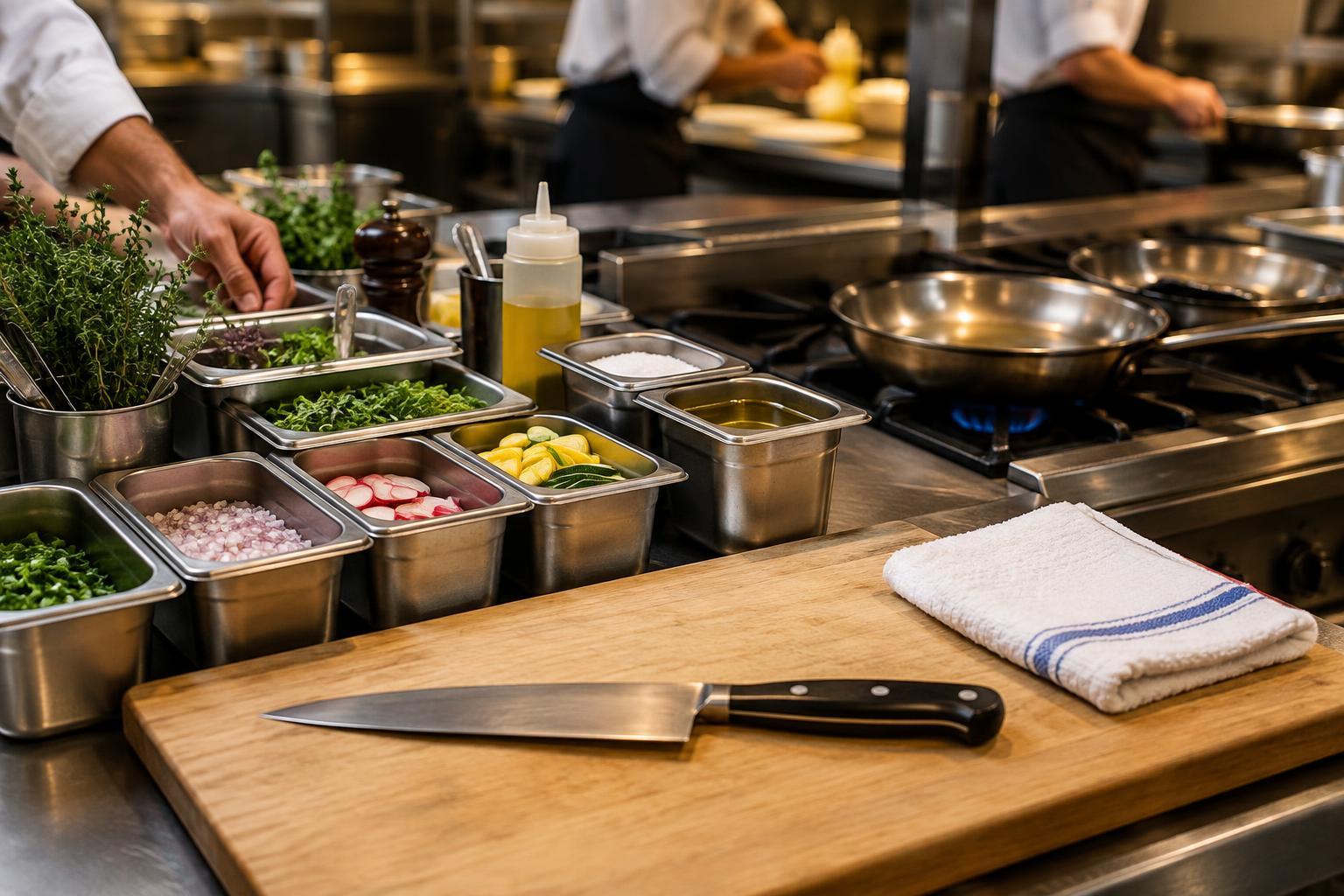
Mise en place, often translated as “everything in its place,” describes the work that happens before a cook starts a dish. Vegetables may be washed and cut, sauces made, garnishes portioned and pans set within reach. Just as important, the cook checks what is available, what still needs attention and where each item belongs. The result is not a decorative display of little bowls. It is a station arranged to make the next task possible.
In a professional kitchen, orders can arrive close together, and several dishes may need the same station at once. There is rarely time to search for a clean utensil or discover that a key component is missing after cooking has begun. Preparing ahead moves predictable work out of the busiest part of service. It gives cooks more attention to spend on heat, timing and the condition of the food in front of them.
A system for timing and teamwork
A restaurant meal is rarely the work of one person from start to finish. One station might prepare a main dish while another handles its garnish, and the finished plates need to reach the pass at roughly the right moment. Mise en place helps each cook understand what their station can produce and how quickly. When components and tools are ready, the team has a better chance of coordinating its work without relying on frantic last-minute fixes.
The system also makes communication more useful. A cook who knows that only a few portions of a prepared component remain can say so before it runs out. Someone taking over a station can see what is ready and what needs replenishing. These small exchanges matter because a kitchen works through shared expectations as much as individual skill. Good preparation does not eliminate surprises, but it makes them easier to identify and address.
Consistency without cooking on autopilot
Guests may order the same dish on different visits and expect a familiar result. Having components prepared to an agreed standard helps a kitchen work toward that consistency. Cuts of a similar size cook more evenly; a sauce made in advance can be tasted and adjusted before service; a measured garnish is less likely to vary dramatically from plate to plate. Mise en place gives cooks a reliable starting point.
That starting point is not a substitute for judgment. Ingredients change with the season and from one delivery to the next. A cook still needs to taste, observe and adapt as a dish comes together. The purpose of preparation is to leave room for those decisions, not to turn cooking into a sequence that cannot change. A well-organized station makes it easier to notice when something needs more time, a different seasoning or a fresh approach.
What organization reveals
Mise en place can make waste and bottlenecks more visible. If a station repeatedly prepares too much of one garnish, the team has an opportunity to reconsider its quantities. If cooks keep reaching across one another for the same tool, the layout may need to change. Preparation offers a chance to ask whether each step serves the menu and whether the station can be cleaned and replenished as service continues.
It also includes less photogenic work: labeling containers clearly, storing food appropriately, keeping surfaces usable and checking that equipment is ready. These habits support orderly service, though they do not replace a kitchen’s food-safety procedures. A station piled high with beautifully cut ingredients is not truly prepared if a cook cannot find what is needed or use it at the right time.
A practice that continues through service
Mise en place is often pictured as a completed checklist before the doors open. In practice, preparation continues as items are used and conditions change. A cook may need to replenish a sauce, reset a cutting area or revise a plan when a dish sells faster than expected. Keeping a station ready is an ongoing task, not a single moment of perfect order.
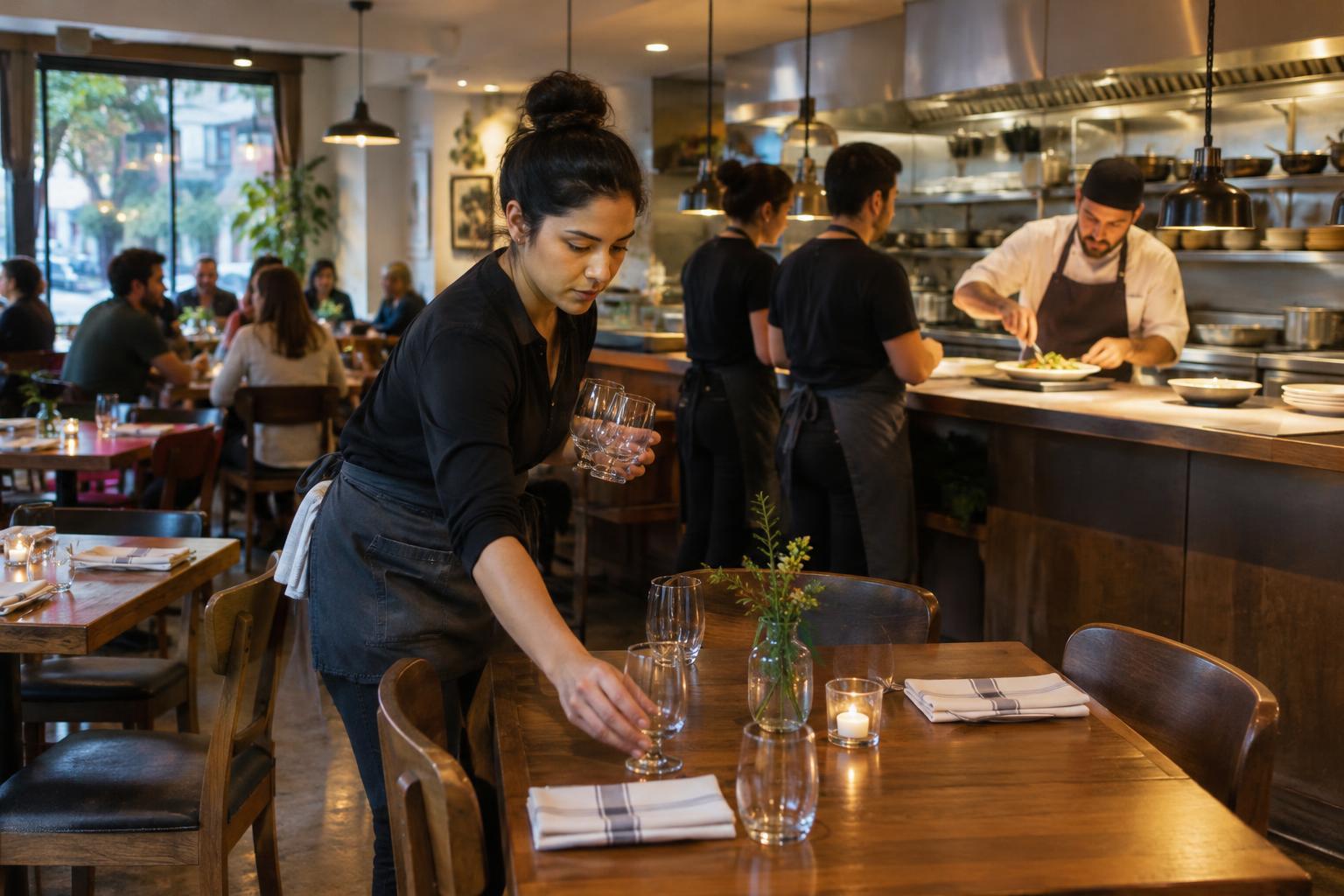
That is why the phrase carries weight in kitchen culture. It describes both physical organization and a habit of thinking ahead: what will be needed next, what could delay the team and what needs to be communicated now. For a diner, much of that work is invisible. Its value appears in the quieter details of service—a plate assembled with care, a dish arriving at an appropriate temperature and a team with enough room to respond when the evening does not go exactly to plan.