A system for dividing the work
The kitchen brigade is a way of organizing a professional kitchen so that people know what they are responsible for and how their work connects to everyone else’s. Its familiar job titles come from the formal structure of classical French kitchens. In practice, a brigade is less like a rigid chart and more like a plan for getting many parts of a meal ready at the right time.
A restaurant may need to prepare sauces, wash greens, roast proteins, plate desserts and clean equipment while orders continue to arrive. Assigning tasks to stations helps cooks build skill and keep track of their ingredients. A clear chain of communication helps the kitchen decide what to do when a table changes an order or several dishes need to leave together. Not every restaurant uses French titles, and smaller kitchens often combine several roles into one job.
Who leads the kitchen?
The chef de cuisine is generally responsible for the kitchen’s day-to-day direction. Depending on the restaurant, that can include planning dishes, setting standards, organizing staff and checking that plates match the intended menu. An executive chef may oversee more than one kitchen or take a broader role in menus and operations. These titles are not interchangeable everywhere; what matters most is who makes decisions and who staff should turn to when priorities compete.
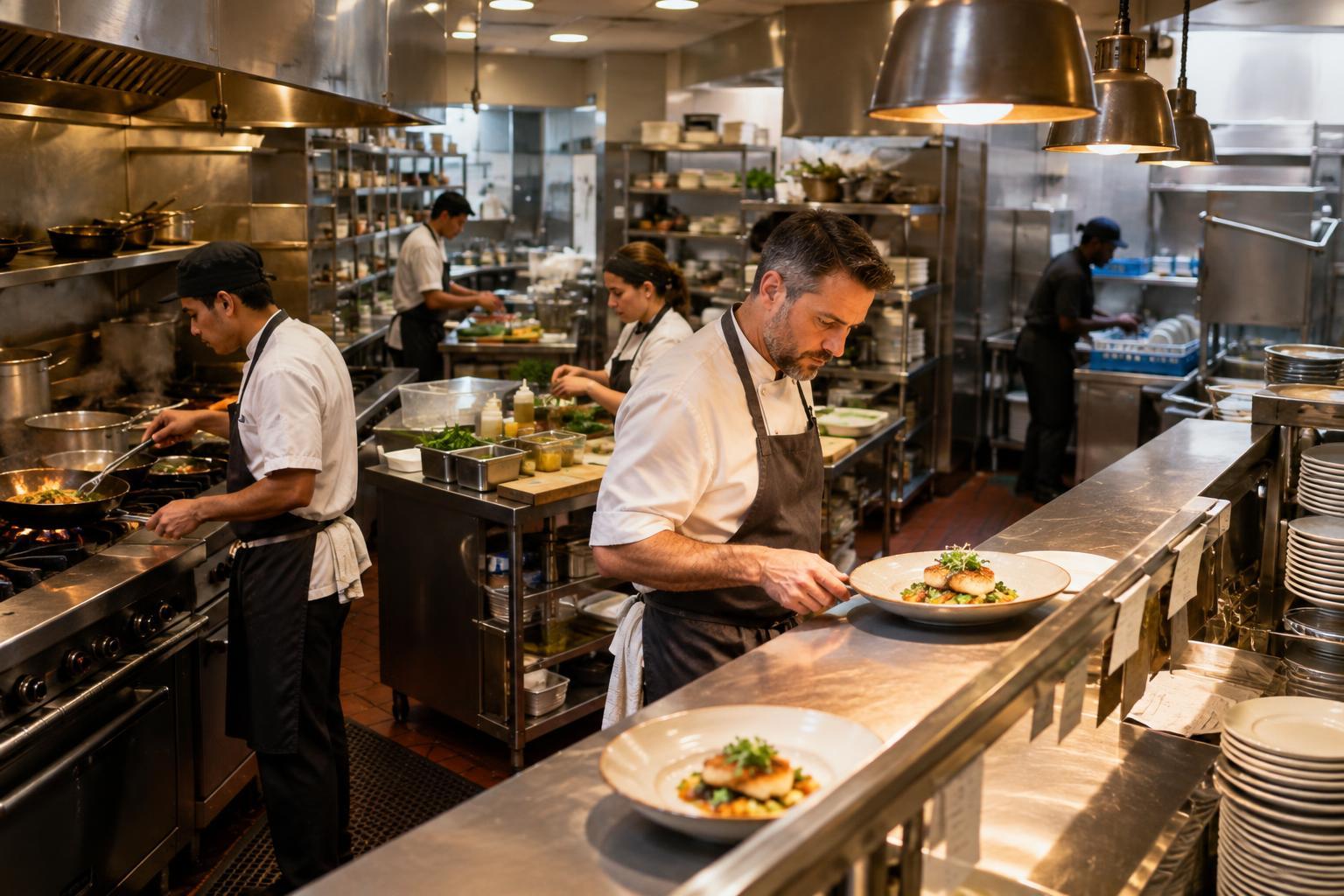
The sous chef supports the chef and helps turn plans into service. A sous chef might check preparations before opening, shift cooks between tasks, solve problems during a rush or run the pass. The pass is the point where finished dishes are checked, completed and sent to the dining room. The person coordinating it is often called the expeditor, or expo. Their job is to track orders and timing so that, for example, a quickly cooked fish does not sit waiting for a slower side dish.
Good leadership in this system is not only about giving orders. It also means making expectations understandable: what should be prepared ahead, how a dish should look and when cooks need to tell someone that an ingredient is running low. Those decisions give each station a workable plan.
What happens at the stations?
A chef de partie is a cook responsible for a particular station or area of production. In a large classical brigade, separate specialists might handle sauces, fish, grilled foods, vegetables, cold preparations or pastry. Contemporary kitchens may keep only some of those divisions. One cook might handle all hot appetizers, while another takes care of roasted mains and their accompaniments.
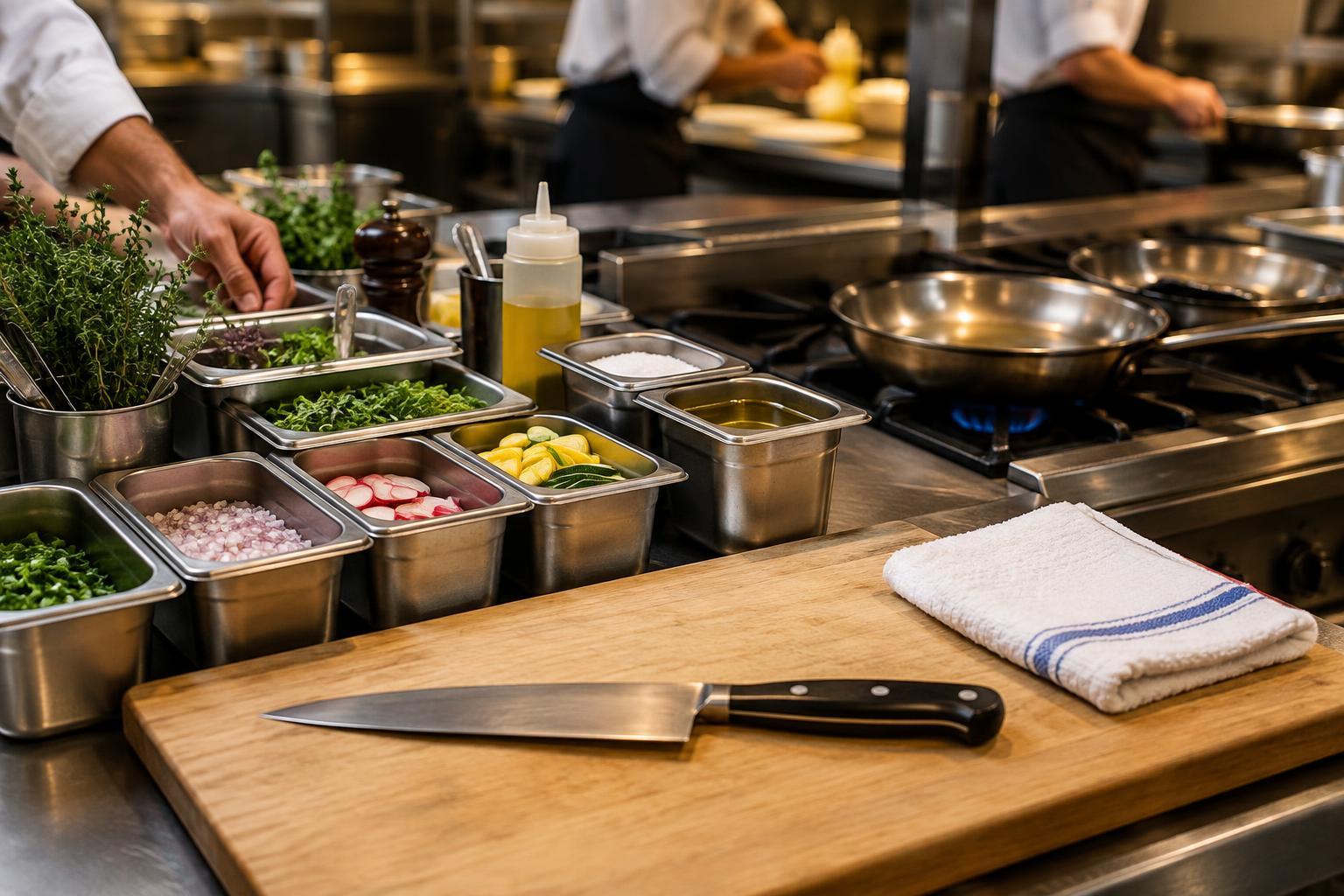
Station cooks do more than cook to order. Before service, they organize tools, portion ingredients and prepare components that can be made in advance. This preparation, often called mise en place, allows them to finish dishes promptly without starting every element from scratch. During service, a station listens for orders, cooks or finishes its components, and communicates when they will be ready. Its timing has to fit the rest of the plate, not just its own pan.
Commis cooks, or junior cooks, may assist a station while learning its routines. Prep cooks may work across stations, making stocks, cutting vegetables or completing other tasks that support the menu. The exact boundaries vary, but the shared goal is the same: hand over ingredients and components in a condition the next person can use.
The roles that keep service moving
A brigade chart can make the cooking stations look like the whole kitchen. They are not. Dishwashers keep clean plates, pans and utensils circulating; without them, even a well-prepared station can stop. Receiving and storage work matter too. Ingredients need to reach the right place, and cooks need to know what is available before they promise a dish.
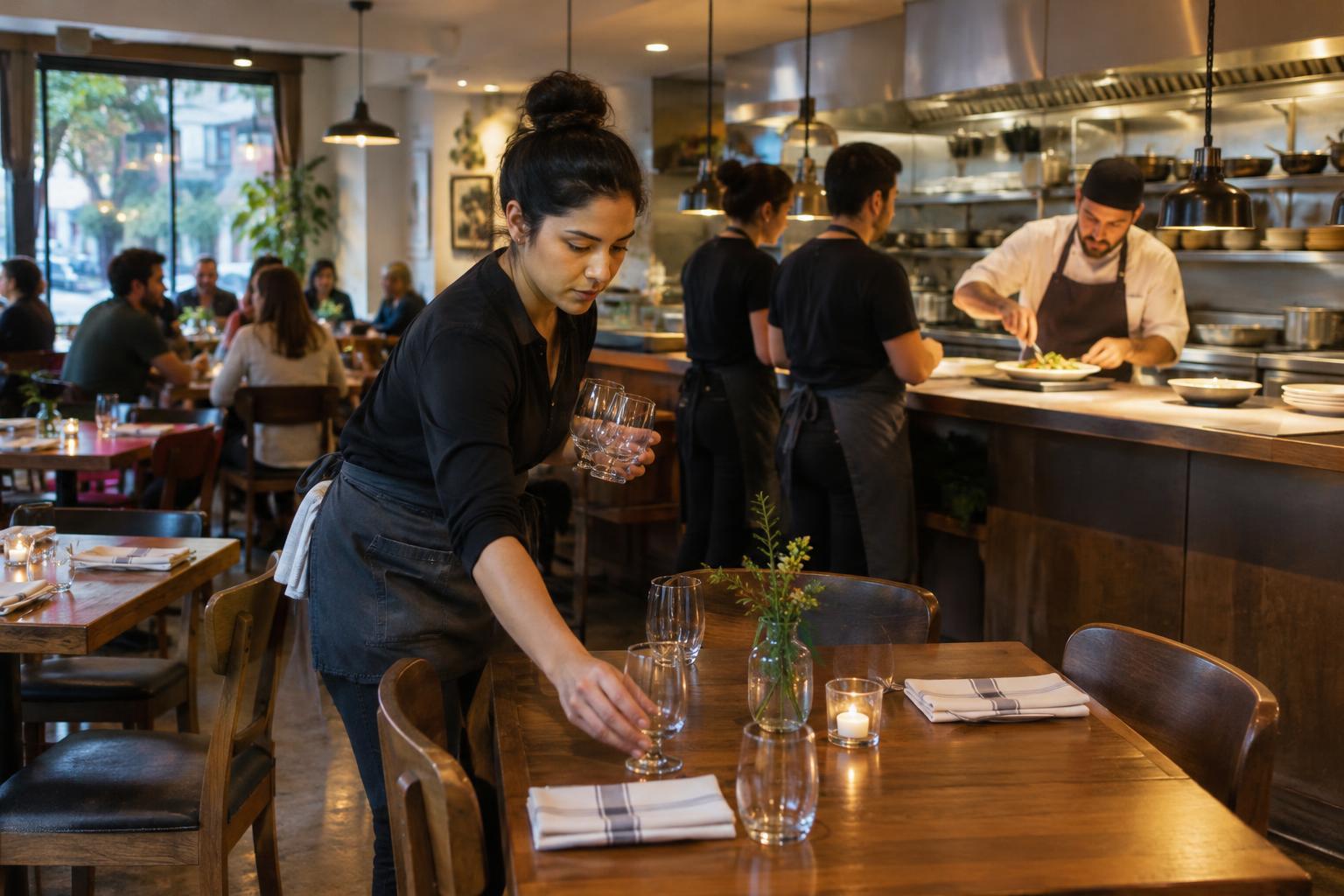
The kitchen also depends on communication with the dining room. Servers convey orders and relevant guest requests, while the pass provides a place to confirm that the right dishes are ready for the right table. A request involving an allergy, for instance, needs clear communication and careful handling rather than an assumption that one cook has noticed it. The brigade organizes responsibilities, but coordination across those responsibilities is what makes it useful.
Why the brigade looks different from kitchen to kitchen
A large restaurant with a broad menu may benefit from dedicated stations and several layers of supervision. A small neighborhood kitchen may have one chef cooking beside a few colleagues who share prep, plating and cleanup. A bakery, tasting-menu kitchen or casual lunch counter will divide its work differently. Calling all of these teams a brigade can be helpful, provided the term does not imply that every kitchen has the same hierarchy.
The enduring idea is straightforward: give people clear areas of responsibility, prepare before orders arrive and communicate as dishes move from station to pass to table. Understanding those connections makes a menu easier to appreciate. What appears at the table as one composed plate is often the result of several people planning, cooking, checking and handing off their work at precisely the right moments.