Service style is part of the meal
A menu may tell you what you can eat, but the service style tells you how the meal will unfold. It influences when you order, who brings the food, how dishes are shared and how much control you have over the pace. Understanding those differences can help you choose a restaurant for the occasion and settle in more comfortably once you arrive.
Counter, table and family-style service are useful descriptions, not rigid categories. A restaurant might take orders at a counter but bring food to seated guests. Another might offer attentive table service while serving several dishes on shared platters. The clearest way to compare them is to look at the decisions diners make throughout a meal.
Counter service: order first, then settle in
With counter service, guests usually choose and pay for food at a counter or ordering station. They may collect the food when it is ready, or a staff member may bring it to a table. Drinks, extra utensils and condiments might be handed over at the counter or placed where guests can help themselves. Because the ordering step happens early, it is worth scanning the menu and checking any questions before joining a busy line.
This style can feel flexible for a quick lunch, a solo meal or a group whose members plan to arrive at different times. It also puts more of the meal’s logistics in the diner’s hands. You may need to find a seat, carry a tray or return to the counter for another drink. If you are unsure what to do with used dishes or where to collect an order, a brief question to staff is more reliable than guessing.
Table service: a guided sequence
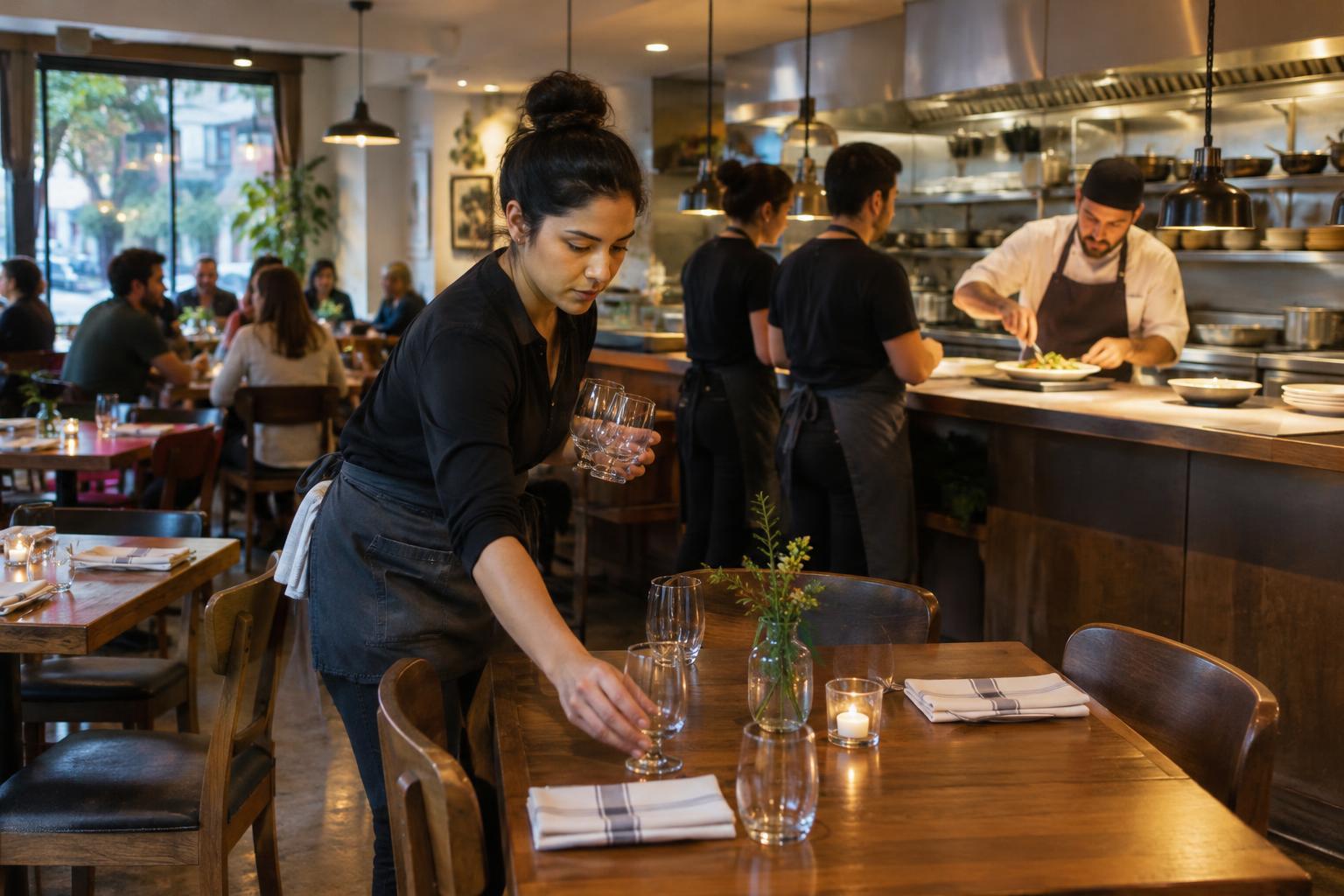
In table service, guests are seated and a staff member typically takes orders and brings food and drinks to the table. There may be more opportunities to ask about ingredients, request an adjustment or decide on another course after the first one. The meal often has a clearer sequence, although its pace depends on the restaurant and the choices guests make.
Table service can suit occasions when the conversation is meant to linger or when several courses are part of the plan. It does not necessarily mean formal dining: a casual neighborhood restaurant can offer table service just as a more elaborate dining room can. A useful habit is to mention a timing need when ordering, rather than waiting until the meal is underway. Staff can then tell you what is practical.
Family-style service: dishes for the table
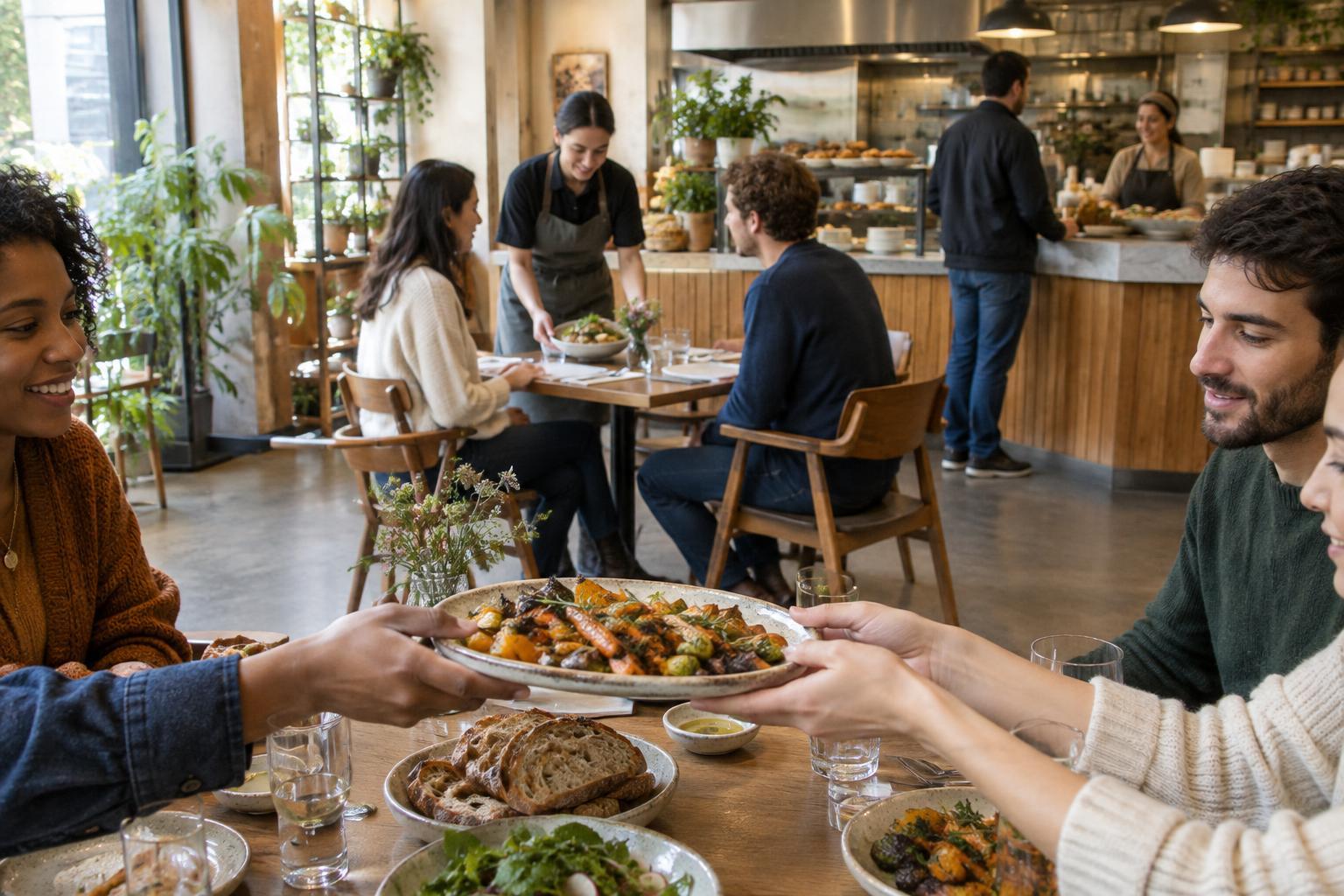
Family-style service describes how food is presented: larger dishes arrive for people to portion out and share. Ordering and payment may still happen at a counter or through a server at the table. This distinction matters because family-style is not simply a more relaxed version of table service; it changes how diners choose food and coordinate with one another.
Shared dishes invite conversation about what everyone wants to try, but they also call for a little planning. Consider the number of diners, different appetites and any dietary restrictions before ordering. If one person cannot eat a shared dish, it may help to order something suitable specifically for them. Serving utensils make sharing easier, and passing a platter before taking a second portion gives everyone a chance to taste it. When dish sizes are unclear, ask staff how they are intended to be shared rather than assuming that every plate serves the same number of people.
Choosing the right fit
Think first about the kind of time you want to spend. Counter service may be a good fit when you want a straightforward meal and are comfortable handling a few steps yourself. Table service offers a more guided experience, particularly useful when you want time to discuss the menu or order in stages. Family-style service works well for a group that enjoys sharing and is willing to make choices together.
No style guarantees a particular price, speed or level of care. A counter-service meal can be leisurely, and a table-service meal can be efficient. What matters is whether the restaurant makes its process understandable and whether that process suits your group. Notice where orders are placed, whether dishes are individual or shared, and how to get help after the food arrives. Those small cues let you spend less energy figuring out the room and more attention enjoying the meal.