Start with the job salt needs to do
The best time to salt an ingredient depends on what happens next. Salt added early has time to dissolve and spread. Salt added during cooking can season a dish as its components come together. Salt added at the end is more noticeable on the surface and gives you a final chance to adjust the taste. These are different tools, not competing rules.
Before reaching for the salt, consider the ingredient’s size, moisture and cooking time. A thick piece of meat needs a different approach from a thin slice of cucumber. A pot of beans gives you many chances to taste; a quickly seared mushroom gives you fewer. Also account for salty ingredients already in the dish, such as olives, cheese, cured foods, stock or condiments. When those are involved, a lighter hand at the start leaves room to adjust later.
Salt before cooking when you want time and evenness
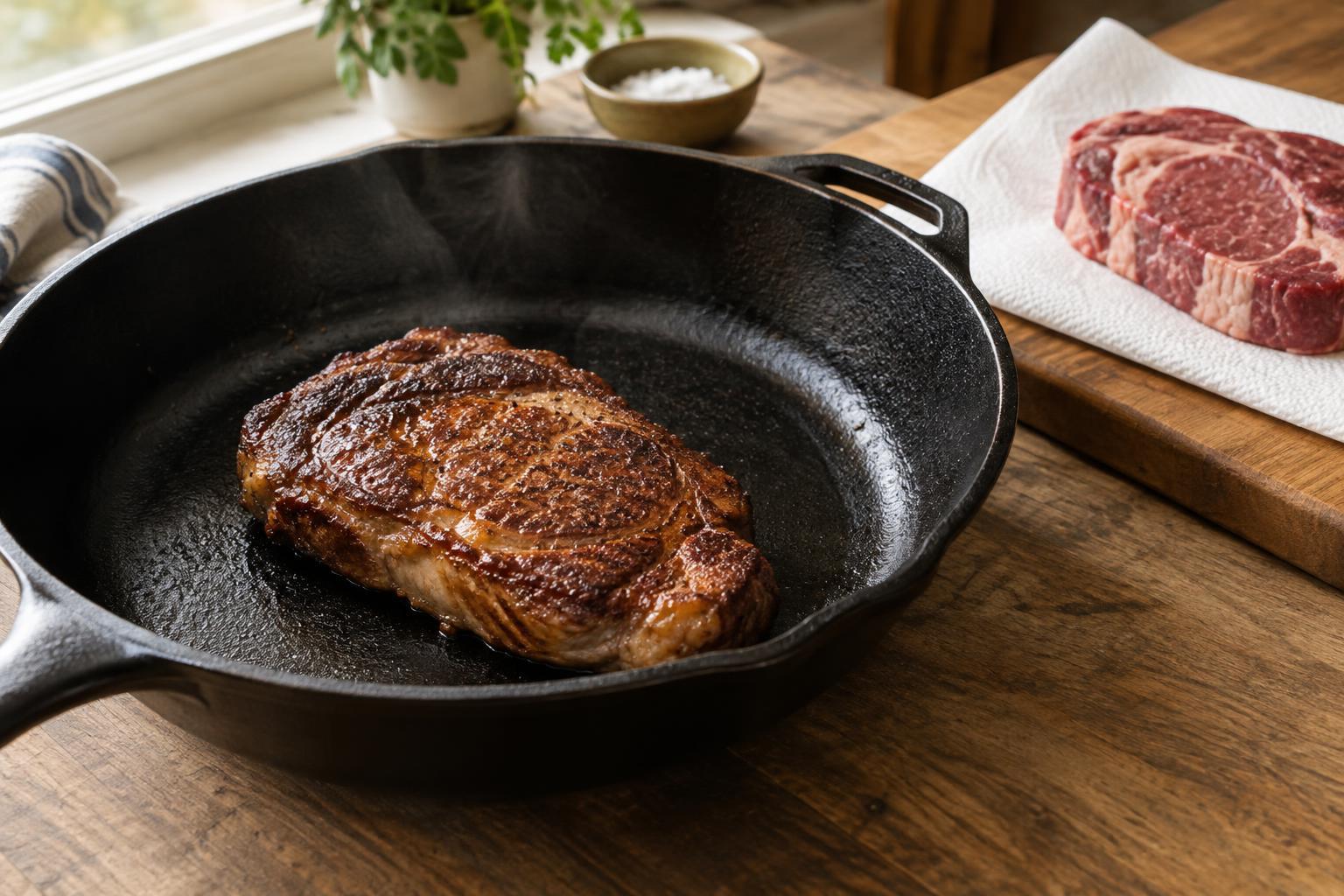
Salting meat before cooking can help season more than just its exterior. If you have time, season it evenly and let it rest in the refrigerator. Salt may first draw moisture to the surface; given more time, some of that moisture can move back into the meat. Before browning, pat the surface dry. If you are cooking straight away instead, season shortly before the meat goes into the pan. Either approach is more predictable than leaving it damp and exposed while waiting to cook.
Early salt can also be useful for vegetables when you want them to release water. Salt sliced cucumbers before dressing them for a salad, for example, and drain off excess liquid so the dressing stays less diluted. The same idea can help with shredded cabbage. Taste before adding more salt: draining removes water, but it does not necessarily remove all the seasoning.
For doughs and batters, follow the recipe’s timing. Salt contributes flavor, but its role can vary with the mixture, so a general rule for a sauté pan should not replace a tested baking method.
Salt during cooking when flavors are building
Many everyday dishes benefit from seasoning in modest stages. Add a little salt as onions soften, another small amount when unsalted vegetables or tomatoes go in, and check the dish again as it simmers. This gives the seasoning a chance to disperse without forcing you to make one large guess at the end. It is especially helpful in soups, stews and sauces, where ingredients release liquid at different times.
Be more cautious when a dish will reduce. As water evaporates, the amount of salt stays largely the same while the volume of liquid falls, so a sauce that tastes balanced early may taste too salty later. Start lightly, particularly if you plan to add cheese, salted butter or another salty finishing ingredient.
Cooking water is another place to make a deliberate choice. Salting water for pasta lets the pasta pick up seasoning as it cooks. For grains or vegetables cooked in water, a measured amount in the pot can be easier to distribute than a heavy sprinkle after draining. How much you need depends on the water, the ingredient and what will be added later; taste the finished food rather than relying on a universal measure.
Use late salt for contrast and control
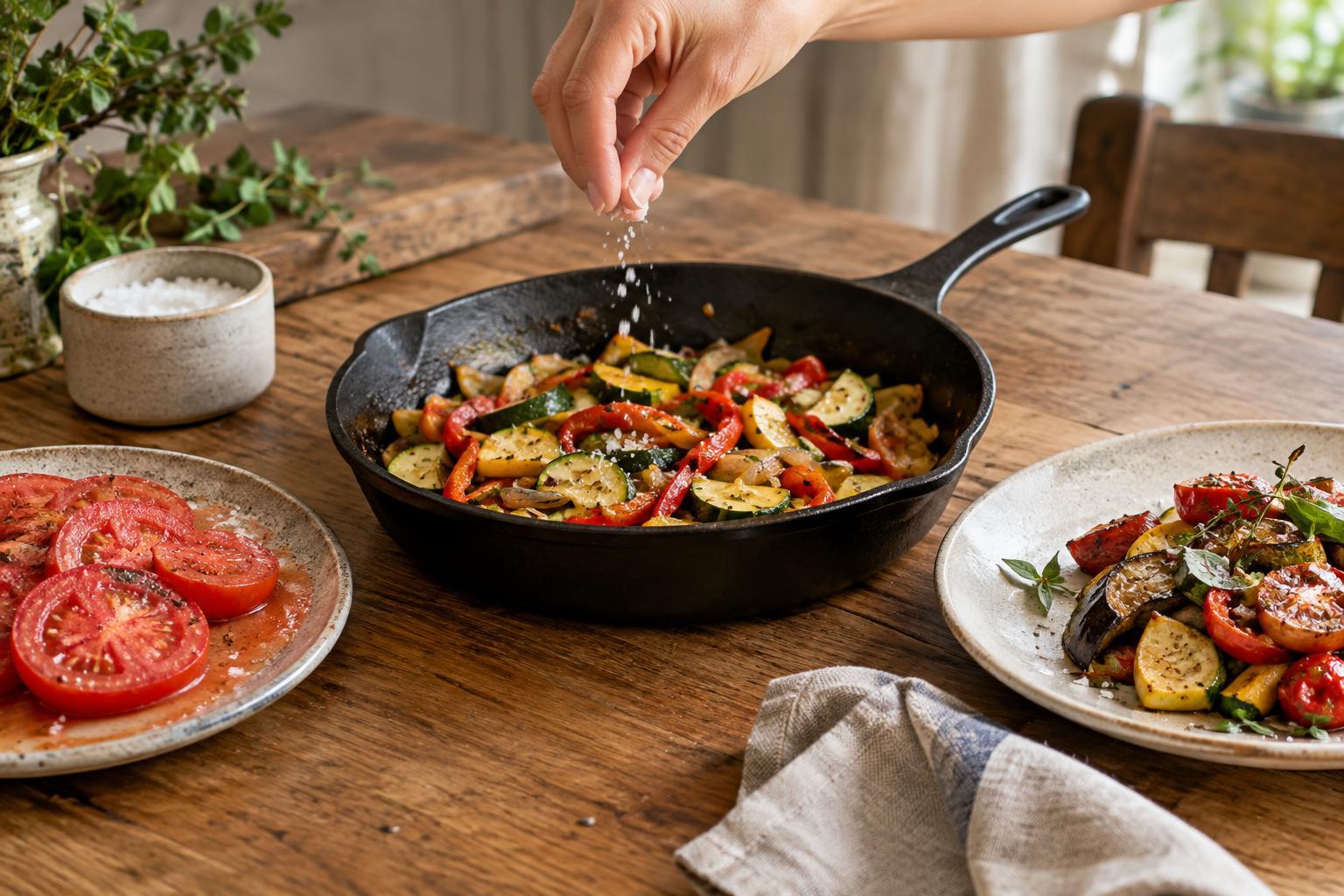
A final sprinkle has a different effect from salt dissolved into a dish. On roasted vegetables, eggs or a slice of tomato, a few grains at the surface can make individual bites taste brighter. Coarser finishing salt may add a little crunch, while fine salt dissolves more quickly. Neither is automatically better; choose the texture that suits the food.
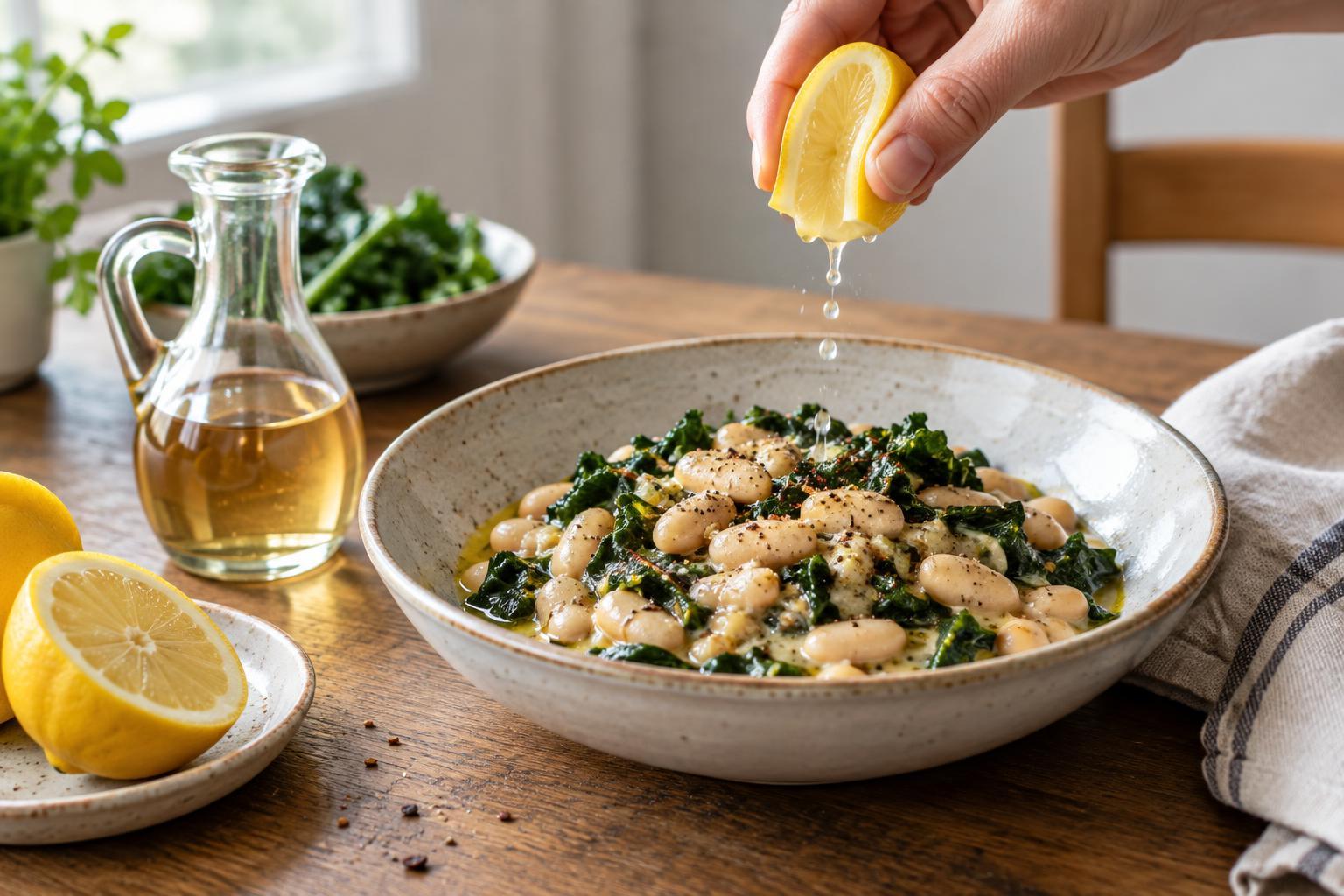
Late seasoning is also your safeguard. Taste a spoonful that includes the dish’s different components, then add salt in small increments, stirring and tasting again. If the food seems flat, salt may help, but it is not the only answer. Acidity, richness, temperature and texture all influence how a dish tastes. A squeeze of lemon or a splash of vinegar may bring a well-salted dish into focus without adding more salt.
Make timing a habit, not a rigid rule
For a simple meal, think in three passes: season substantial ingredients before they cook, add small amounts as unsalted components join the pan, and taste just before serving. You may skip a pass when the dish does not need it. A salad with salty cheese might need no salt until it is assembled; a pot of plain rice might benefit most from seasoning its cooking water.
The goal is not to salt at every opportunity. It is to give salt enough time to work when even seasoning matters, hold some back when flavors will concentrate, and make the final decision with a taste. That small pause at the end is often the most useful technique of all.