What acidity can do
A rich stew, creamy sauce or buttery vegetable dish may taste satisfying at first, then feel heavy after a few bites. Acidity can give that richness a clearer edge. It does not remove fat, but it changes how the dish tastes alongside it. A few drops of vinegar or a squeeze of citrus may be enough to make the other ingredients seem more distinct.
Acidity can also help a dish that tastes flat, though it is not the answer to every flat dish. Before reaching for the lemon, taste for salt. If the food tastes muted all the way through, a small amount of salt may bring its existing flavors forward. If it is adequately seasoned but still feels dull or overly sweet, acid may provide the contrast it lacks. Taste after each adjustment so you know which change helped.
Choose an acid that belongs with the dish
Lemon and lime juice bring a fresh, recognizable citrus flavor as well as tartness. Lemon often suits greens, beans, fish and buttery sauces; lime can work well with herbs, chiles and fruit. Their zest offers fragrance with much less sourness, making it useful when a dish needs brightness but is already sharp enough. Zest the fruit before squeezing it, and avoid digging into the bitter white pith.
Vinegars offer a different range of flavors. White wine vinegar can sharpen a vinaigrette or vegetable dish without drawing much attention to itself. Apple cider vinegar brings a fruity note to slaws and braises. Rice vinegar can be a gentler-tasting choice for quick dressings, though its sweetness varies by product. Darker vinegars can add deeper flavors that suit roasted vegetables or slow-cooked ingredients. These are starting points, not rigid pairings: taste the acid on its own, then consider whether its flavor fits the food.
Add it at the moment it can help most
For soups, stews and braises, begin with a small splash near the end of cooking, stir thoroughly and taste again. Adding acid early can be useful when it is part of the dish’s foundation, but a finishing addition is easier to judge. Start with less than you think you need; it is simple to add another few drops and difficult to take them back. When cooking a large pot, test a spoonful in a small bowl first. That trial gives you a sense of the direction before you season the whole batch.
Citrus juice is particularly useful just before serving, when its fresh flavor remains noticeable. A lemon wedge at the table also lets each person adjust a serving. Vinegar can be whisked into a dressing, stirred into a sauce or lightly tossed with cooked vegetables. Whichever acid you use, distribute it well. One sour mouthful beside several unchanged ones is less helpful than an even, gentle lift.
Match the adjustment to the problem
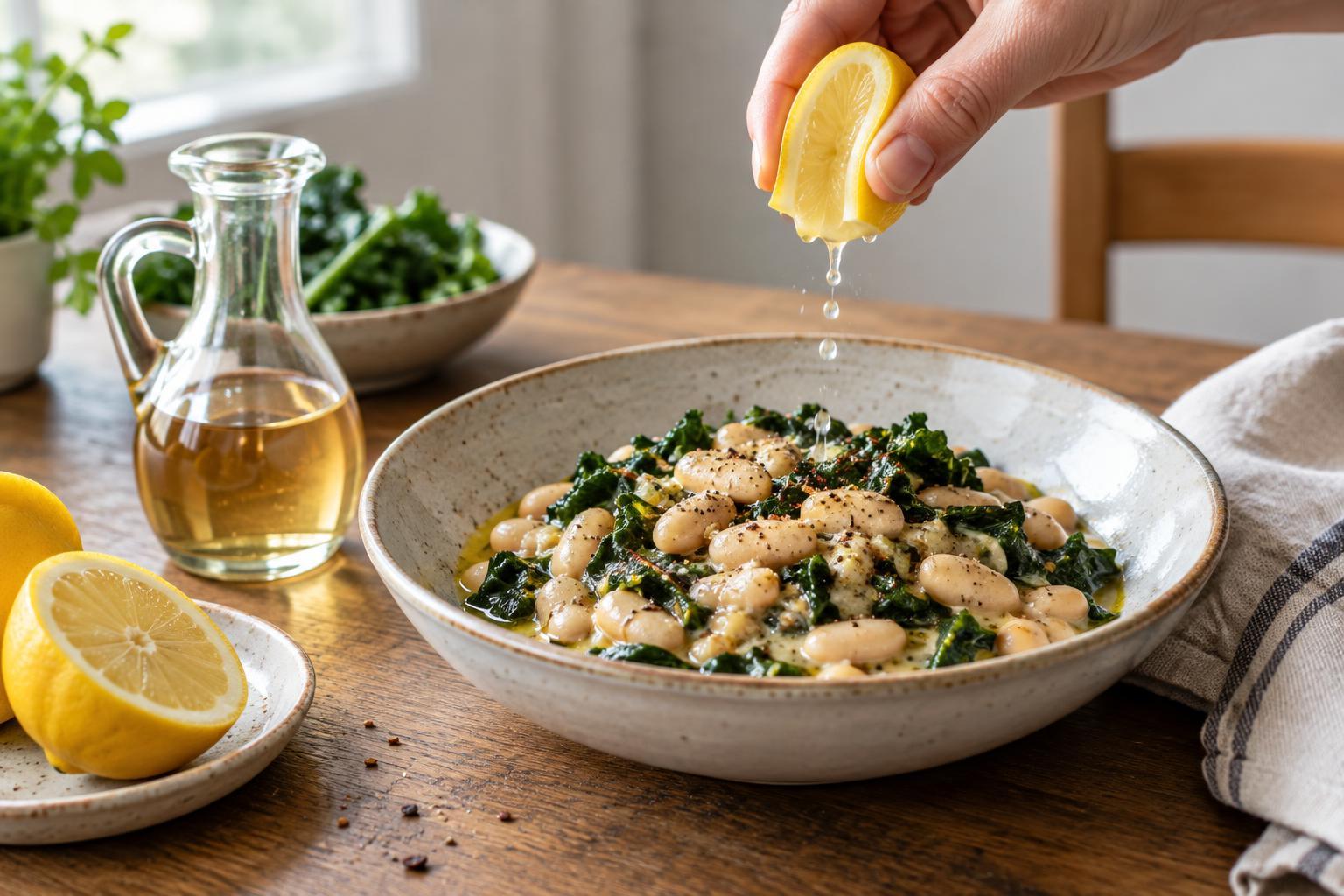
Consider a bowl of creamy beans. If the beans are tender and well salted but taste heavy, a little lemon juice may bring the beans and any herbs into focus. If roasted carrots taste too sweet and soft-edged, a light vinegar dressing can provide contrast. A pan sauce made with butter may need only a few drops of lemon before serving. In each case, the aim is not to make the finished dish taste overtly sour; it is to make you want the next bite.
Acid is less likely to solve problems of texture or concentration. A watery soup may need to reduce, while a grain salad that tastes bland may need more seasoning throughout. Acid can also interact with other ingredients: adding plenty of lemon juice or vinegar to a hot dairy-based sauce may cause it to separate or curdle. For delicate creamy sauces, test a small portion, add acid sparingly and avoid vigorous boiling afterward.
If you add too much, restore balance gently
When a dish turns too sharp, pause before adding sugar. Sweetness can soften the impression of acidity, but it may change the character of a savory dish. First consider whether you can add more of the main ingredients, broth or sauce base to spread the acid through a larger volume. A little fat or a starchy accompaniment may also make a sharp dish more pleasant to eat, depending on what you are serving.
The most useful habit is to make small changes and taste deliberately. Ask whether the dish is salty enough, whether its richness needs contrast, and whether the vinegar or citrus contributes a flavor you actually want. Used this way, acidity is not a last-minute trick. It is a simple tool for bringing the parts of a dish into balance.