Start with the leaves you have
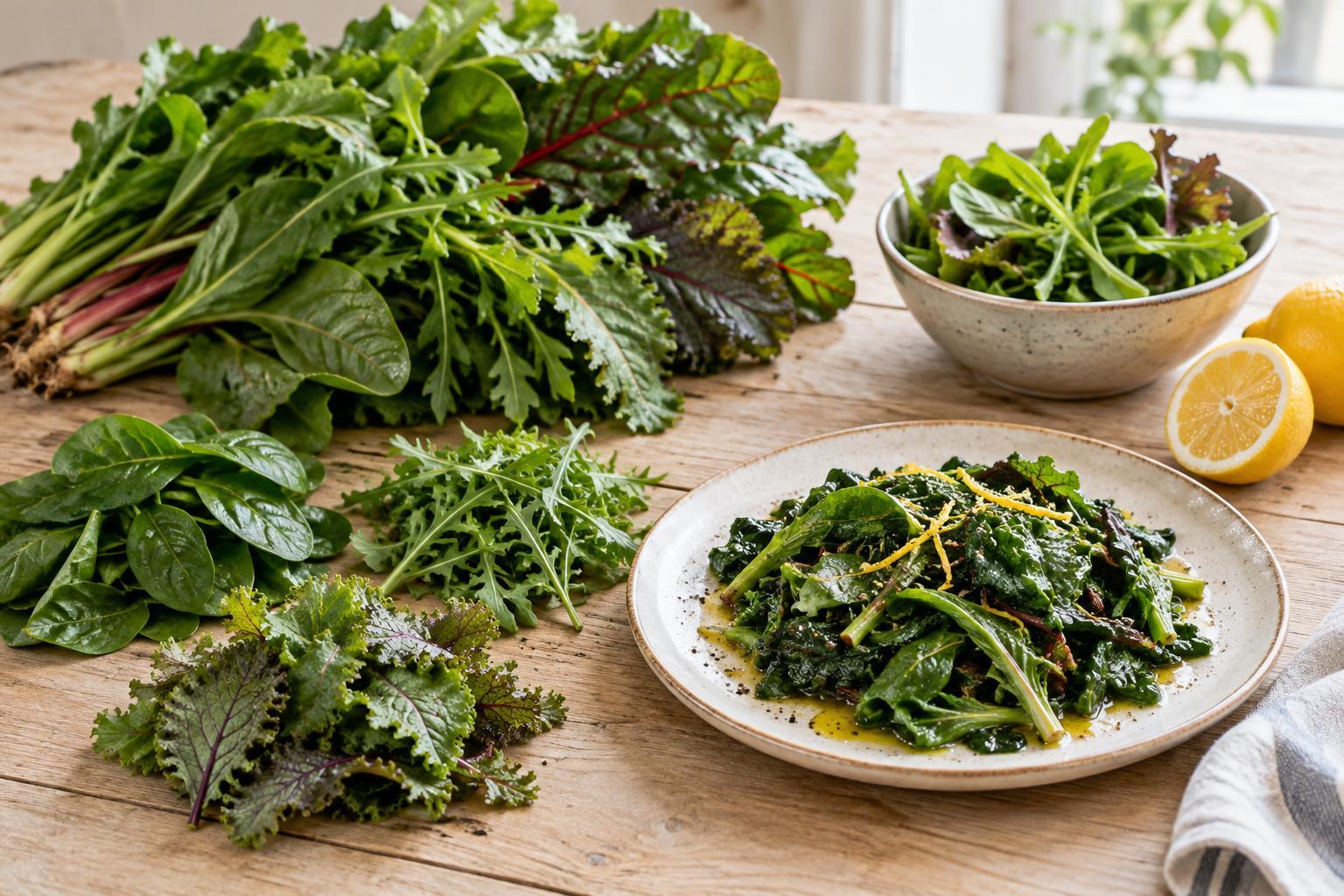
A bag of spring greens rarely stays uniform for long. Baby spinach and tender lettuce may remain mild, while arugula, mustard greens and mature kale can have a sharper edge from the start. Flavor also varies with the plant’s growing conditions and maturity. Rather than waiting for every leaf to behave the same way, taste one while you wash the bunch. That small check can tell you whether to serve it raw, cook it briefly or give it a supporting role in a larger dish.
Sort by texture as well as flavor. Set aside delicate leaves for salads or last-minute additions to hot food. Slice sturdy stems thinly and cook them ahead of the leaves; they often need more time to soften. Discard leaves that are slimy or have an off smell. For the rest, wash away grit, dry them well and refrigerate them loosely wrapped so they are ready for the next meal. Good storage helps preserve texture, though it cannot make a naturally peppery leaf taste mild.
Use tender greens where their freshness shows
The gentlest leaves need very little intervention. Toss spinach, young chard leaves or mild salad greens with something crisp, such as sliced radish or cucumber, and something substantial, such as cooked grains, beans or a soft-boiled egg. Dress just before serving. A little olive oil and lemon can make the greens taste lively without burying them, while a creamy dressing can round out a peppery handful of arugula.
Tender greens also work as a finishing ingredient. Scatter them over warm potatoes, fold them into a grain bowl after it comes off the heat, or tuck them into a sandwich with cheese and roasted vegetables. The residual warmth softens the leaves slightly without turning them limp. If a mix includes both mild and punchy greens, use the mild ones as the base and add the stronger leaves a handful at a time, tasting as you go.
Give firmer leaves a quick cook
When greens feel too tough for a salad, a wide pan can make them dinner-ready in minutes. Warm oil with sliced garlic or scallions, add chopped stems first, then pile in the leaves with a splash of water. Cover briefly to help them wilt, uncover and cook until excess moisture evaporates. Finish with lemon juice or vinegar. The acid will not erase bitterness, but it can make the finished dish taste more balanced.
Those sautéed greens can become a filling for an omelet, a topping for toast with ricotta, or an addition to pasta with white beans and grated cheese. For a more assertive bunch of mustard greens or kale, pair the leaves with ingredients that bring sweetness or richness: slowly cooked onions, roasted carrots, butter, olive oil or a handful of toasted nuts. Adding more greens to a dish you already know is an easy way to use them before the leaves lose their appeal.
Make a flexible soup or green sauce
Soup welcomes greens at several stages of freshness. Begin with onion and a vegetable such as potato or carrot, add broth and simmer until the vegetables are tender. Stir in chopped greens near the end so they soften without spending the whole cooking time in the pot. White beans or lentils make the soup more filling. If the leaves are particularly bold, use a smaller amount and finish each bowl with a spoonful of yogurt or a squeeze of lemon.
A green sauce is another useful destination for a mixed handful. Blend washed leaves with olive oil, nuts or seeds, a little garlic and enough water to make the mixture spoonable. Tender leaves can go in raw; briefly blanch tougher or more bitter ones, then drain and squeeze them dry before blending. Toss the sauce with pasta, spread it on a sandwich or spoon it over roasted vegetables. Taste before adding salt or acid, especially if the sauce includes a salty cheese.
Let flavor guide the plan
There is no single moment when spring greens “turn bitter.” Some are prized for their bite, and a leaf that seems too strong on its own may be excellent beside beans, eggs or a rich dressing. The useful habit is to check the bunch early, use the tenderest leaves raw and move the sturdy or assertive ones toward heat. A salad today, a quick sauté tomorrow and a pot of soup for the remaining handfuls can make good use of the greens without asking every meal to taste alike.