Start with the whole bunch
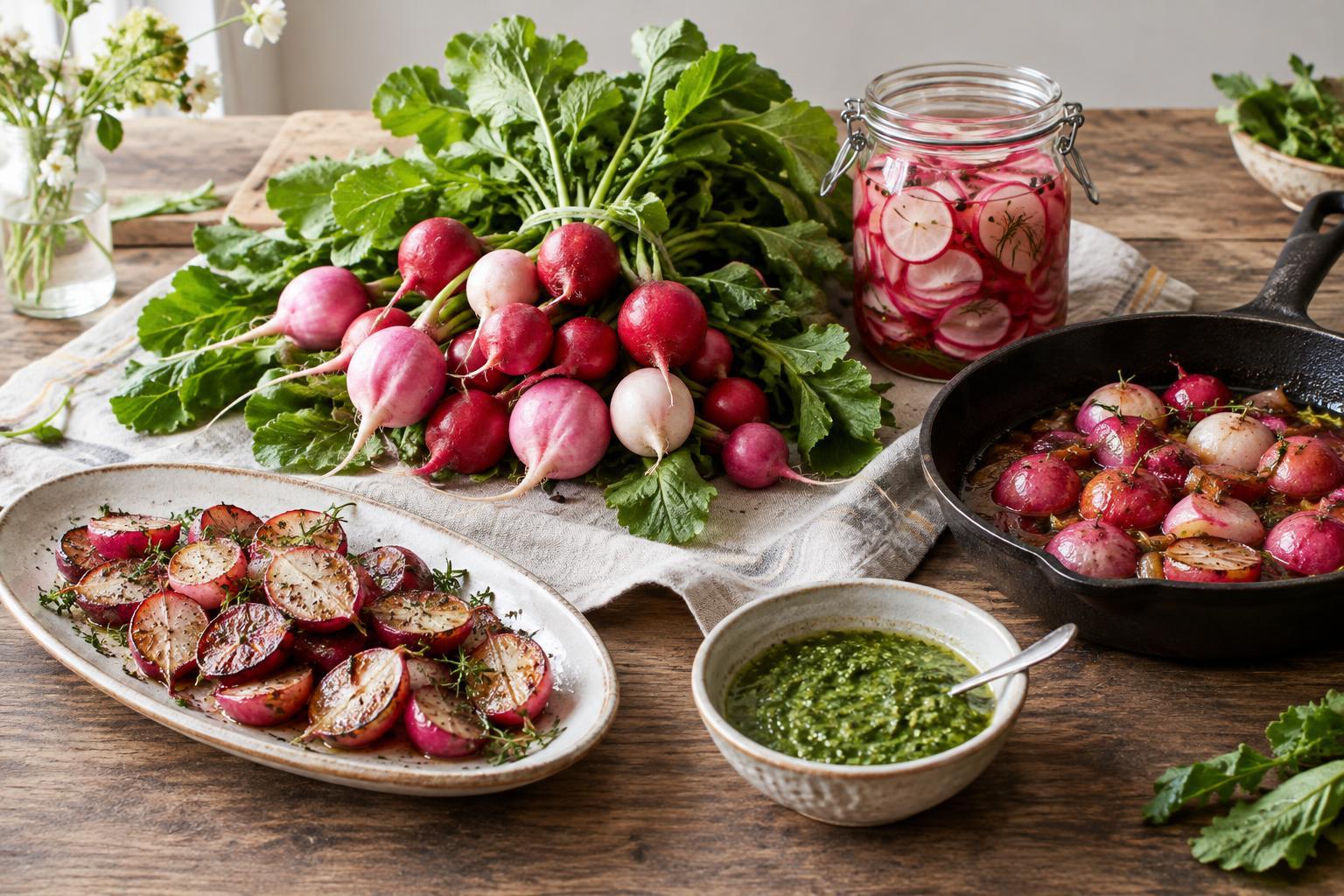
A radish bunch offers more than slices for a salad. The roots bring crunch and a peppery bite; the leaves, when fresh, can be cooked like other tender greens. Heat softens the roots’ sharpness and brings out a gentler flavor, while cutting them in different ways changes their role on the plate. Halves make a side dish, thin slices pickle quickly, and grated radish can disappear into a savory spread.
Choose roots that feel firm, and check the leaves separately: crisp-looking greens are worth saving, while yellowed or slimy ones should be discarded. Remove the tops before storing so they do not draw moisture from the roots. Refrigerate the two separately, wash them before use, and pay particular attention to grit caught near the base of the leaves. A small radish with sound greens gives you two ingredients to plan around.
Roast the roots for a mellow side dish
Roasting is a simple way to make radishes feel at home beside a main course. Trim the roots, leave small ones whole, and halve or quarter larger ones so the pieces are roughly the same size. Toss with oil and salt, spread them out on a baking sheet, and roast at about 425°F (220°C). Start checking after 15 minutes; depending on size, they may need another 10 minutes or so. They are ready when a fork enters easily and the cut faces have some color.
Finish with lemon juice or a small splash of vinegar to give the mild, warm radishes some lift. Soft butter and chopped herbs make them richer; toasted breadcrumbs add contrast if you want crunch. Serve them with roast chicken, beans or a grain dish, or let them cool slightly before folding them into a composed salad. Roasted radishes lose much of their raw snap, so pair them with something crisp rather than expecting the same texture.
Braise them in a skillet
For a softer result without turning on the oven, put halved radishes cut-side down in a skillet with a little butter or oil. Let the cut surfaces take on color, then add a shallow splash of water or broth and a pinch of salt. Cover and simmer until the radishes are nearly tender. Remove the lid and let the remaining liquid reduce to a light coating. A squeeze of citrus, a dab of mustard or a few chopped herbs can finish the pan.
This method is especially useful when the roots vary in size: cut the larger ones smaller and check the smallest first. The finished radishes can sit alongside fish or eggs, or become the warm element in a bowl of lentils. If they taste too mild, adjust the seasoning and acidity before adding more fat. A little brightness usually does more for them than a heavy sauce.
Make a quick pickle or a savory spread
Thinly sliced radishes make a lively refrigerator pickle for sandwiches, rice bowls and rich dishes. Cover the slices with a mixture of vinegar and water, add a little salt and sugar to taste, and refrigerate until they take on the tang you like. Keep this as a refrigerated condiment, not a shelf-stable preserve. You can also add a few slices of onion or a pinch of pepper flakes, but a plain batch makes it easiest to taste what the radishes contribute.
For something less sharp, grate a radish and squeeze out excess moisture. Stir it into softened butter with salt and lemon zest, or into thick yogurt with herbs. Spread either version on toast and add sliced eggs, cucumbers or cooked vegetables. Grating distributes the peppery flavor throughout the spread, making a single bunch go further. Taste before adding extra spice: radishes themselves may provide enough bite.
Give the greens their own place
Radish greens are best treated as an ingredient in their own right, not as a garnish you feel obliged to use. After a thorough wash, chop tender leaves and stir them into a skillet of beans, a pot of soup or warm grains near the end of cooking. Their flavor can be assertive, so begin with a handful and taste. If the stems seem tough, remove them or chop them finely and cook them before adding the leaves.
Fresh greens can also become a loose sauce: blend or finely chop them with olive oil, nuts or seeds, garlic if you like it, and enough lemon juice to balance the mixture. Spoon it over roasted radishes to bring the whole bunch back together. When the leaves are past their best, skip them and use the roots. Making the most of an ingredient should lead to a good meal, not a reason to keep something you would rather discard.