Give asparagus a clear role
A dinner built around asparagus does not need asparagus in every dish. It needs one moment when the vegetable is unmistakably the focus. Its flavor is gentle and grassy, with a slight sweetness that can disappear beneath heavy sauces, intense spice or a crowded plate. Plan one main preparation first, then choose the rest of the meal to give it space.
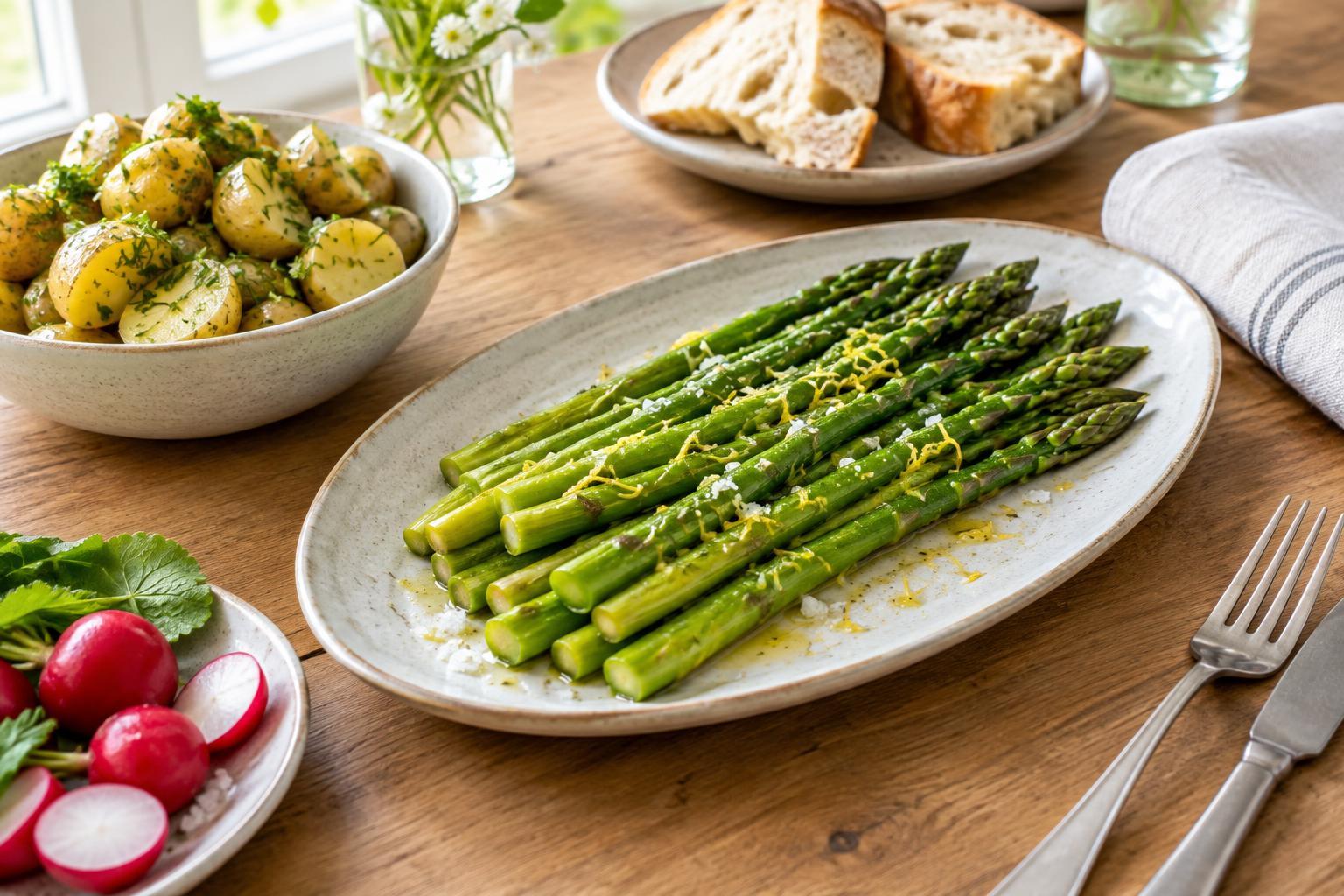
A simple three-part menu might begin with a light salad, continue with asparagus beside a softly cooked egg and small roasted potatoes, and end with fruit and a modest dessert. For a more substantial main course, serve the asparagus alongside roast chicken, white beans or a mild fish. The supporting dishes can make dinner satisfying without asking the asparagus to compete with several bold flavors at once.
Buy and prepare for even cooking
Look for spears that feel firm, with compact tips and cut ends that are not excessively dry. Thickness is less a measure of quality than a guide to cooking: slim spears finish quickly, while thick ones can take a little longer. Choosing a bunch with similar-sized spears makes it easier to cook them evenly.
Keep asparagus cool until you are ready to use it. Rinse it, dry it, and remove the woody part of each stem by trimming or bending it near the base. There is no need to discard more than necessary; if the lower portion is firm but not woody, a thin peel may make it pleasant to eat. Drying the spears matters especially if you plan to roast or sauté them, since excess water encourages steaming rather than light browning.
Cook just enough, then season with restraint
The best method depends on the texture you want. For a clean, bright-tasting centerpiece, blanch the spears briefly in simmering salted water, then drain them as soon as they are tender enough to bite but still have some firmness. If they will wait before serving, cool them promptly and rewarm them gently. If dinner is ready, serve them straight away.
Roasting gives asparagus a deeper flavor and slightly crisp tips. Spread dry spears in a single layer, add a little oil and salt, and use a hot oven so they cook without sitting in their own moisture. A quick sauté offers similar control on the stovetop. With any method, watch the spears rather than relying on a fixed cooking time: their thickness and your preferred texture matter more than the clock.
Finish with one or two accents instead of a collection of toppings. A little butter or olive oil adds richness; lemon zest offers brightness without the sharpness of too much juice. Soft herbs such as parsley, dill or chives work well in small amounts. If you add cheese or toasted nuts, use enough to provide contrast while leaving most bites of asparagus uncovered.
Build the rest of the plate around contrast
A good companion brings something asparagus does not: creaminess, gentle richness or a different texture. A softly cooked egg turns spears into a satisfying course, while white beans or tender grains can make them part of a substantial vegetarian dinner. Roast chicken or mild fish can sit alongside asparagus without requiring a strongly flavored sauce.
Think about the entire menu before adding acidic dressings, salty toppings or garlic to the asparagus itself. If the starter is a sharp salad, the main course may need only butter and herbs. If the main includes a creamy element, a small squeeze of lemon at the table might be welcome. Keeping bold accents in separate dishes lets guests find the balance they like without covering the vegetable's flavor.
Make timing part of the plan
Asparagus is easiest to appreciate when it reaches the table soon after cooking. Prepare the other components first: wash the salad greens, finish the dressing, set out serving dishes and have the main course nearly ready. Then cook the spears as the final task. If you are hosting, a room-temperature preparation is also practical; dress cooked, cooled asparagus lightly just before serving rather than leaving it in an acidic dressing for a long wait.
Serve the asparagus where guests can see and take it easily, whether on a platter or arranged beside the main dish. Leave a little space around it, and put extra lemon, herbs or cheese on the table instead of adding everything in the kitchen. The result is a spring dinner that feels considered but not fussy, with asparagus tasting like the reason you planned the meal.