Start with the job the onion needs to do
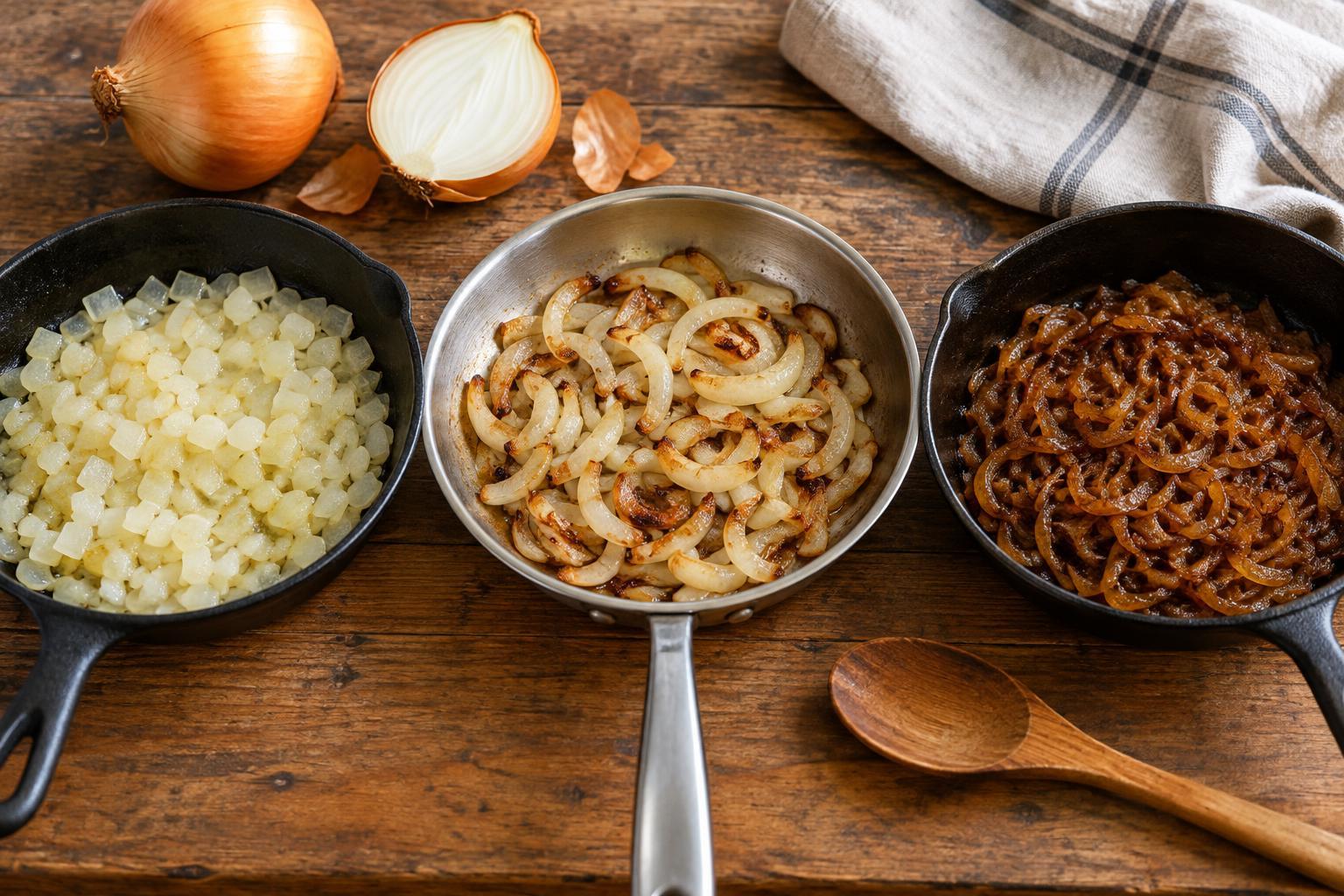
An onion can disappear into a sauce or stand out as a topping. Before turning on the stove, decide whether you want it soft and mild, deeply browned, or somewhere in between. That choice determines the cut, the pan temperature and how often you stir.
A fine dice blends easily into soups, stews and fillings. Thin slices keep more of their shape and work well when the onions will be served alongside other ingredients. Aim for pieces of a similar size so they cook at a similar rate. If the onion is meant to be noticeable, cut it a little thicker than you would for a sauce base.
Sweat onions for a gentle foundation
To sweat onions, cook them with a little oil or butter over low to medium-low heat. Add a small pinch of salt if it suits the dish, then stir occasionally. The goal is to soften the pieces and tame their sharpness without developing much color. If the edges begin to turn brown, lower the heat or add a small splash of water.
Sweated onions are useful when you want the other ingredients to remain prominent, as in a delicate vegetable soup or a lightly seasoned rice dish. A lid can help trap moisture and encourage softening, but lift it to stir and check the pan. Continue until the pieces look supple and, for most onions, more translucent. They need not be perfectly colorless to do their job.
Brown onions for savory edges
Browning calls for more heat and less trapped moisture. Use a pan wide enough to hold the onions without piling them too deeply, and leave the lid off. Once the onions have softened and much of their surface moisture has cooked away, let them sit briefly between stirs. Contact with the hot pan helps create browned spots.
Watch the color rather than relying on a fixed cooking time. Golden edges can add depth to a quick skillet meal, while darker brown pieces bring a more pronounced roasted flavor. If dark specks appear before the onions have softened, the heat may be too high. Reduce it and stir; if the pan looks dry, add a small amount of water to loosen any stuck bits. Blackened pieces can taste bitter, so remove them rather than stirring them through the dish.
Cook slowly for soft, deeply colored onions
When you want onions that are soft, sweet-tasting and deep brown throughout, plan for a slower process. Slice them evenly and begin with a little fat in a roomy pan over moderate heat. Stir more often as their volume shrinks and their color deepens. Lower the heat if the pan starts to darken faster than the onions; add a small splash of water when needed to release browned bits and keep them from scorching.
These onions are often called caramelized onions, though their flavor develops through several changes as they cook. The useful distinction is practical: they should be uniformly tender and richly colored, not merely browned on the outside. Stop earlier if you want some bite, or continue for a softer, more concentrated topping. They can anchor a sandwich or tart, or be stirred into a dip.
Adjust the method to the rest of the dish
Think about what will happen after the onions leave the pan. Onions destined for a long-simmered stew may only need to soften at the start; they will keep cooking with the other ingredients. Onions for a quick topping must reach their intended texture before serving. If garlic is joining them, add it later: finely chopped garlic can darken before the onions are ready.
Taste as you go, especially when changing from one method to another. If softened onions taste too sharp for the dish, give them more time. If browned onions seem too intense, pair them with ingredients that provide moisture or freshness. The most useful cue is not the name of the technique but the result in the pan: tender pieces, an appropriate level of color and a flavor that fits the finished plate.