Start with the kind of dinner you want
Eggplant suits late-summer cooking because it can take on several roles: a soft filling for flatbread, a substantial layer in a grain bowl, or the centerpiece of a platter to share. Instead of beginning with a recipe, decide how you want to serve it. For a hands-off dinner, roast thick pieces until their centers are tender. For a quicker meal, cook smaller pieces in a skillet. If you want something spoonable, cook eggplant down with aromatics and a little liquid.
Then give the meal a simple structure. Pair the eggplant with something filling, such as rice, lentils, bread, or pasta; something fresh, such as sliced cucumber or herbs; and something sharp or creamy to finish. That approach leaves room for whatever else looks good where you shop. A late-summer tomato might become a fresh topping, but the meal need not depend on finding one.
Choose a cut that suits your cooking method
For roasting, cut eggplant into thick wedges, rounds, or lengthwise halves. The larger pieces give you a contrast between browned surfaces and soft interiors. Coat them lightly and evenly with oil, spread them out on a baking sheet, and turn them if one side is browning much faster than the other. Cook until the flesh yields easily to a fork; color alone is not a reliable sign that the center is ready.
For a skillet, use bite-size pieces and cook in batches if the pan is crowded. Eggplant absorbs oil readily, so adding more every time the pan looks dry can leave the finished dish heavy. Start with a measured amount, let the pieces sit long enough to brown, and add a small splash of water if they need help softening. Salting eggplant in advance is optional for most everyday dishes. If you do salt it, blot away the released moisture before cooking so the surface can brown.
Build flavor through contrast
Cooked eggplant has a mild flavor and a soft texture, which makes finishing ingredients especially important. Add acidity with lemon juice, a spoonful of yogurt, or a little vinegar. Add crunch with toasted seeds, nuts, or crisp breadcrumbs. Fresh parsley, basil, or mint can make a warm dish feel lighter. Choose one or two finishes rather than adding everything at once; each should have a clear job on the plate.
Season in stages. Salt the eggplant before or during cooking, then taste it again after adding any sauce or topping. Garlic, cumin, or smoked paprika can give roasted pieces a different direction, while a tomato-and-onion mixture makes a natural companion for skillet-cooked eggplant. If you use a strongly seasoned condiment, taste before adding more salt. The goal is not to disguise the eggplant but to give its soft texture enough contrast to remain interesting through the meal.
Turn one batch into a complete meal
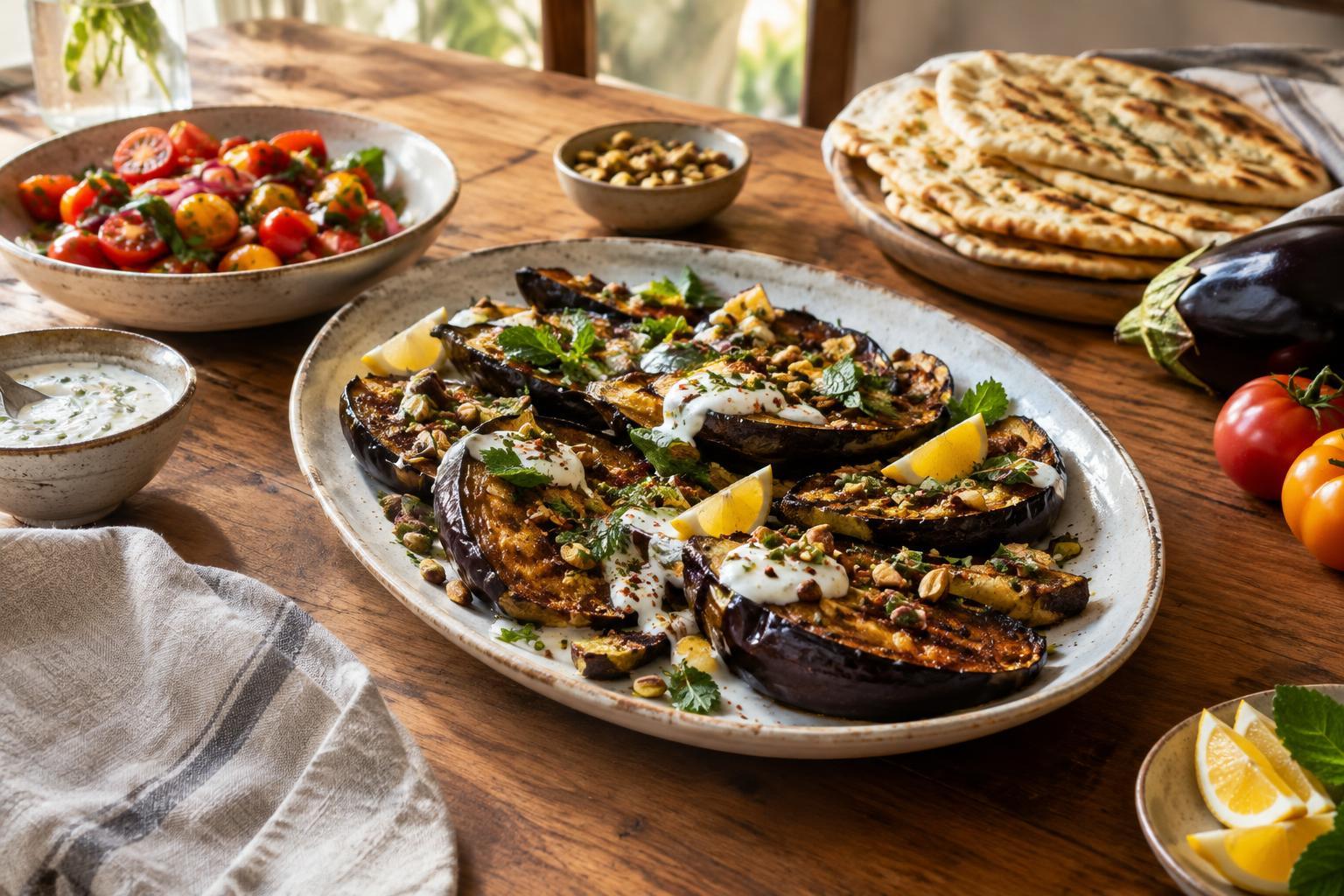
For a platter dinner, spread yogurt or a cooked bean purée on a plate, arrange warm roasted eggplant on top, and finish with herbs and a squeeze of lemon. Serve bread alongside to scoop up the soft pieces. For bowls, put skillet-cooked eggplant over grains or lentils, then add chopped cucumber and a sharp dressing. Both formats let diners adjust the balance of warm, cool, rich, and bright elements at the table.
If you have leftover cooked eggplant, change its role rather than repeating the same plate. Fold it into pasta with a little cooking water, tuck it into a sandwich with something crisp, or chop it for a spread. Store leftovers promptly in a covered container in the refrigerator and reheat them thoroughly when serving warm. Seasonal cooking can also begin with noticing the landscape beyond the market; for a different kind of seasonal browsing, explore Nature and Landscapes · Java Culture Trails.