Choose tomatoes for the dish, not just the display
Summer tomatoes invite a simple approach, but different dishes ask different things of them. For a plate of sliced tomatoes, look for fruit that feels heavy for its size, has an inviting aroma near the stem and gives slightly without feeling mushy. An irregular shape or a small surface blemish need not matter if the flesh beneath is sound. Color alone is less useful: ripe tomatoes come in many shades.
A firm tomato can be easier to cut neatly for sandwiches or a chopped salad. Very ripe, soft tomatoes may be harder to slice, yet excellent for a quick sauce, soup or pan of roasted vegetables. Small tomatoes are convenient for scattering over a dish whole or halved; larger ones offer generous slices and plenty of juice. Choosing with the finished meal in mind helps you enjoy tomatoes at different stages of ripeness rather than waiting for every one to be perfect.
Give uncooked tomatoes time to season
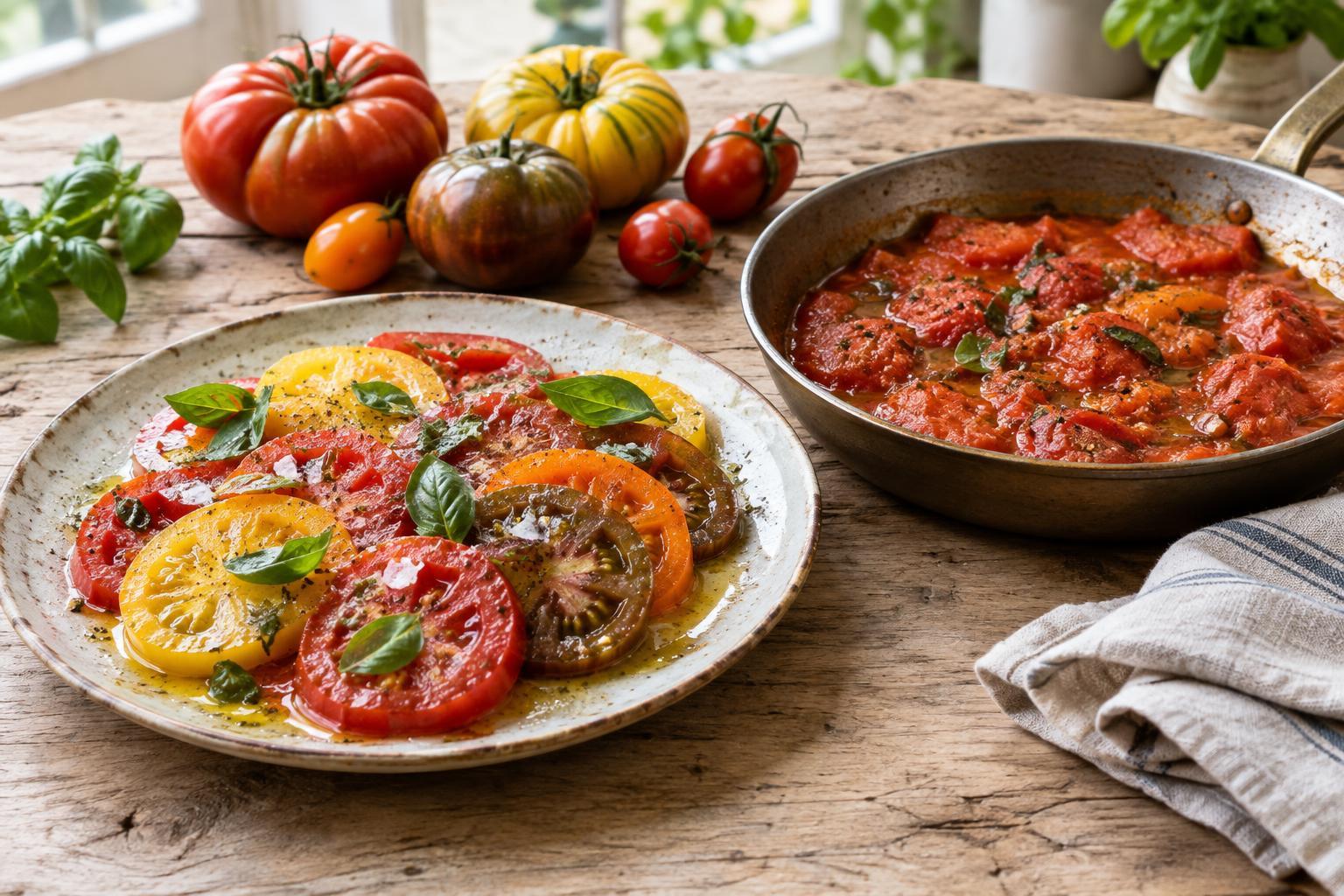
A good raw tomato dish needs little more than salt, a little fat and something that adds contrast. Slice tomatoes onto a plate or cut them into uneven chunks, then season and let them stand briefly. Salt draws out some juice, which mixes with olive oil into a dressing worth keeping. Spoon it over the tomatoes, or catch it with bread, cooked grains or warm beans.
Build from there according to the meal. Torn basil or parsley brings freshness; finely sliced onion or a splash of vinegar adds sharpness; a spoonful of yogurt or soft cheese offers a cool, creamy counterpoint. For a sandwich, salt tomato slices separately before assembling, so every bite tastes seasoned. If they release more liquid than you want in the bread, let them rest on a plate first and use the collected juice elsewhere.
Use gentle heat for a quick sauce
Cooking changes a tomato’s character. Heat softens its flesh and brings its juice together with the other ingredients in the pan. For a loose, fresh-tasting sauce, warm olive oil with garlic or onion, add chopped tomatoes and cook just until they collapse. Stir occasionally and taste before adding more salt. Leave the sauce chunky for pasta or spoon it over eggs, fish or grilled vegetables.
For a thicker sauce, use a wider pan and cook uncovered so moisture can evaporate. Stir more often as it reduces, especially around the edges. Tomato skins and seeds are welcome in a casual sauce, but you can remove larger pieces of skin as they loosen if you prefer a smoother texture. A little tomato juice can help start the pan without extra oil; a splash of water can loosen the sauce if it thickens before the tomatoes taste fully cooked.
Roast for concentration and flexibility
Roasting is useful when tomatoes are plentiful or a little bland. Halve small tomatoes or cut larger ones into wedges, arrange them in a single layer and toss with olive oil and salt. Roast until the edges soften and color and the juices in the pan begin to thicken. Give the pieces room: crowded tomatoes tend to steam, while a roomy pan allows more browning.
Roasted tomatoes can become more than a side dish. Fold them into couscous or rice, tuck them into a sandwich, spoon them onto toast with beans, or pair them with a cool salad. Save the pan juices, too. They carry tomato flavor and can be stirred into a warm grain bowl or whisked into a dressing. If the tomatoes taste especially sweet after roasting, finish the dish with lemon or vinegar for balance.
Let texture guide the rest of the meal
A tomato-centered dish feels complete when it has something to play against. Juicy raw tomatoes welcome crisp toast, cucumbers or toasted nuts. A soft cooked sauce benefits from pasta with some bite or vegetables that hold their shape. Herbs added at the end stay distinct; herbs cooked in the pan become part of the sauce. Neither choice is better, but each gives a different result.
Keep whole tomatoes where they can ripen without being crowded, and use the softest ones first. Once cut, cover and refrigerate what you will not use promptly, then let it lose some of its chill before serving for a more pleasant texture. Above all, taste as you go. A ripe tomato may need little seasoning, while another may come alive with salt, acidity or a few minutes of heat.