Start with a meal, not just a salad
When the kitchen is hot, a bowl of sliced vegetables sounds appealing—until everyone is hungry again an hour later. The easiest way to make a no-oven summer meal satisfying is to give it structure. Choose something substantial, such as beans, lentils, eggs, tofu, canned fish or leftover cooked chicken. Add a base that can hold the meal together: bread, rice, couscous or noodles all work. Then bring in fresh produce for flavor and crunch.
This approach is flexible rather than formulaic. White beans with tomatoes and torn bread feel different from chilled noodles with cucumber and tofu, but both offer more than a collection of side dishes. Think about how each bite will eat: Is there something soft, something crisp and something that makes you want another forkful? If the meal feels too light, add a more generous serving of the substantial ingredient before adding extra garnish.
Let seasonal produce do the easy work
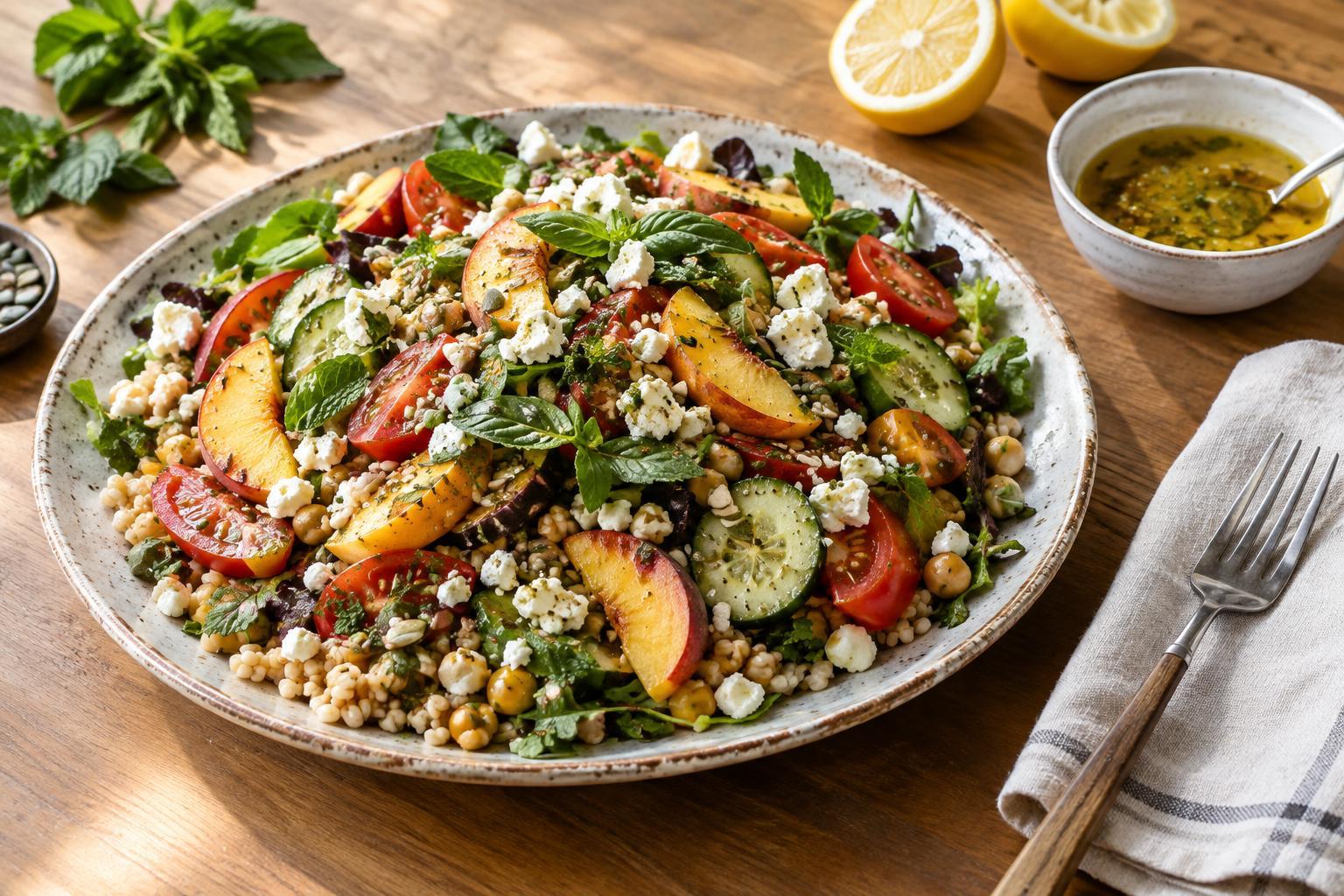
Summer ingredients often need little preparation. Ripe tomatoes can be sliced and salted; cucumbers can be chopped or shaved; tender greens and herbs can be washed and added just before serving. Melon pairs well with salty ingredients, while stone fruit can bring sweetness to a grain bowl. Choose combinations based on what tastes good together, rather than trying to use every vegetable in the kitchen at once.
A little attention improves uncooked produce. Salt tomatoes shortly before serving to draw out their juices, which can mingle with a dressing or soak into bread. Slice firmer vegetables thinly if you want them tender, or leave them in larger pieces for crunch. If an ingredient is bland, give it help with lemon, vinegar, herbs or a flavorful sauce. If it is already sweet and juicy, keep the additions simple enough to let it stand out.
Use cool or quick-cooking bases
Avoiding the oven does not mean every ingredient must be raw. Couscous can be prepared with hot water, while noodles and eggs need only a brief spell on the stovetop. If even that feels like too much heat, use canned beans, ready-to-eat grains or bread. Leftovers are useful, too, provided they have been stored properly and are still suitable to eat.
Match the base to the ingredients. Bread is excellent with juicy tomatoes and a sharp dressing. Noodles welcome a sauce that can coat each strand, plus crisp vegetables for contrast. Beans and lentils hold up well to chopped herbs, diced vegetables and a little oil. For a composed plate, try spreading a seasoned yogurt or bean dip beneath vegetables and serving bread alongside. The same ingredients can feel like a new meal when their arrangement changes.
Build flavor with dressing and contrast
A simple dressing can connect ingredients that otherwise seem unrelated. Start with an acidic element such as lemon juice or vinegar, add olive oil or another flavorful fat, and season to taste. Mustard, grated garlic, chopped herbs or a spoonful of yogurt can change its character. Dress beans or grains first so they absorb some flavor, then add delicate greens near the end to keep them fresh.
Satisfying meals also benefit from contrast. Add toasted nuts or seeds, crumbled cheese, pickles or crisp raw vegetables to a soft bowl. A spoonful of chili crisp can enliven mild rice and cucumber; herbs can lift a rich tuna-and-bean salad. You do not need every kind of contrast at once. One bright element and one crunchy element are often enough to make a familiar combination feel deliberate.
Make the last few minutes easy
Keep a small set of useful ingredients on hand so lunch or dinner does not begin from scratch. A can of beans, a jar of pickles, noodles, a favorite dressing ingredient and a few sturdy vegetables offer many combinations. When you bring home tender herbs or greens, wash and dry them as needed and store them appropriately; keeping everything dry helps preserve its texture.
For an easy summer dinner, put a large platter in the middle of the table: sliced tomatoes and cucumbers, seasoned beans or another substantial ingredient, herbs, bread and a bowl of dressing. Let people assemble their own plates. It is a low-heat way to serve a meal that feels generous, with room to adjust for different appetites and whatever produce looks best.