Start by sorting the harvest
When zucchini arrives faster than you can cook it, resist the urge to put every piece into one enormous bake. Sort it by size and condition first. Small, firm zucchini is especially useful raw or quickly cooked, when its mild flavor and delicate texture can stand on their own. Larger ones have more room for stuffing or grating; if the center is very seedy or spongy, scoop that portion out. Set aside any damaged pieces to use promptly, and discard zucchini that has become slimy or smells off.
Keep unwashed zucchini in the refrigerator and wash it just before preparing it. If you have more than you can use while it is fresh, make a plan rather than waiting for inspiration. The simplest way to avoid repetition is to give each batch a different job: one crisp dish, one deeply browned dish, one batter-based dish and one sauce. A change in texture does more to distinguish meals than a new sprinkle of herbs.
Keep the first meal cool and crisp
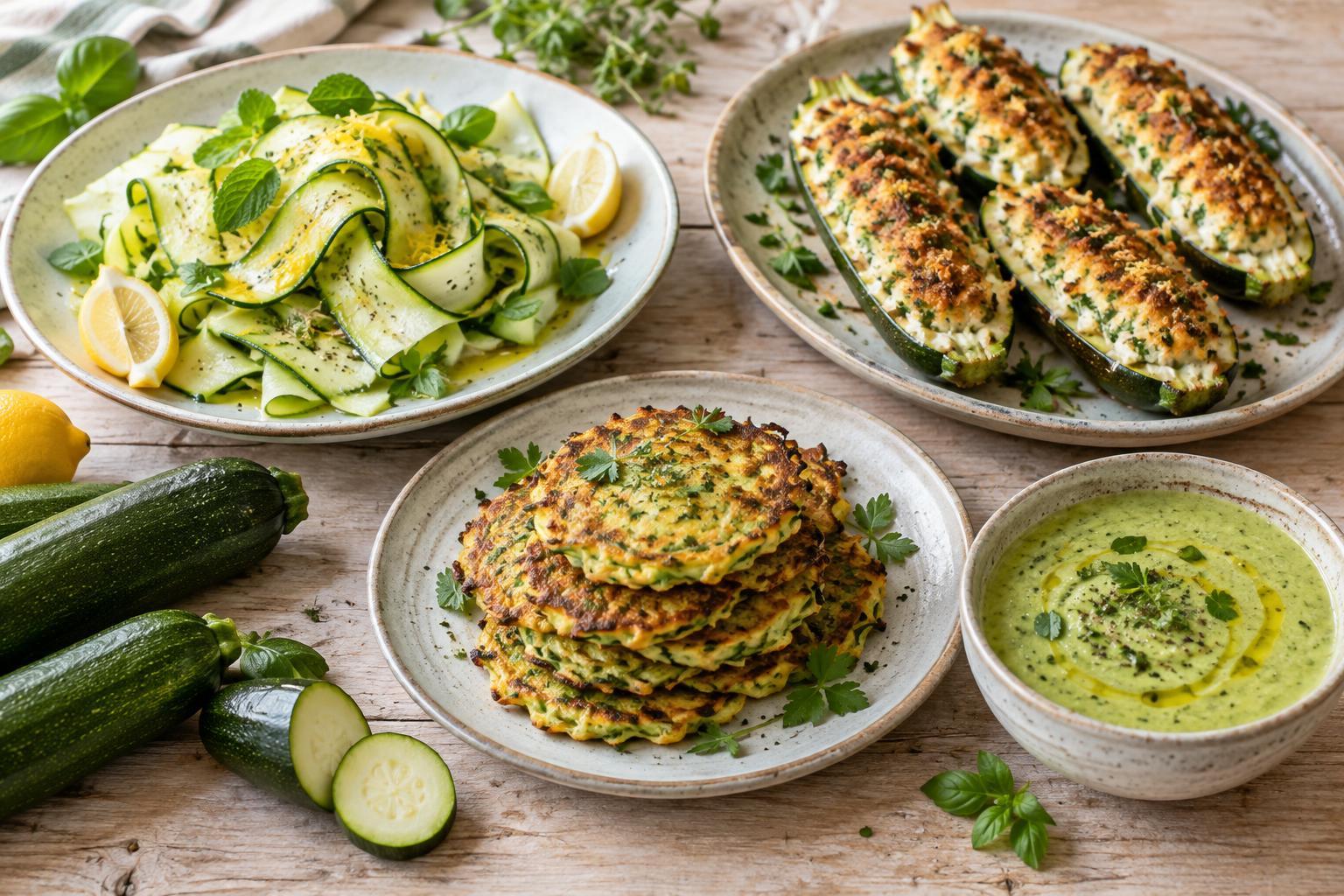
For a dish that barely needs cooking, shave small zucchini lengthwise into thin ribbons with a vegetable peeler. Toss them shortly before serving with lemon juice, olive oil, salt and something crunchy, such as toasted nuts or breadcrumbs. Add shaved hard cheese if you like. This works as a side for dinner or as the base of a lunch salad with beans or chickpeas. Dressing at the last minute helps the ribbons keep some bite.
The next day, take the same raw idea in a different direction: cut zucchini into small dice and fold it into a grain bowl with cooked farro or rice, chopped herbs and a spoonful of yogurt. The dice make the vegetable feel like part of the bowl rather than a salad laid on top. If raw zucchini is not your preference, briefly sear the dice in a hot pan and let them cool before assembling. Either way, use enough acidity and salt to give the mild vegetable a clear place in the dish.
Make heat and browning do the work
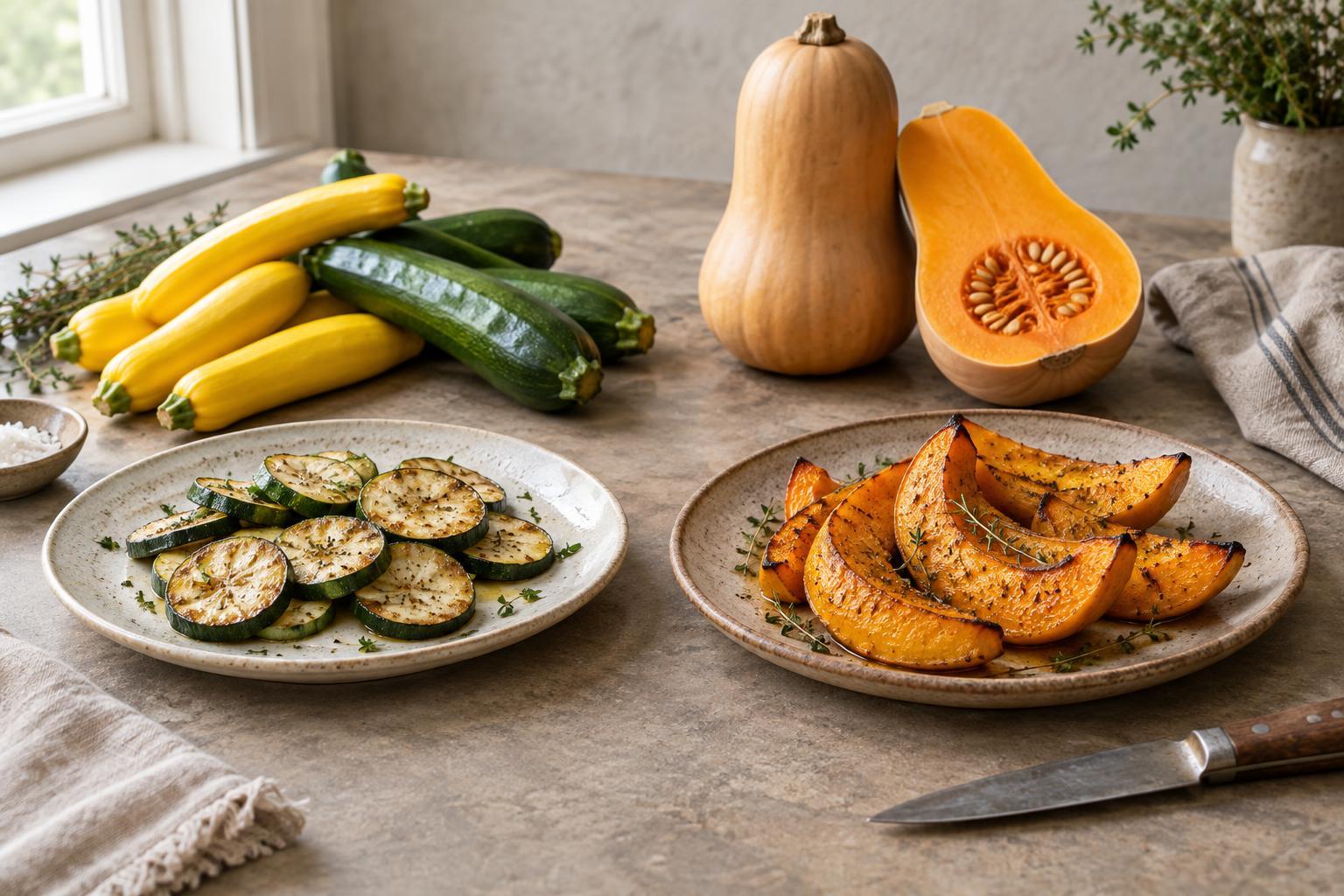
For a warm meal, cut zucchini into thick planks or half-moons, coat lightly with oil and spread it out on a hot baking sheet. Give the pieces space; a crowded tray tends to steam rather than brown. Roast until the edges take on color, then finish with a punchy topping such as garlic and lemon, or tomato and capers. Spoon the zucchini beside a simple main, or pile it over toast with a little soft cheese.
Save the larger zucchini for stuffed halves. Split them lengthwise, scoop out some of the center and roast the shells until they begin to soften. Meanwhile, cook the chopped scooped-out flesh with onion, then mix it with cooked grains, beans or leftover roasted vegetables. Fill the shells and return them to the oven until hot throughout. Compared with the roasted planks, this is a fork-and-knife supper with a substantial filling. It also gives you a useful place for small amounts of other ingredients already in the kitchen.
Grate some for fritters, then cook down the rest
Grated zucchini is handy for fritters, but its water needs attention. Salt the shreds lightly, let them stand for a short while, then squeeze them well in a clean towel. Mix with egg, a little flour, chopped scallion and herbs. Drop modest spoonfuls into a lightly oiled skillet and cook until browned on both sides and set in the middle. Serve them with yogurt and lemon for a meal that feels nothing like a roast or a salad. Make the fritters small enough to turn easily, and adjust the flour if the mixture still seems loose.
For another batch, skip the squeeze and use that moisture in a sauce. Cook grated zucchini slowly in olive oil with garlic or onion until it softens and most of the excess liquid cooks away. Add a splash of pasta water to loosen it, then toss with pasta, black pepper and cheese. The zucchini becomes a soft coating instead of a visible side vegetable. You can also cool the cooked mixture and freeze it in meal-sized portions; thaw and reheat it before adding pasta water and finishing the dish.
Build a rotation, not a backlog
A bumper crop is less daunting if you decide how much zucchini each meal can reasonably use. A raw salad may take only one or two small pieces, while a tray of roasted vegetables or a pot of sauce can handle several. Match the recipe to the amount on hand rather than forcing a delicate dish to absorb the whole harvest. If you want to bake with some, grated zucchini can add moisture to muffins or a loaf, but follow a tested recipe: batters vary in how much liquid they can accommodate.
A simple sequence keeps the week varied: eat the smallest zucchini raw, roast the next batch, stuff the largest and turn the remainder into fritters or sauce. Change the accompaniments as well as the cooking method. Crunchy toppings, creamy yogurt, grains and bright citrus each give zucchini a different role at the table. The goal is not to hide the crop; it is to let a versatile vegetable be crisp, browned, hearty or silky in turn.