Start with the fruit, not the recipe
A peach or plum can do more than add a sweet note to a summer plate. Its juice can soften a salty ingredient, its acidity can brighten a rich one, and its color can make a simple dish feel generous. The useful question is not whether stone fruit belongs in savory food, but what role a particular piece of fruit can play.
Ripeness matters. A firm, fragrant peach can be sliced neatly into a salad or set briefly on a grill. A very soft peach is better crushed into a dressing or spooned over something crisp. Plums vary widely, but many keep their shape better than ripe peaches and bring a tart edge that stands up to roasting or simmering. Taste the fruit first: a sweet plum may need vinegar, while a tart peach may need only salt to bring its flavor forward.
Where peaches work best
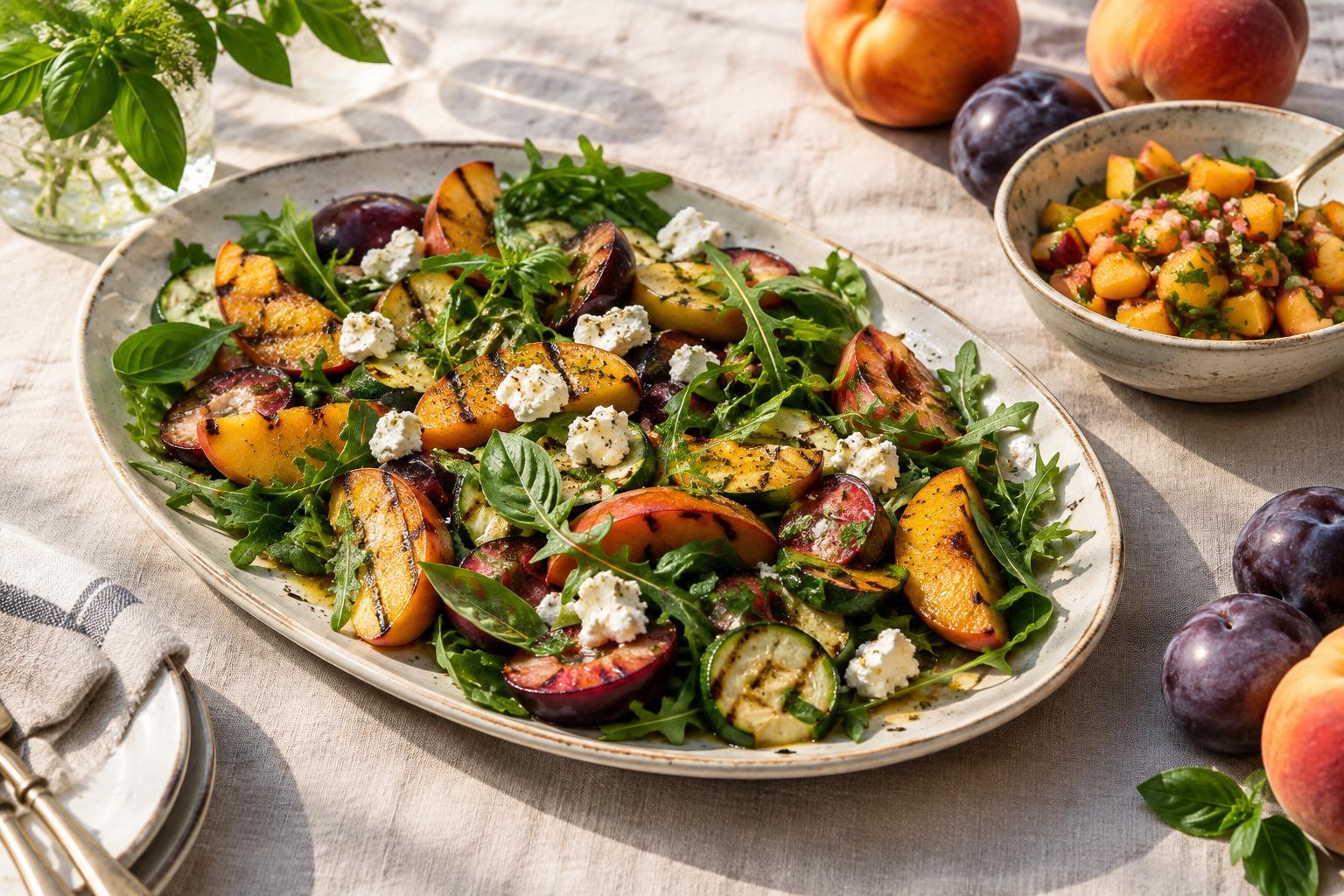
Peaches are at their best in savory dishes that leave room for their floral aroma. Try wedges with tomatoes, torn herbs and a sharp vinaigrette, or lay slices beside fresh cheese and peppery leaves. The fruit should not have to carry the whole dish; salt, herbs and a little acidity give its sweetness a clearer outline.
Firm peaches also take well to quick, high heat. Cut them into broad wedges or halves and cook just long enough to color the surface without collapsing the flesh. Serve them with grilled chicken, beans or charred vegetables, adding a bright dressing at the end. For a no-cook option, dice ripe peaches with cucumber, chili and lime for a loose salsa. Keep the pieces fairly large if the fruit is juicy, and drain off a little liquid before serving if needed.
Where plums have the advantage
Plums are especially useful when a dish needs contrast rather than softness. Their skins and tart flesh can cut through roasted eggplant, grilled sausages or a plate of rich, savory grains. Sliced raw plums bring a brisk bite to salads with cabbage, bitter greens or toasted nuts; choose fruit that is ripe enough to taste full but still firm enough to hold a clean edge.
Cooking changes their role. Roasted plum halves become tender and concentrated, making a good partner for onions, squash or other vegetables that brown well. Chopped plums can also be simmered briefly with vinegar, shallot and a little water into a spoonable sauce. Stop while some texture remains, then taste for salt. The result can sit alongside a main dish without turning it into dessert.
Build the savory balance
Stone fruit works most reliably when sweetness is one part of the plate. Salt makes the fruit taste more vivid; acid keeps it lively; herbs, alliums and mild heat give it a savory direction. Basil, mint and parsley offer different kinds of freshness, while thinly sliced shallot or scallion adds bite. Toasted seeds or nuts supply crunch when the fruit is soft.
Begin with less fruit than you think you need, then taste a forkful containing every component. If the dish seems flat, try salt or lemon before adding more fruit. If it tastes too sharp, a little oil or a creamy element may round it out. For a warm dish, add delicate fruit near the end of cooking. For a cold one, dress sturdy ingredients first and fold in soft slices just before serving so they stay distinct.
A flexible summer plate
For an easy starting point, combine one stone fruit with one substantial ingredient, one fresh element and one crisp finish. That might mean peach wedges, white beans, basil and toasted almonds, dressed with olive oil and vinegar. Or try sliced plums with roasted eggplant, parsley and crisp breadcrumbs. These are patterns rather than fixed recipes: change the herbs, grains or vegetables according to what you have.
Serve stone fruit dishes soon after assembling them, particularly when the fruit is very ripe. Juice will mingle with the dressing and soften crisp ingredients over time. Keeping fruit and crunchy toppings separate until the last moment preserves the contrast that makes these combinations appealing. Whether you choose a mellow peach or a tart plum, let its actual flavor guide the seasoning rather than asking it to behave like a different fruit.