Start with the dish, not the display
A pile of winter squash can look like a collection of interchangeable shapes, but the best choice depends on what you plan to cook. For soup, look for flesh that softens readily and blends smoothly. For stuffed halves, choose a squash with a useful hollow and a shape that will sit steadily on a baking tray. For purée, favor dense, flavorful flesh that will not turn watery once mashed or blended.
Whatever the variety, choose squash that feels firm and substantial for its size. The skin should be intact, without soft spots or deep cuts. A dry, sound stem is helpful, though a missing stem does not automatically make a squash unusable. If you are buying ahead, keep whole winter squash in a cool, dry place and check it occasionally. Once cut, wrap or cover the pieces and refrigerate them.
For soup: choose flesh that blends easily
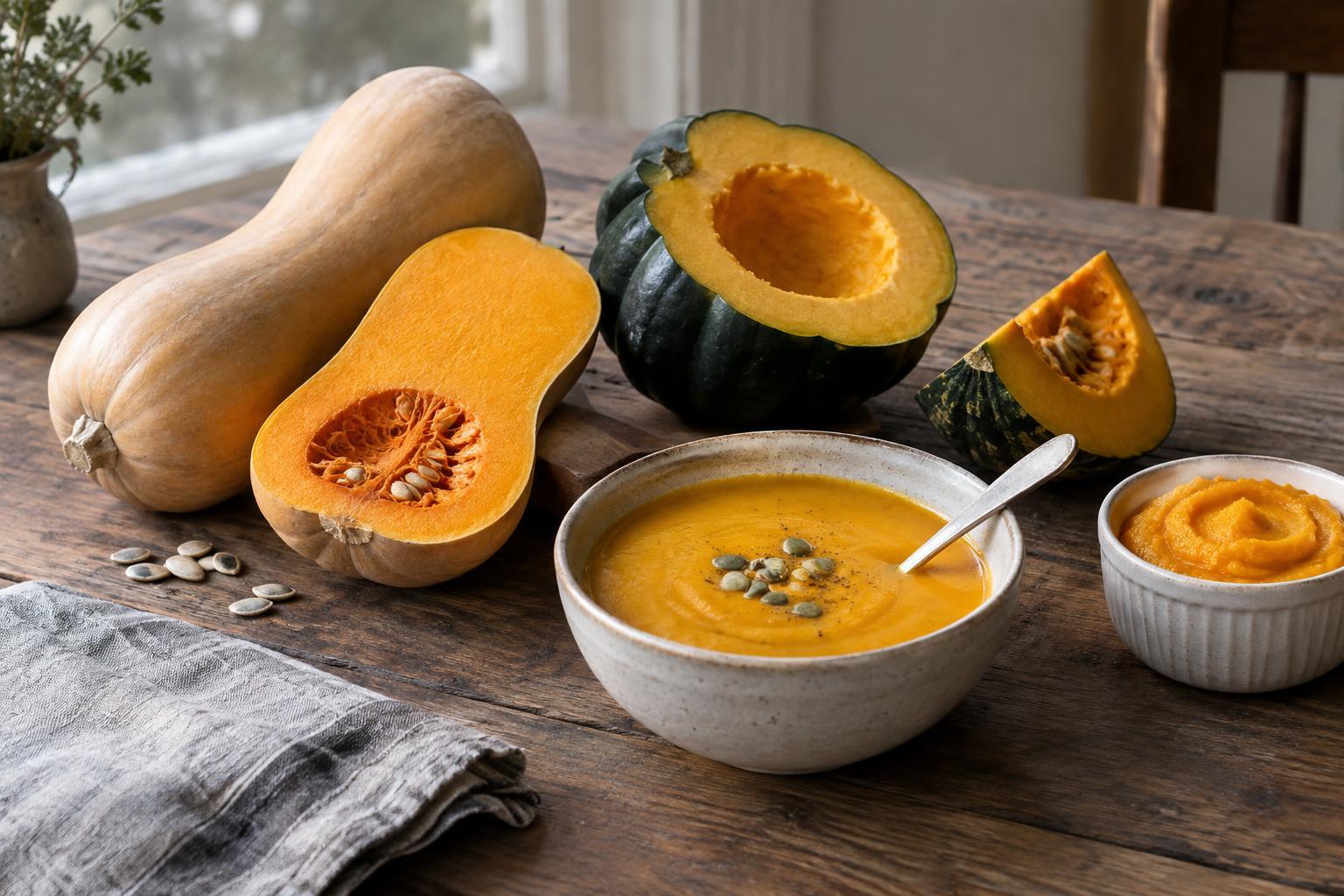
Butternut squash is a dependable starting point for soup. Its relatively smooth flesh blends readily, and its long neck provides plenty of usable squash with few seeds to remove. Its gentle sweetness works with onions, garlic and herbs, as well as warmer spices. If you want a soup that tastes distinctly of squash, begin with a modest amount of seasoning and adjust after blending.
Kabocha is another good option when you want a thicker, richer bowl. Its dense flesh can make a soup feel substantial without much added cream, though you may need more stock or water to reach your preferred consistency. Roast either squash before blending for deeper flavor, or simmer peeled cubes for a milder result. Add liquid gradually: it is easier to thin a thick soup than to rescue one that has become too dilute.
For stuffed halves: look for a stable bowl
Acorn squash is well suited to stuffing because its central cavity leaves room for a filling while the flesh forms a sturdy edible border. Small acorn squash can be halved into individual portions; larger ones may be easier to share. Check how each half rests on the tray before filling it. If it rocks, trim a very thin slice from the rounded outside, taking care not to cut through the cavity.
Delicata squash offers a different approach. Its smaller size and tender skin make it convenient for compact portions, although its narrow cavity holds less filling than acorn squash. In either case, roast the empty halves cut-side down or up until the flesh begins to soften, then add a filling that is already cooked or nearly cooked. Grains, sautéed vegetables and beans are useful choices. Return the squash to the oven until it is tender and the filling is heated through.
Consider the balance of the whole plate. A sweet squash benefits from something savory, tangy or crisp in the filling or at the table. Toasted seeds, herbs or a squeeze of lemon can provide contrast without covering up the squash.
For purée: control moisture as well as flavor
Kabocha and butternut squash both make useful purées, but they produce different results. Kabocha tends toward a dense mash with a pronounced squash flavor; butternut generally gives a smoother, softer purée. Acorn squash can also be puréed, though its shape makes it simpler to roast in halves and scoop out the flesh than to peel and cube it raw. Spaghetti squash is better saved for dishes that make use of its strands rather than for a smooth purée.
Roasting is a practical way to prepare squash for purée because it softens the flesh without adding cooking water. Let the cooked squash release steam for a few minutes, then scoop it from the skin and mash or blend. If it seems too wet, warm it gently in a pan while stirring to let some moisture evaporate. For an especially smooth texture, blend in small batches and add only as much liquid as needed to keep the mixture moving.
Winter squash varies from one specimen to the next, even within the same variety. Taste before making final adjustments: a little salt may bring its flavor into focus, while butter or olive oil can add richness. Choosing the right squash gives you a head start, but the final texture is something you can shape as you cook.