Start with the texture you want
Brassicas are useful anchors for autumn meals because one family of vegetables offers so many textures. Cabbage can turn silky in a covered pan or keep its crunch in a quick sauté. Kale softens into soups without disappearing. Cauliflower can be roasted until its edges brown, while Brussels sprouts work well when their cut sides meet a hot pan. Rather than choosing a recipe first, consider whether the meal needs something crisp, tender or deeply browned.
A few minutes of preparation make the results more predictable. Cut cabbage into wedges for roasting or thin ribbons for the stovetop. Strip tough kale leaves from their stems, then chop the stems finely if you want to cook them too. Keep cauliflower florets similar in size, and halve larger Brussels sprouts so they cook at roughly the same pace as smaller ones. Dry vegetables before roasting: excess surface water makes browning harder.
Let cooking methods do different jobs
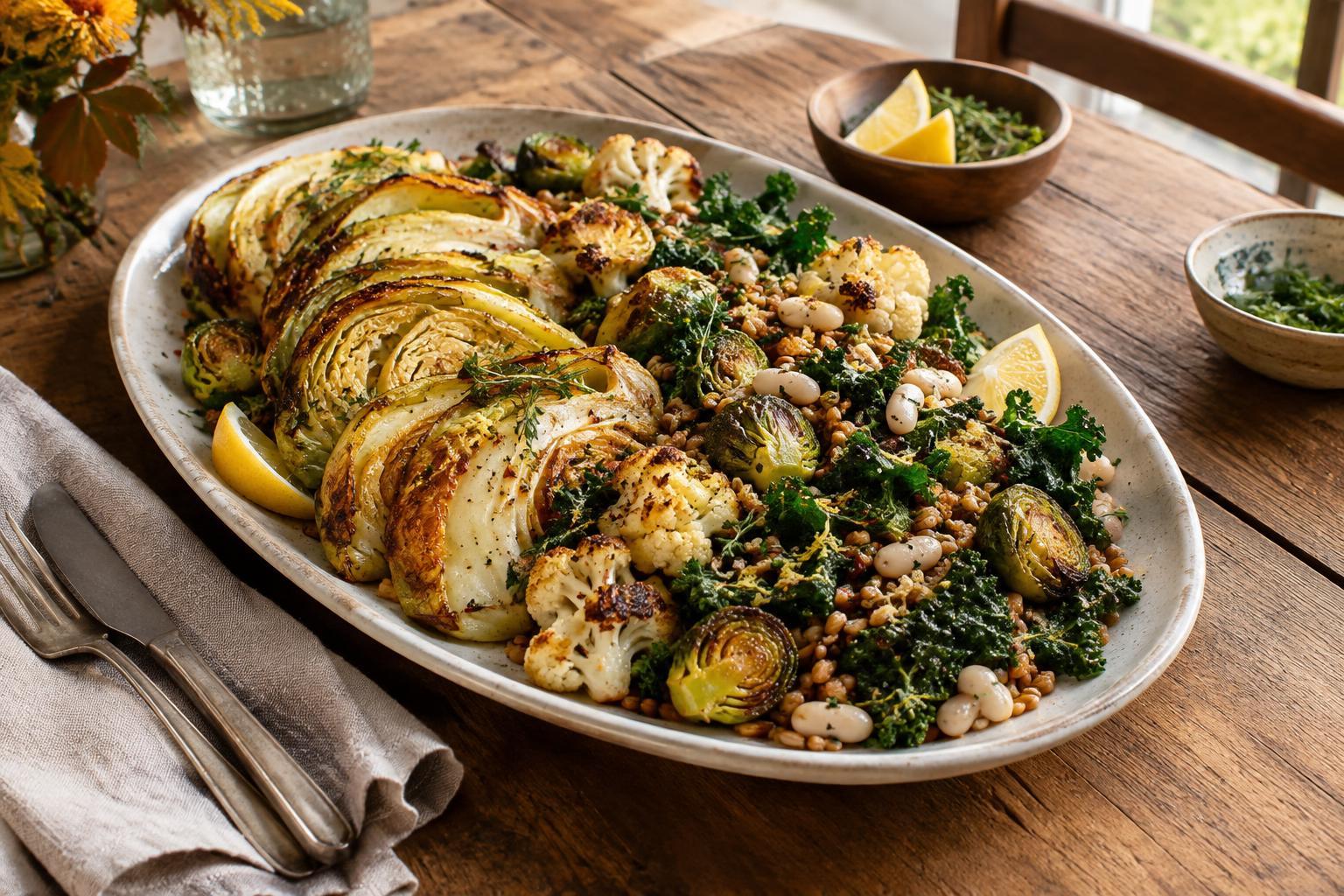
High heat gives brassicas a savory edge. Spread cauliflower, cabbage wedges or Brussels sprouts in a single layer on a generously sized tray, coat lightly with oil and season. Leave room between pieces so they roast rather than steam, and turn them once the undersides have browned. Add delicate ingredients such as chopped garlic near the end, when they are less likely to burn.
For a softer dish, begin with onion in a heavy pot, add sliced cabbage and a little liquid, then cover and cook until the cabbage reaches the tenderness you like. Kale can go into the same pot later because its leaves need less time than thick cabbage pieces. A splash of vinegar or lemon juice at the end lifts the flavor. These gentler methods are especially useful when the vegetables will be served with grains, beans or a rich main dish.
Build a meal, not just a side
A hearty autumn plate needs contrast as well as volume. Pair a generous portion of brassicas with something substantial: lentils, white beans, barley, rice, potatoes or pasta. Roasted cauliflower and chickpeas can sit over warm grains with a yogurt sauce. Cabbage and beans can simmer together into a thick, spoonable stew. Kale, folded into a pot of pasta with its cooking water and a little cheese, becomes part of the sauce rather than a separate green on the plate.
Think about what each addition contributes. Beans bring creaminess; toasted nuts or seeds add crunch; an egg can turn leftover greens and potatoes into a quick supper. If the dish feels heavy, it may need acidity rather than more salt. If it tastes sharp or austere, a little olive oil, butter or a creamy dressing can round it out. This approach makes it easier to adapt a meal to what is already in the kitchen.
Balance bitterness and sweetness
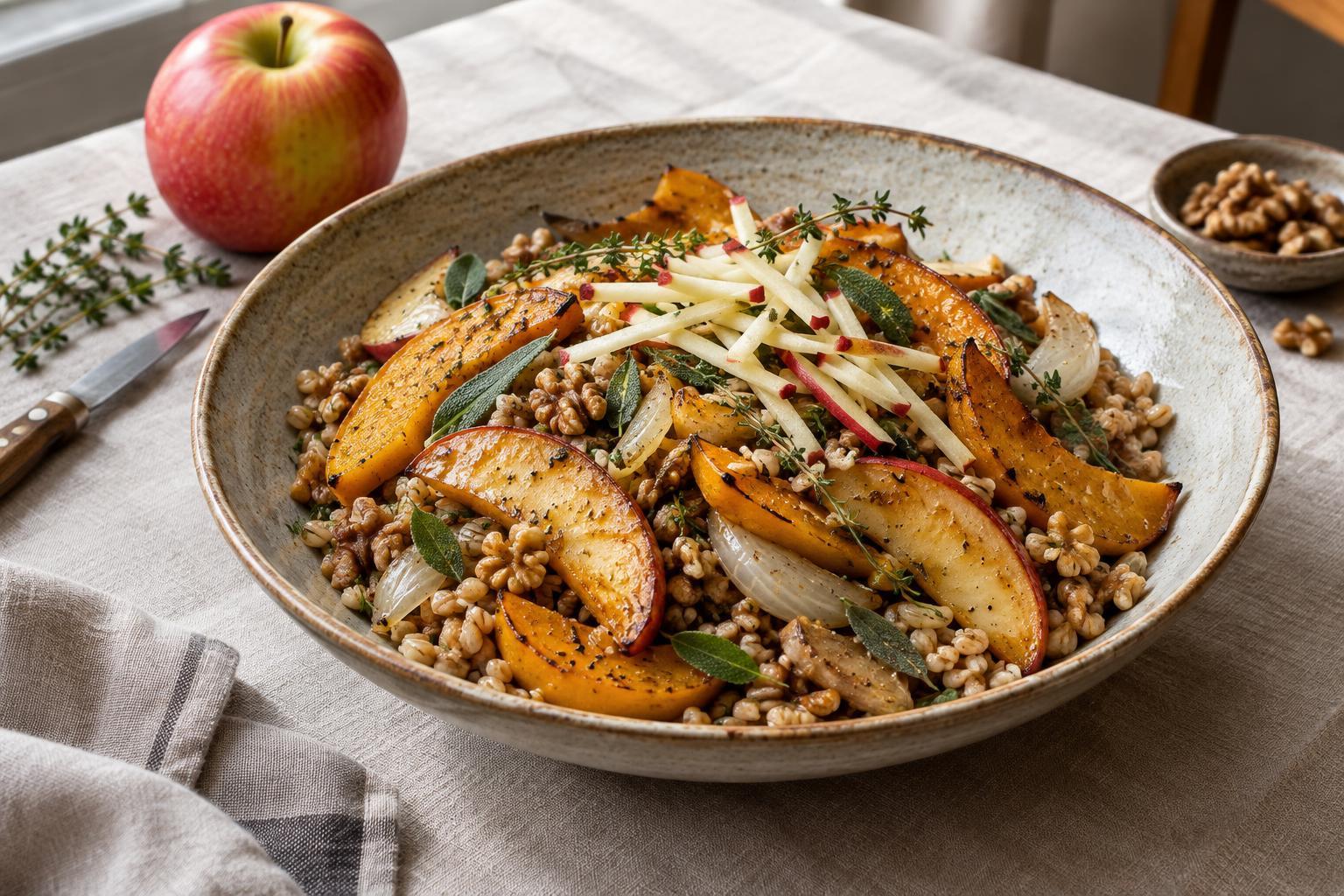
Some brassicas taste pleasantly peppery or bitter, particularly when cooked only briefly. Browning can bring out sweeter notes, but it is not the only way to make a dish feel balanced. Slowly cooked onions, carrots or apples offer gentle sweetness alongside cabbage or kale. Mustard, vinegar, citrus and pickled vegetables provide a sharper contrast. For warmth, try smoked paprika, caraway or chili, using enough to support the vegetable rather than cover it.
Consider a simple cabbage-and-apple skillet: soften onion, add sliced cabbage and cook until tender, then fold in thin apple slices near the end so they retain some shape. Finish with a small spoonful of mustard and a splash of vinegar. Serve it with potatoes and beans for a complete meal, or spoon it beside another autumn dish. The same sweet-sharp idea works with roasted Brussels sprouts, using a light dressing instead of a pan sauce.
Cook once, change the leftovers
Preparing more brassicas than one meal requires can make the next meal easier, especially if you keep sauces and crunchy toppings separate. Extra roasted cauliflower can become a filling for flatbreads with greens and yogurt. Braised cabbage can be stirred into a bean soup. Chopped cooked kale can go into a frittata or a bowl of grains. Store cooked vegetables covered in the refrigerator, and reheat them until hot when serving warm.
The best second meal does not have to repeat the first. If dinner featured soft cabbage, add something crisp the next day; if the original dish was richly roasted, pair the leftovers with a bright dressing. Brassicas are versatile enough to move between methods and meals. Their real advantage in autumn cooking is not that they demand a particular recipe, but that they offer several ways to make an everyday meal feel substantial.