Think beyond sweetness
An apple does more than sweeten an autumn dish. Raw, it can add a clean crunch where cooked ingredients feel soft or rich. Heated, it can lend gentle sweetness and a little acidity to onions, squash, cabbage, or a pan sauce. The useful question is not simply whether apples belong in a savory recipe, but what you want them to do: hold their shape, soften into the background, or brighten a finished plate.
Start with the rest of the dish. Apples pair readily with earthy vegetables, beans, grains, and roasted meats, but they work best when another flavor keeps their sweetness in check. Mustard, vinegar, lemon, black pepper, bitter greens, and salty cheese can all provide contrast. You need not use several at once. Often, a spoonful of mustard or a small splash of vinegar is enough to make an apple taste like part of dinner rather than dessert.
Choose an apple for the texture you want
For a salad or slaw, choose an apple that tastes crisp and pleasantly tart to you. Slice it shortly before serving for the freshest texture. If you need to prepare it ahead, toss the pieces with a little lemon juice or vinaigrette; this can slow browning, though it will also affect the flavor.
For roasting or sautéing, a firm apple is easier to manage because it is less likely to collapse immediately. Cut it into fairly thick wedges if you want recognizable pieces alongside carrots, onions, or squash. Thin slices or small dice are better when you want the apple to soften and mingle with other ingredients. Apple varieties can behave differently depending on ripeness and storage, so taste a piece and adjust as you cook rather than relying on a variety name alone.
Peeling is optional. The skin adds color and can help pieces keep some definition, while peeled apples blend more readily into a sauce or braise. Remove the core and seeds either way. Try to cut the apple and its companion vegetables to sizes that suit their cooking times: a large piece of raw squash will usually need a head start before small apple cubes go into the pan.
Use timing to control the result
Apples added early to a slow-cooked dish tend to soften, release moisture, and become part of the sauce. That can be welcome in a pot of braised red cabbage or a skillet of onions. If you want distinct bites of apple, add them later. In a sauté, let onions develop some color first, then add apple wedges and cook just until their cut edges soften and brown.
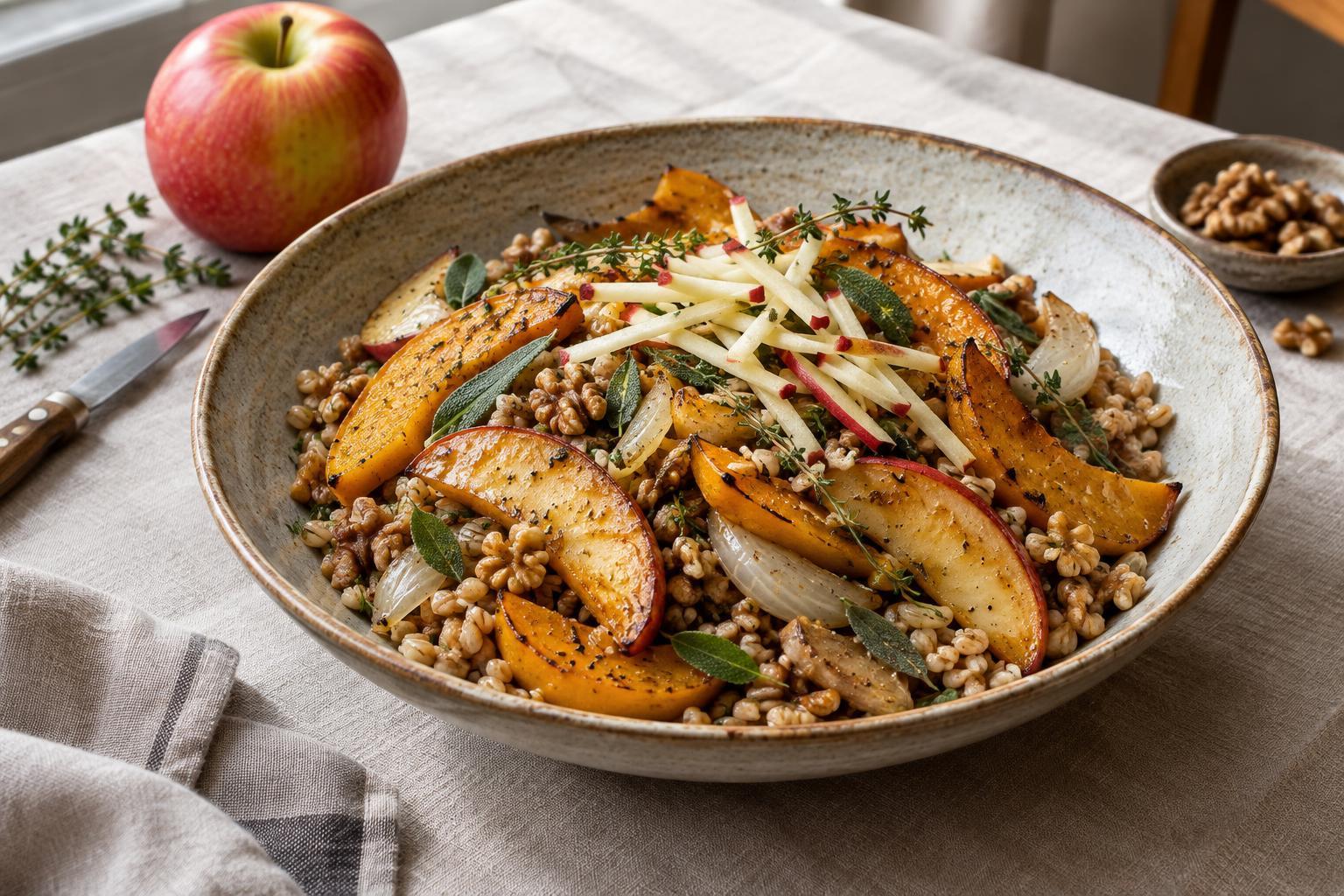
For a sheet-pan meal, roast dense vegetables first and add apple wedges partway through. Give everything room on the pan so the pieces can brown instead of steaming in their own juices. A little oil and salt are useful starting points; add herbs or spices with restraint. Sage, thyme, rosemary, and warm spices can complement apples, but too much cinnamon or clove may push the dish toward a dessert-like flavor.
Raw apple is best added near serving time when its snap matters. Scatter matchsticks over a warm grain bowl, tuck thin slices into a cabbage salad, or fold small dice into a lentil dish after it comes off the heat. The contrast between warm, tender food and cool, crisp apple is often the point.
Build a few reliable autumn combinations
For an easy vegetable side, roast carrots and red onion until nearly tender, then add apple wedges and continue cooking until the edges color. Finish with a small splash of cider vinegar and a pinch of salt. Taste before adding more acid: a tart apple may already provide enough lift.
For a heartier meal, toss cooked farro, barley, or another grain with sautéed mushrooms and onions. Add diced apple briefly to the skillet if you prefer it warm and tender, or fold it into the grains raw for crunch. Finish with parsley, toasted nuts, and a mustard vinaigrette. The grain makes the dish substantial, while the nuts and apple give it contrasting textures.
Apples also fit into a quick pan sauce. After cooking pork, chicken, or a plant-based cutlet, sauté sliced apple and shallot in the same pan. Add a little water or broth to loosen the browned bits, then stir in mustard and simmer until the liquid lightly coats a spoon. Taste for salt and acidity before serving. The goal is a savory sauce with apple in it, not a sweet glaze.
Taste for balance before serving
Because apples vary in sweetness and tartness, the final adjustment matters more than an exact pairing rule. If a dish tastes flat, try a little salt or acid. If it tastes sharp, a bit of olive oil, butter, or another rich element may round it out. If the apple dominates, add more of the savory base rather than piling on spices to hide it.
A useful finishing check is to take one forkful with every main component: apple, vegetable or grain, and dressing or sauce. Each should have a role. When the apple supplies a clear contrast without taking over, it can make an ordinary autumn supper feel thoughtfully composed.