Start with the berries you have
A berry dessert works best when its supporting ingredients respond to the fruit rather than follow a fixed formula. Taste a few berries before deciding what to make. Some are sweet enough to serve almost untouched; others are pleasantly tart and benefit from a little sugar or a creamy accompaniment. Mixing varieties can create balance, but a bowl of excellent raspberries or strawberries needs no blend to feel complete.
Sort the fruit before preparing it. Set aside crushed berries for a sauce or a quick compote, and keep the firmest, most attractive ones for serving whole. Rinse berries gently when you are ready to use them, then let them drain and pat them dry. Excess water dilutes their juice and can turn a crisp topping soft. Remove strawberry tops after rinsing so the fruit does not take on as much water through the cut surface.
Add sweetness a little at a time
Sugar should bring a berry’s flavor forward, not make every variety taste alike. If the fruit is ripe and sweet, try it plain alongside an unsweetened or lightly sweetened base. For sharper berries, sprinkle on a small amount of sugar, stir gently and taste again after a few minutes. As the fruit releases juice, you may find that it needs less sugar than you first expected.
A short rest with sugar, sometimes called macerating, creates a spoonable syrup for yogurt, cream or cake. Slice larger berries so they release juice evenly, but leave delicate raspberries and blackberries whole if you want them to hold their shape. A little lemon juice can sharpen a flat-tasting mixture; too much can make tart berries seem harsher. Add it by the drop and taste before adding more.
Choose quiet partners and useful contrast
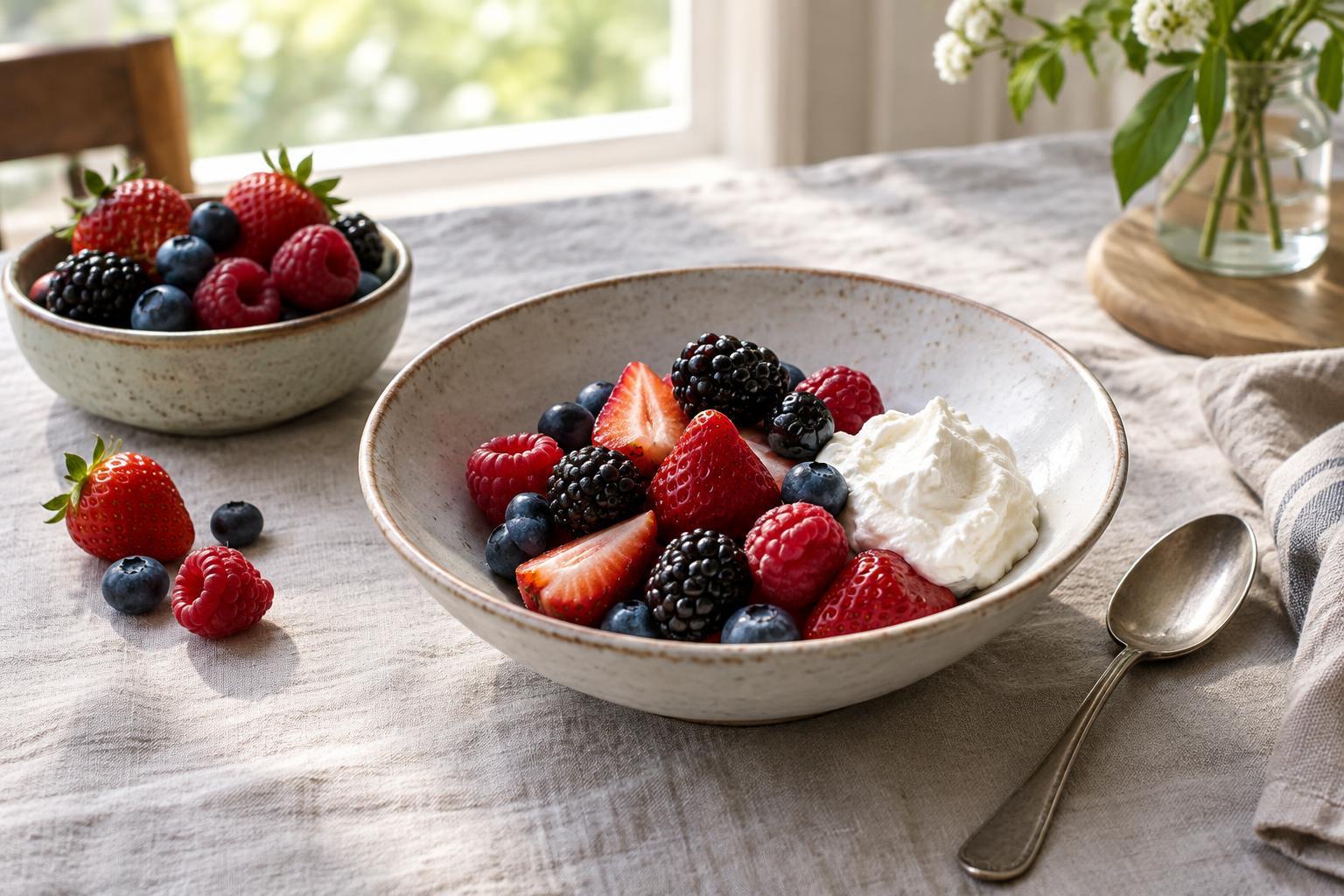
The best companions give berries something they cannot provide on their own. Plain whipped cream adds softness, thick yogurt brings tang, and a spoonful of mascarpone offers richness. Keep these elements modestly sweet so the fruit remains distinct. Vanilla can add warmth, while a small amount of citrus zest can lift the aroma without adding much liquid. Strong extracts and heavily flavored sauces are easier to overdo.
Texture matters as much as flavor. A crisp biscuit, a thin slice of toasted cake or a scattering of lightly toasted nuts makes juicy berries more interesting to eat. Choose one crunchy element rather than several competing ones. For an easy dessert, spoon berries and their juices over a dollop of cream, then add the crisp component just before serving. Each bite will have fruit, richness and a little crunch.
Use heat only when it helps
Cooking concentrates berry juices, which is useful when the fruit is very tart or needs to become a sauce. It also softens the berries and changes their fresh aroma. If you want both effects, cook only part of the fruit. Warm a handful of berries with a little sugar until they release their juices, let the mixture cool, then fold in fresh berries. The cooked portion provides a sauce while the uncooked portion keeps the dessert lively.
Baked desserts can follow the same principle. A simple cake or biscuit base can be baked first and topped with fresh berries afterward. If the fruit must go into the oven, avoid burying it under a thick layer of sweet topping. A light crumble, for example, leaves room for the fruit’s tartness to come through. Let a hot dessert cool enough to taste before adding more sweetness; temperature can affect how its flavors seem.
Assemble for the moment you serve
Fresh berries lose their neat texture when they sit against cream, syrup or a crisp crust for too long. You can prepare the components ahead, but keep them separate until serving when possible. Hold washed, dry berries covered in the refrigerator, and bring them out shortly before assembling if you prefer them less cold. Stir any collected juice back into macerated fruit gently rather than draining it away.
A useful final check is to taste one complete spoonful, not just the berries. If the cream and cake make it seem too sweet, add a few plain berries. If it seems too sharp, a little more cream may be better than more sugar. Summer berry desserts do not need elaborate decoration: a generous portion of good fruit, a restrained base and attention to timing are often enough.