Start with the sauce you want
A good sauce does more than cling to a spoon. It carries flavor, connects the ingredients on a plate and has a texture that suits the dish. A pan sauce for a seared chop might need only a little body, while a vegetable gravy should hold together when poured. Before reaching for a thickener, decide whether the sauce needs more concentrated flavor, a fuller texture or simply a small adjustment before serving.
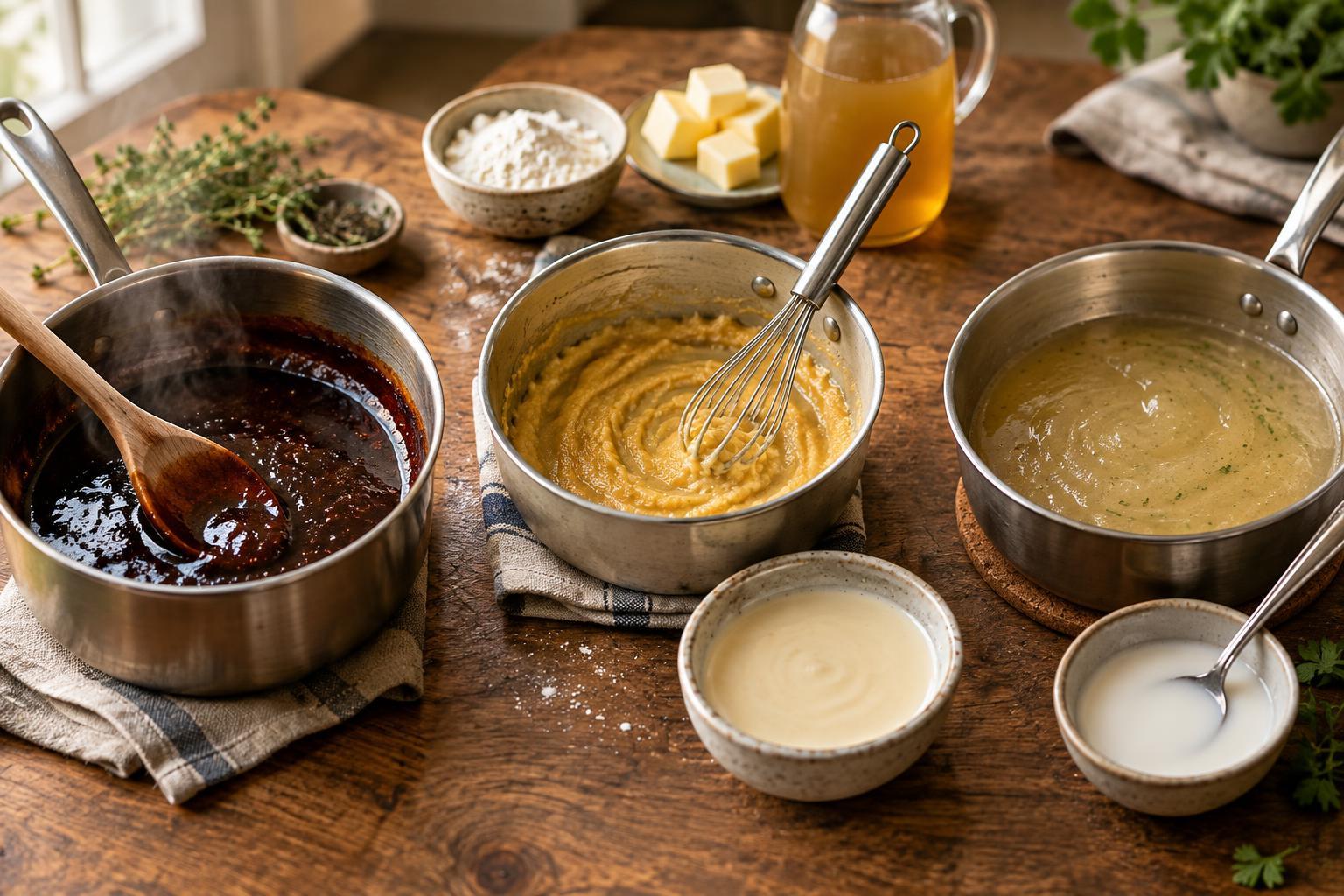
Reduction, roux and starch slurry solve different problems. Reduction removes water and intensifies what remains. A roux thickens liquid with flour cooked in fat, creating a cohesive, often opaque sauce. A slurry disperses starch in cold liquid so it can be stirred into a hot sauce for a relatively quick adjustment. The best choice depends on what is already in the pan and how you want the finished sauce to look and feel.
Use reduction when flavor needs focus
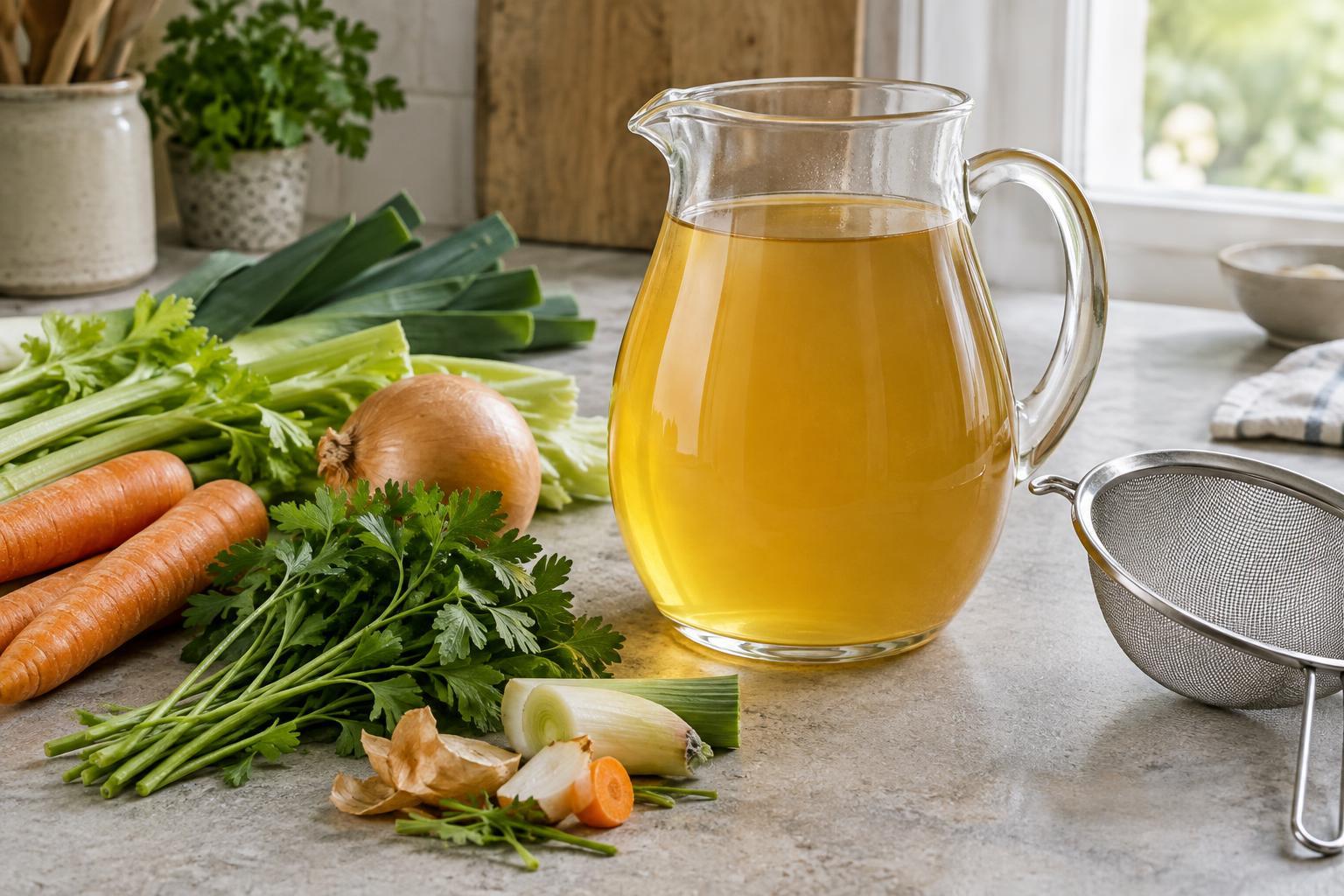
To reduce a sauce, simmer it in a wide pan so moisture can escape. Stir occasionally and taste as it cooks. As the volume falls, the sauce may become richer and more cohesive, especially if it contains stock, vegetable purée or other ingredients that already give it some body. Reduction works well for pan juices and broths that taste promising but watery.
It also concentrates salt, acidity and sweetness. If the sauce is already strongly seasoned, reducing it further may make those qualities too pronounced. Leave final seasoning until near the end, and use a gentle simmer when you want control. A very thin liquid may need to lose more volume than expected before it coats food; if the flavor is ready but the texture is not, another thickening method may be more useful.
Check the sauce off the heat as well as while it bubbles. Hot, moving liquid can look thinner than it does on the plate. If you reduce too far, add a little unsalted liquid and stir to bring it back to a pourable consistency.
Choose roux for a built-in foundation
A roux begins with flour stirred into melted fat and cooked before liquid is added. Butter is familiar, but another suitable cooking fat can work. The flour should be evenly coated and heated long enough to lose its raw taste. A pale roux provides thickening with a relatively mild flavor; cooking it darker brings a deeper, toasted character but generally gives it less thickening power.
Roux is a useful starting point for gravies and sauces made with milk, stock or cooking juices. Add the liquid gradually at first, whisking until each addition is smooth. Once the mixture loosens, the rest can go in more readily. Let the sauce simmer gently, stirring along the bottom of the pan, until the flour is cooked and the texture is even.
This method is less convenient when a sauce is already finished and needs only a last-minute correction. Adding raw flour directly to hot liquid tends to create lumps. Roux also changes the sauce’s character: it usually gives more opacity and weight than reduction or a light starch thickening.
Reach for a slurry for a small, late adjustment
A starch slurry is starch mixed thoroughly with cold water or another cold liquid before it meets the hot sauce. Cornstarch is a common choice. Stir the slurry again just before adding it, because starch settles quickly. Pour in a little while stirring the simmering sauce, then give it time to thicken before deciding whether it needs more.
A slurry is handy when the flavor is already where you want it and continued reduction would make the sauce too salty or sharp. It can also give a glossier appearance than a flour-thickened sauce. Use a light hand: too much starch can make the texture pasty or gel-like. Avoid judging the result the instant the slurry goes in; the sauce needs to heat through before its final thickness becomes clear.
Starch-thickened sauces can change texture as they cool or sit. If a sauce must wait, aim for slightly less thickness than you want at the table, then check it again during gentle reheating. A splash of liquid and a thorough stir can often restore its flow.
Make the final adjustment deliberately
Whichever method you use, add thickness in stages. A spoonful of sauce should coat its surface without forming a heavy paste; when poured, it should move freely enough for the dish. Those are guides, not rules. A sauce for noodles may need to be looser than one spooned over roasted vegetables.
If the texture is right but the sauce tastes flat, thickening it further is unlikely to help. Try tasting for salt, acidity or richness instead. If it tastes balanced but runs off the food, choose the thickening method that changes its flavor the least. Thinking of flavor and texture as separate decisions makes it easier to stop at the right moment.