Start with a purpose, not a scrap bag
Vegetable stock is a way to give soups, grains, sauces, and braises a savory foundation. It does not need to taste like a finished soup on its own. In fact, a restrained stock is often more useful: you can season and shape it later to suit the dish. The goal is a clean, rounded flavor in which no single vegetable dominates.
Scraps can help, but freshness matters more than thrift. Save clean carrot ends, celery leaves and stalk pieces, leek greens, and onion trimmings if they are still sound. Wash away grit, especially from leeks and celery, and discard anything slimy, spoiled, or strongly scented from a long stay in the refrigerator. A stockpot will concentrate those flavors rather than hide them.
Build a balanced mix of vegetables
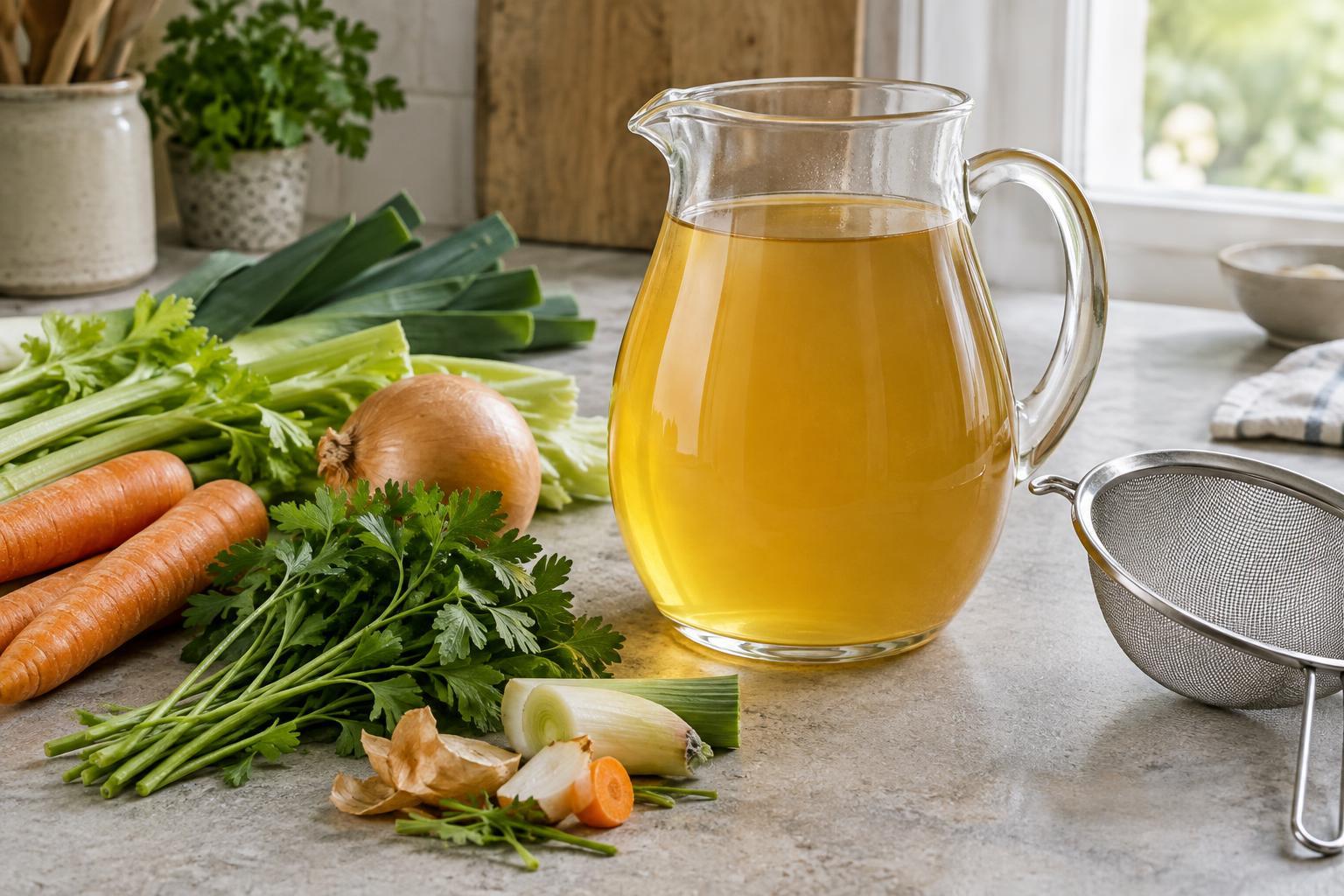
For a straightforward batch, begin with roughly equal parts onion, carrot, and celery, then add a little leek or a few mushroom stems if you have them. Cut large pieces into manageable chunks so they fit under the water; precise knife work is unnecessary. A parsley stem or small thyme sprig can add a gentle herbal note. Keep the mix simple on your first attempt so you can recognize what each ingredient contributes.
Some vegetables need a lighter hand. Broccoli, cabbage, Brussels sprouts, and other brassicas can make a stock assertive or sulfurous, particularly when cooked for too long. Beet scraps bring strong color and earthiness; potato peels and starchy scraps can cloud the liquid. Tough herb stems, large amounts of pepper, and dark onion skins can also pull the flavor away from a neutral stock. Save these ingredients for a deliberately flavored broth rather than adding them automatically.
Use enough water and a gentle simmer
Put the prepared vegetables in a pot and add cold water to cover them by an inch or two. More water makes a lighter stock; less water makes one that is more concentrated. Bring the pot just to a simmer, then lower the heat so only small bubbles rise now and then. A hard boil breaks down soft vegetables and can leave the stock cloudy, with a cooked-out taste.
Simmer for about 30 to 45 minutes, tasting a spoonful as the flavor develops. Vegetable stock usually does not benefit from the long cooking used for some meat stocks. Once the liquid tastes pleasantly savory, strain it. If it starts to taste flat, bitter, or overly sweet, more time in the pot is unlikely to improve it. Leave salt out, or use very little, when you plan to reduce the stock or use it in several different recipes.
Strain without pressing
Pour the stock through a fine-mesh strainer into a clean container. Let the vegetables drain, but avoid mashing them against the strainer: pressing forces soft particles into the liquid and can give it a muddy texture. Clear does not have to mean perfectly transparent. A slight haze is harmless in most home cooking; what matters is a clean taste.
For a clearer stock, line the strainer with a clean, damp cloth and pour slowly. This extra step is useful for a delicate broth or sauce, but unnecessary when the stock will become part of a hearty soup. Cool the strained stock promptly in shallow containers before refrigerating it, and freeze portions you will not use soon. Small portions are convenient for loosening a pan sauce or cooking a modest amount of grains.
Adjust the next batch with what you taste
If the stock is bitter, think first about the ingredient mix and cooking time. Try fewer strong greens and brassicas, use fresh trimmings, and strain sooner next time. If it tastes muddy, wash the vegetables more thoroughly, skip starchy scraps, keep the simmer gentler, and do not press the solids. If it tastes too sweet, reduce the proportion of carrots and onions rather than trying to cover the sweetness with salt.
A weak but otherwise pleasant stock is still useful. You can simmer the strained liquid briefly to concentrate it, or use it wherever a subtle background flavor is enough. Making note of what went into the pot will help you repeat a batch you liked. The most reliable recipe is a modest one: a few clean vegetables, enough water to cover, gentle heat, and the willingness to stop when it tastes good.