What al dente feels like
Al dente describes pasta that is cooked through but still offers a little resistance when bitten. It should feel pleasantly firm, not hard or powdery in the center. The best way to find that point is to taste a piece. Package times are useful as a reminder to start checking, but the shape of the pasta, the vigor of the boil, and your preferred texture all affect the result.
If the pasta will spend another minute or two simmering in sauce, drain it just before it reaches the texture you want on the plate. It will continue to cook as it absorbs liquid in the pan. For a sauce that is simply tossed with pasta off the heat, cook it closer to its final texture before draining. This small adjustment helps you avoid noodles that turn soft while you are trying to coat them.
Start with the pot
Use a pot large enough to let the pasta move freely, and stir soon after adding it to boiling water. Stir again during the first few minutes, when pieces are most likely to stick together. Salt the water so the pasta itself has flavor, keeping in mind that the sauce may also contain salty ingredients. There is no need to add oil to the pot; stirring does more to prevent sticking, and oil can make the pasta harder to coat later.
Keep the water at a steady boil and begin tasting before the package’s suggested cooking time is up. A strand or piece sampled from the pot tells you more than a timer alone. Different shapes can have thicker edges, seams, or centers, so bite through the thickest part when checking. Fresh pasta generally cooks much faster than dried pasta, while gluten-free varieties may need especially close attention because their texture can change quickly.
Why the cooking water matters
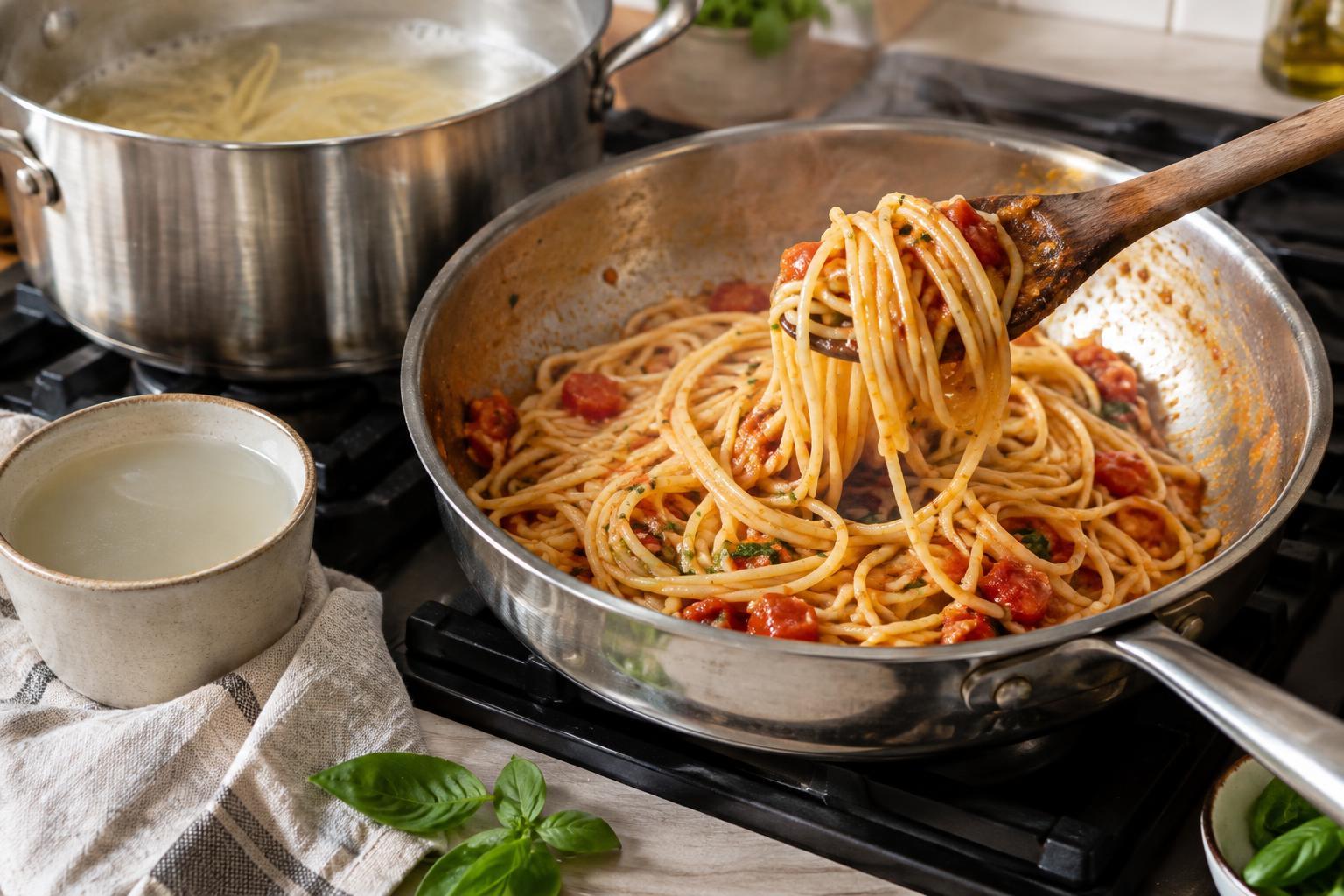
As pasta cooks, some starch enters the water. A splash of that cloudy liquid can loosen a sauce without thinning it in quite the same way as plain water. Combined with stirring or tossing, it helps distribute oil, butter, or cheese through the liquid so the sauce coats the pasta more evenly. The effect varies: water from a crowded pot may be starchier than water from a very large pot.
Before draining, scoop out a mug of cooking water and set it near the stove. A ladle or heatproof cup works well. Save it before you tip the pot into a colander; remembering afterward is much harder. Do not rinse pasta destined for a warm sauce, since rinsing removes surface starch and cools the noodles. A cold pasta salad may call for a different approach, but for a hot dish, move promptly from pot to pan.
Bring pasta and sauce together
Have the sauce warm and ready in a wide pan before the pasta finishes cooking. Transfer the drained pasta to the pan and add a small splash of reserved water. Toss or stir over gentle heat, watching how the sauce changes. If it looks tight or sits in clumps, add a little more water. If it looks watery, keep tossing briefly so the pasta absorbs some liquid and the sauce reduces.
The goal is not a pool of sauce under a heap of pasta. It is a coating that reaches the curves, ridges, and hollow spaces of each shape. For a simple olive oil sauce, pasta water and steady tossing can help the oil spread rather than collect at the bottom of the pan. With a tomato sauce, the same water can make a thick sauce easier to distribute without losing the flavor already in the pan.
Adjust for the sauce in front of you
Cheese-based sauces need particular care. Let the pan cool slightly or move it off the heat before adding finely grated cheese, then toss with small amounts of pasta water. High heat can make cheese clump instead of forming a smooth coating. Butter sauces also benefit from gradual additions of water and active tossing. Start with less liquid than you think you need; you can always add another splash.
Taste the finished pasta before serving. Reserved water carries salt as well as starch, so repeated additions may change the seasoning. If the pasta is firm but the sauce needs more time, a little water can give you room to toss without letting the pan dry out. If the noodles are already tender, finish quickly and serve. Al dente cooking and starchy water are connected techniques: one leaves the pasta ready for its final moments in the sauce, and the other helps make those moments count.