Decide what plating will accomplish
Plated service means assembling each guest’s dish before bringing it to the table, rather than setting out serving bowls for everyone to share. It works especially well when a dish has several components that look or eat better in a particular arrangement. It can also make a small table feel less crowded. It does not require intricate presentation: a portion of the main dish, a side, and a finishing touch are enough.
Choose the scope before you cook. You might plate only the first course and serve the rest family-style, or plate every course for a smaller group. If guests are choosing their own portions or building their own combinations, shared dishes may be more comfortable. The aim is to make eating pleasant, not to impose a restaurant routine on a relaxed evening.
Set up the plates and the workspace
Before guests sit down, count the plates and decide where you will assemble them. Clear a stretch of counter near the food, with enough room to arrange the plates in a row. Put serving spoons, tongs, a clean cloth, and any finishing ingredients within reach. Check the route to the table, too: a crowded counter or a blocked doorway can make the final trip harder than the plating itself.
Match the plates to the food. A shallow bowl can contain a saucy dish more reliably than a flat plate, while a plate with some open space makes a meal easier to carry without touching the food. If you want warm plates for hot food, warm them gently using a method suitable for the dishes; avoid anything too hot to handle. Keep plates for chilled dishes cool if that suits the course. Above all, have them ready before the food is finished.
Cook for the moment of service
Work backward from the point when everyone will eat. Prepare components that hold well first, such as a sauce, cooked grains, or vegetables that can be warmed briefly. Leave delicate steps, such as crisping, tossing a dressed salad, or adding a cold topping, until near the end. A dish with one last-minute element is usually easier to serve than one with several things demanding attention at once.
Arrange the ingredients in plating order before you begin. For example, keep the sauce beside the plates, the main component next to it, and the garnish at the end of the line. If a component needs to stay hot or cold, keep it appropriately stored until you need it rather than letting finished plates wait on the counter. Tell guests when the meal is nearly ready so that plated food can go straight to the table.
Build each plate simply and consistently
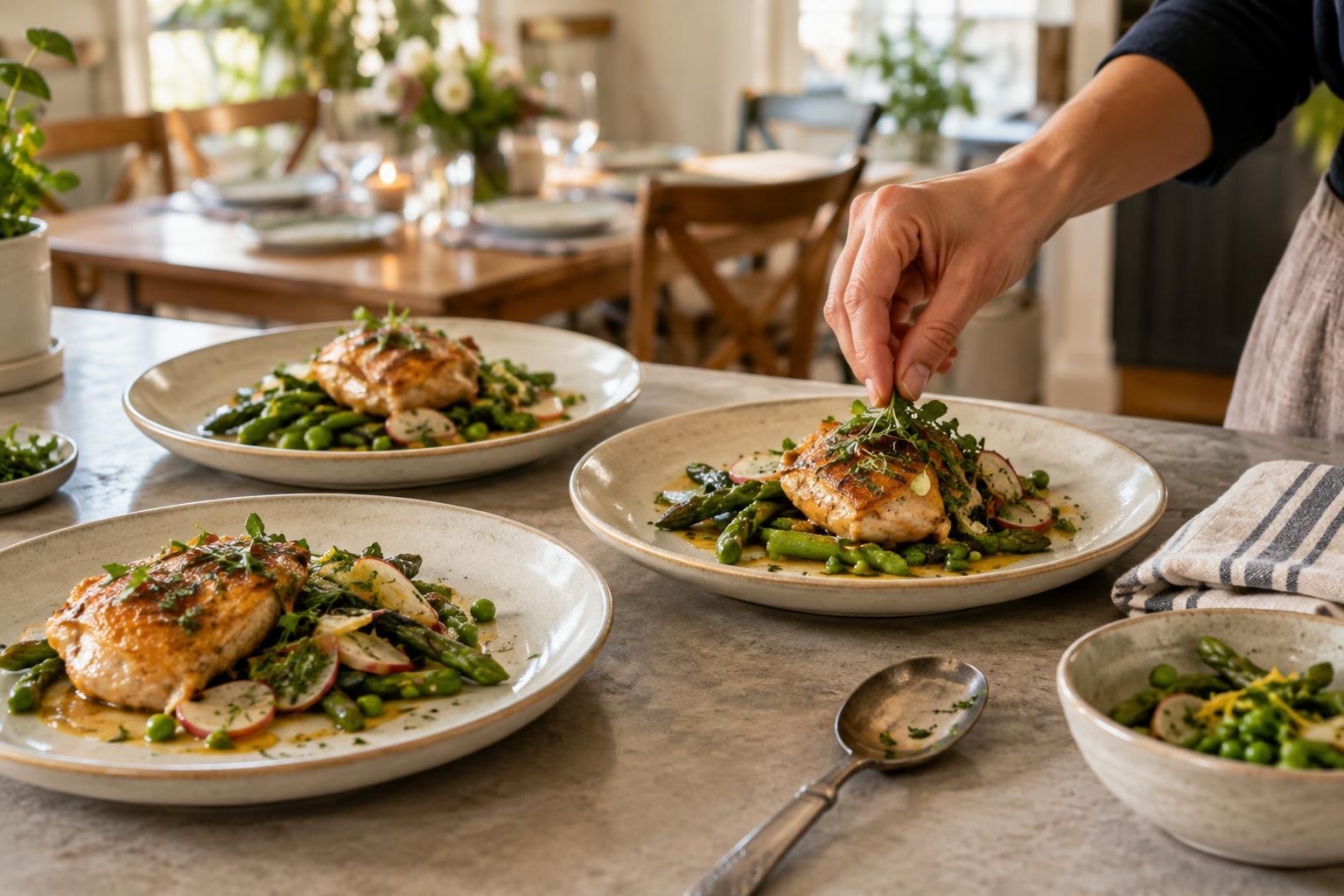
Start with the component that gives the dish its shape, then add sides and sauce. Plating the same element on every dish before moving to the next helps portions stay reasonably even. It also makes it easier to notice whether you have enough of a garnish or side for everyone. You need not make the plates identical, especially if guests have different preferences, but a consistent sequence helps you keep track.
Think about what will happen between the counter and the first bite. Keep crisp foods away from wet sauces when possible, and add fragile herbs or crunchy toppings last. Use a spoon for small amounts of sauce rather than pouring from a large pan over finished plates. If a rim gets marked, wipe it with a clean cloth. These small choices make the food easier to carry and more enjoyable to eat; elaborate decoration is optional.
Bring the dishes out without rushing
Plan how many plates you can carry comfortably. Two steady trips are better than one precarious trip, and a tray is useful only if you can handle it securely. For hot dishes, avoid a long gap between the first plate reaching the table and the last. If you are serving alone, a guest may be happy to help carry plates, but there is no need to turn dinner into an assigned task.
Once everyone has a plate, let the meal take over. Keep extra sauce or a simple side available if someone wants more, and resist returning to the kitchen to adjust a garnish. Good plated service at home gives the cook a clear finishing routine and gives guests a dish they can enjoy right away. Its best result is not a perfect-looking plate, but more time together at the table.