Start with a menu that can wait
The easiest way to manage serving temperature is to think about it before cooking begins. Some dishes are forgiving: a grain salad can taste good cool or at room temperature, while a covered stew often stays enjoyable longer than thin slices of quickly cooked meat. A crisp topping, delicate sauce, or frozen dessert has a shorter window. If several dishes need immediate attention, guests may spend more time waiting than eating.
Choose one or two items that deserve a last-minute finish, then surround them with dishes that can be prepared ahead. A platter of roasted vegetables, a bowl of sturdy salad, and a warm main dish make a simpler sequence than several separate pans that all need to arrive piping hot. When planning, ask what each dish should feel like at its best—not whether every item needs to be served at the same temperature.
Use serving vessels to your advantage
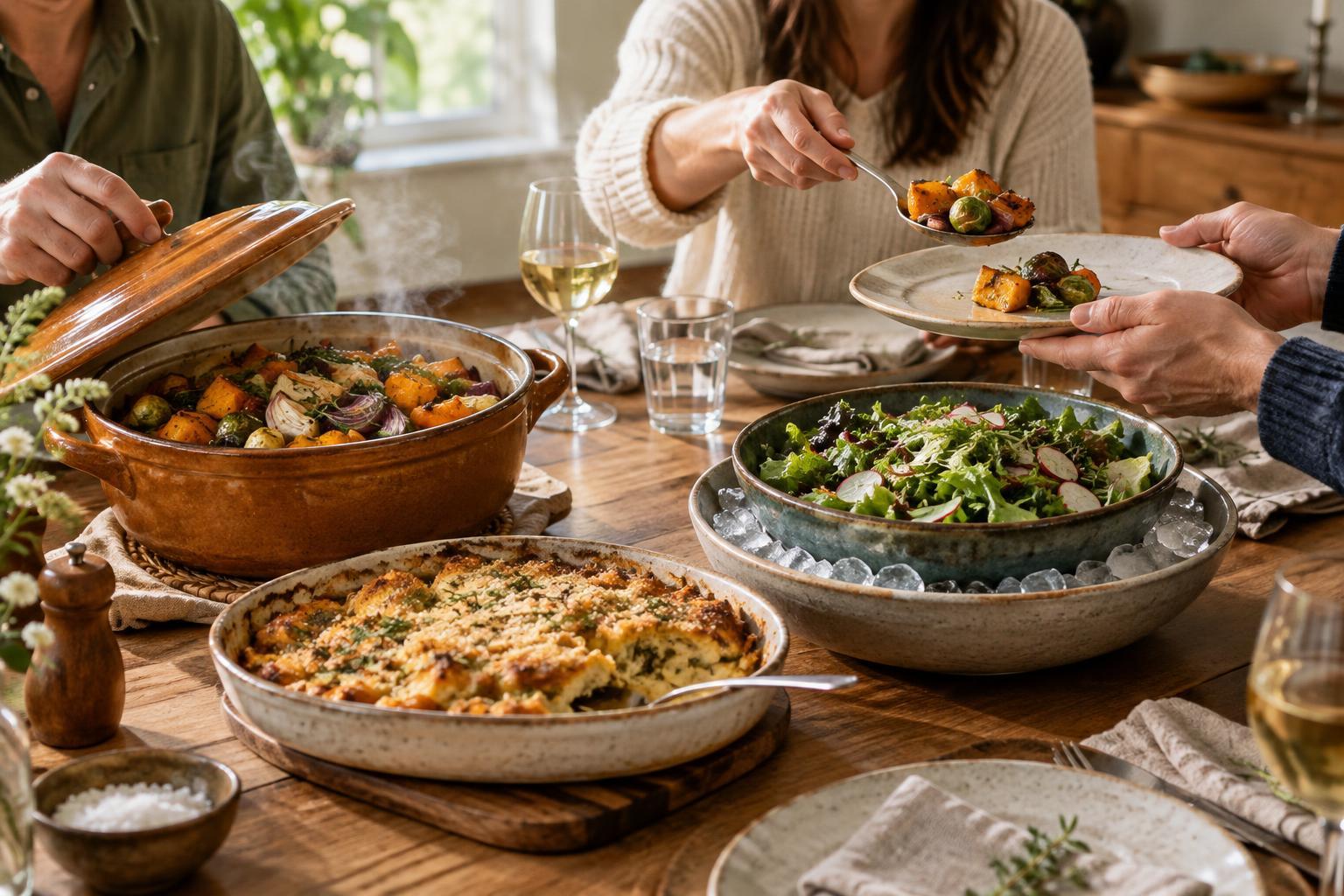
A hot dish loses heat as soon as it meets a cool platter. If the material is suitable, gently warm serving bowls or plates before adding cooked food. Handle them with care and let guests know if a vessel is hot. Lids help retain warmth and moisture, especially for rice, braises, and other dishes that are easy to uncover at the table. For foods meant to stay crisp, though, a tight lid can trap steam and soften the surface; bring those out close to serving instead.
For chilled dishes, keep the serving bowl in the refrigerator until it is needed. A cool vessel is useful for salads, fruit, and dips, but it does not replace proper chilling for ingredients that need it. If a bowl must sit out for a while, consider setting out a smaller portion and keeping the rest refrigerated. A towel beneath a cold bowl can also catch condensation and keep the table comfortable.
Serve in rounds rather than all at once
A shared table does not require every dish to appear together. Start with foods that tolerate a pause, then bring out the hot centerpiece when guests are ready to eat it. Save especially fragile items—such as toast, crisp pastry, or a sauce that changes texture as it cools—for the moment they will be passed around. This creates a natural rhythm without turning dinner into a rigid sequence.
Smaller platters can work better than one large presentation. Put out enough for a first round, then replenish from the kitchen as needed. The food left behind can stay covered, warm, or chilled as appropriate, rather than spending the whole meal on the table. It also leaves room for serving spoons and makes a crowded table easier to navigate.
Make passing food easy
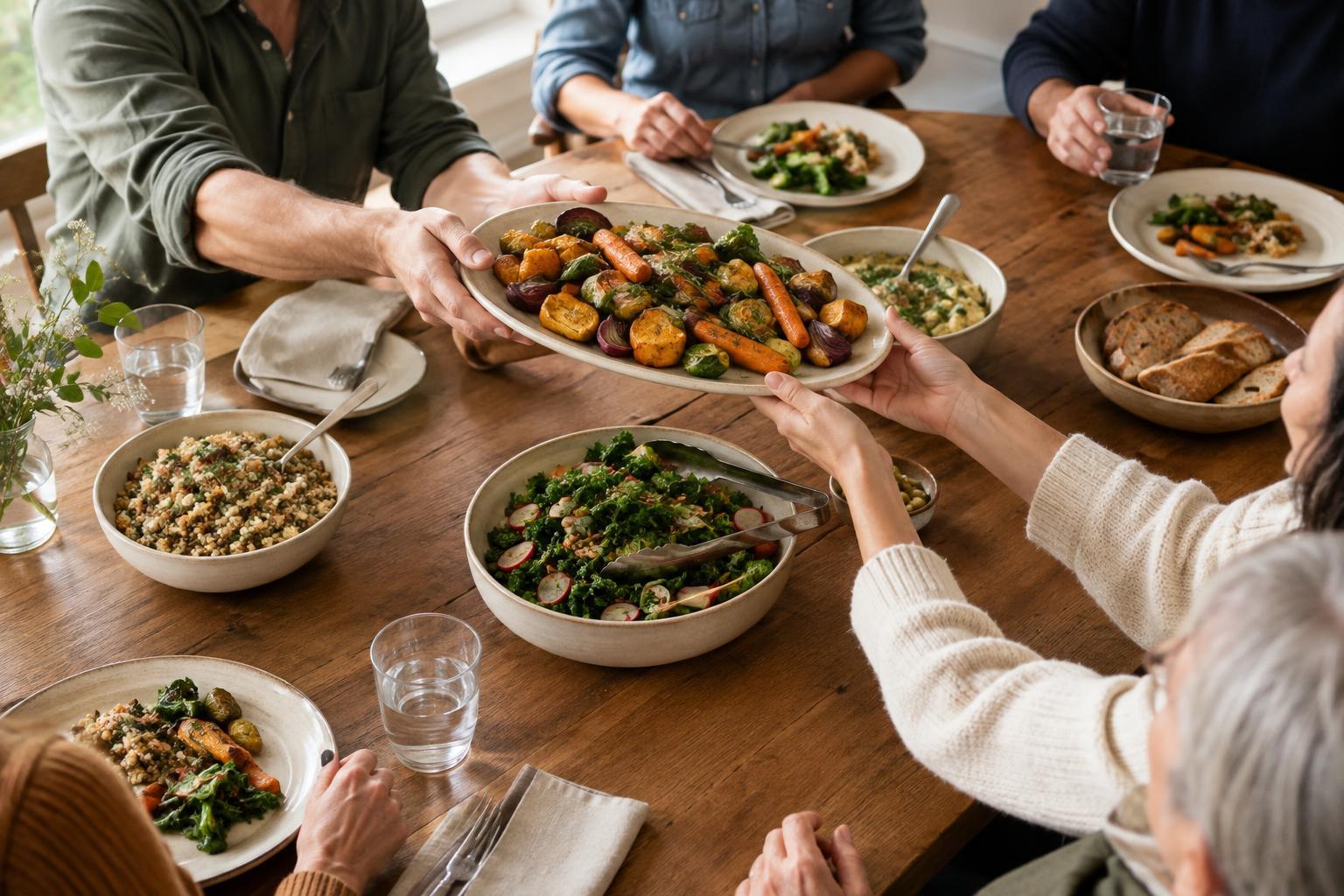
Temperature is only part of the experience. A dish can cool while everyone searches for a spoon or waits for a platter to travel the length of the table. Give each shared dish its own utensil, place frequently requested foods within easy reach, and use more than one small bowl for an accompaniment if the table is long. A trivet provides a clear landing place for a warm vessel and protects the surface beneath it.
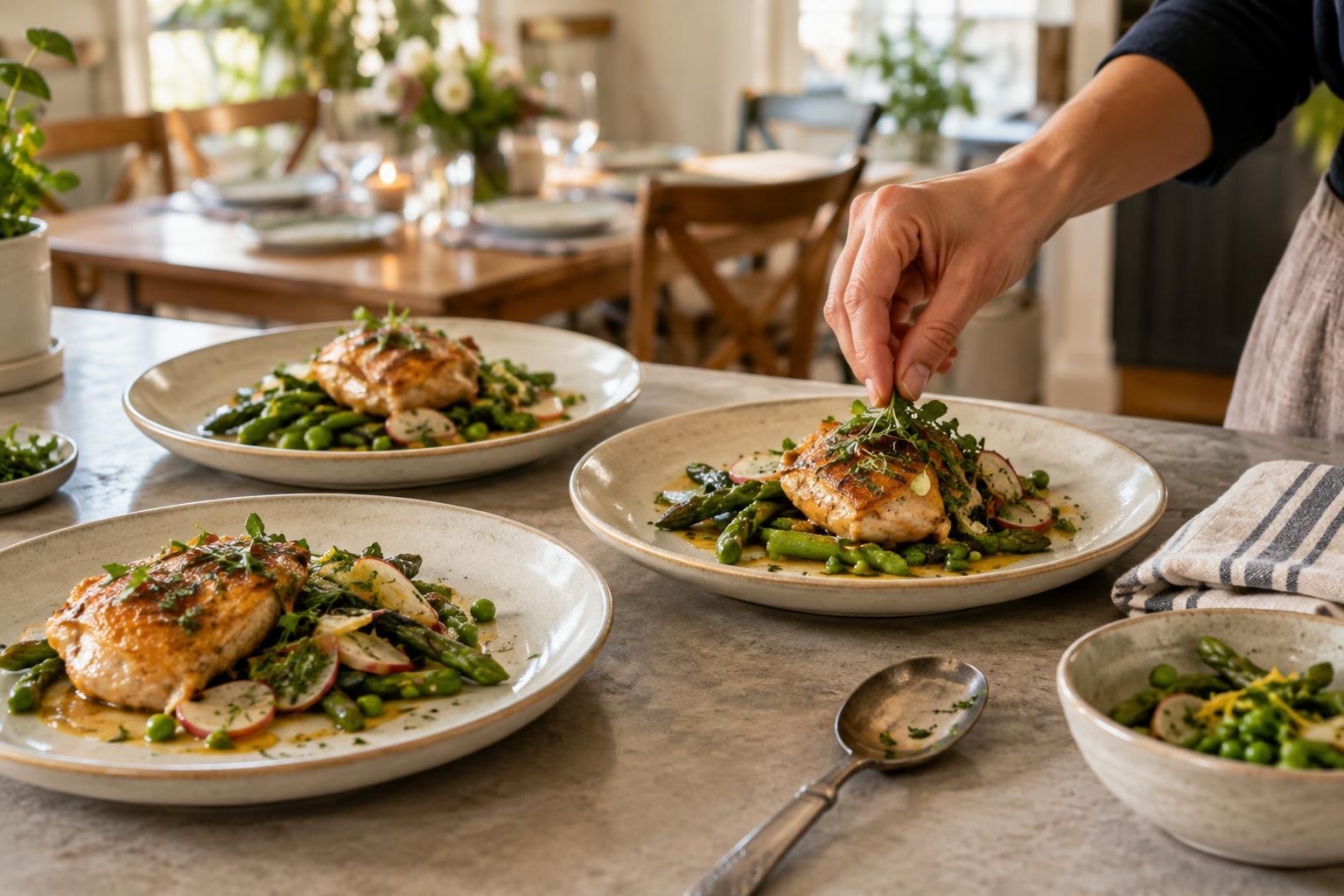
Keep finishing touches separate when they benefit from it. Herbs, toasted crumbs, or a squeeze of citrus can be added as people serve themselves, helping a dish feel fresh even after its first trip around the table. If a sauce is best warm or cool, serve a modest amount first and refill it rather than leaving the entire batch out.
Know when to clear and store
Pleasant serving temperature and food safety are related, but they are not the same thing. A covered bowl may still feel warm after sitting out, and a dish resting on a cool surface may not be cold enough for safe storage. Follow applicable food-safety guidance for holding and storing perishable foods. Avoid treating an insulated container or an ice-filled serving setup as permission to leave food out indefinitely.
At the end of the meal, clear perishable dishes promptly and refrigerate leftovers in suitable containers. This is easier if the table was served in smaller rounds: untouched portions may already be where they belong. The goal is not to monitor every plate, but to give each dish a good moment at the table—and a sensible next step when that moment has passed.