Plan the route before the food arrives
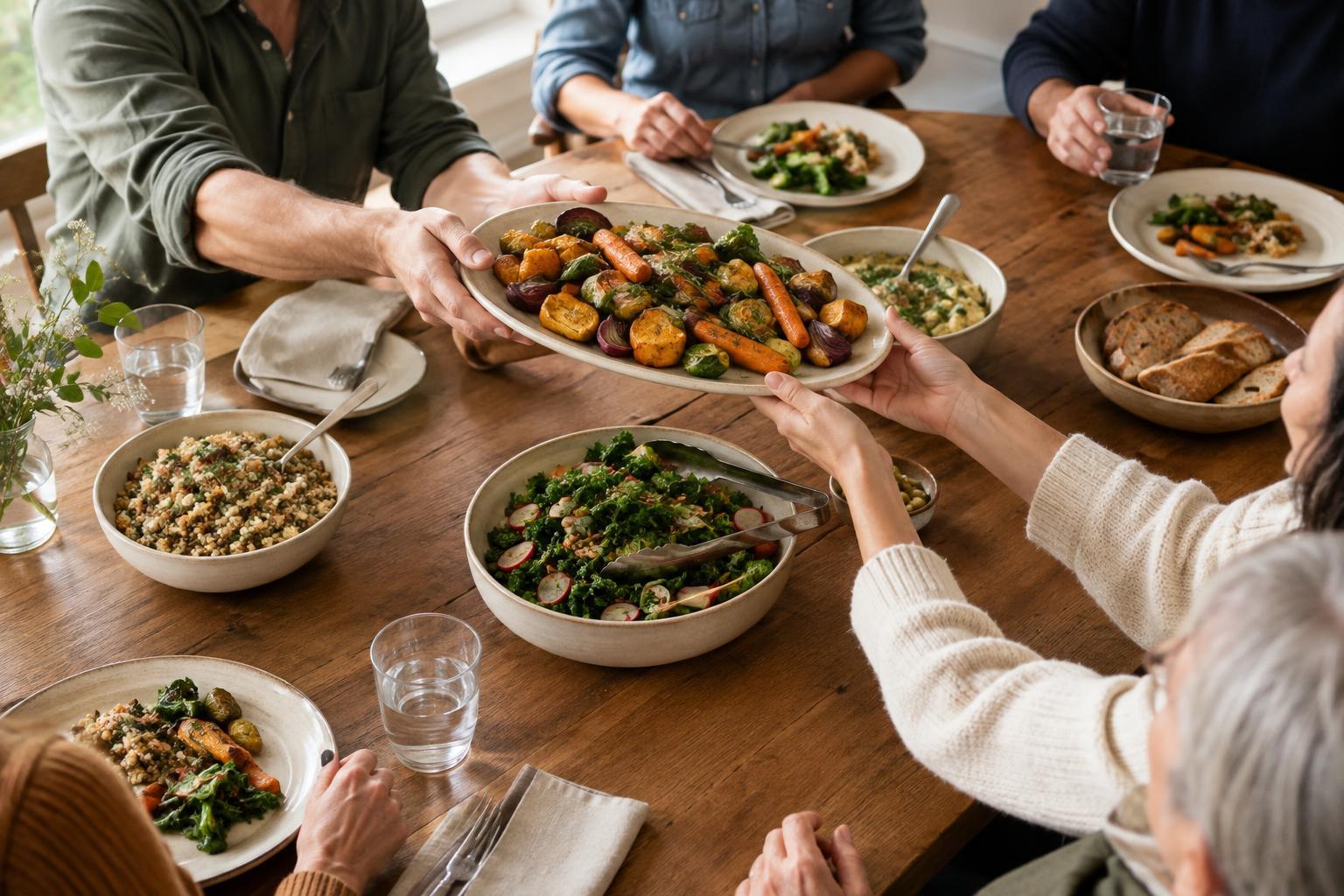
A family-style meal invites everyone to take part in serving, but a crowded table can turn that invitation into a balancing act. Before guests sit down, set the table with plates, glasses, napkins, and shared seasonings, then look at the space left for food. Each platter needs a stable place to land. If the table is small, bring dishes out in rounds rather than trying to fit everything at once.
Think about weight as well as space. A heavy casserole is easier to serve from a central spot than to pass from hand to hand. Lighter bowls of vegetables, bread, or salad can travel around the table. Keep trivets or heat-safe mats ready for hot cookware, and leave a clear path so nobody has to pass a dish over a glass or a candle. The goal is not perfect symmetry; it is a table where people can serve themselves without reaching across one another.
Give every dish a clear way to be served
Put a serving utensil with each platter before it reaches the table. A broad spoon suits soft vegetables or grains, tongs grip bread and larger pieces, and a spoon paired with a fork can help lift portions of a delicate main dish. For food in sauce, choose an utensil that can carry some of the sauce along with the portion. Check that handles are long enough to use comfortably but not so long that they fall out of a shallow bowl.
A dedicated utensil for each dish also helps guests keep foods separate. This matters when someone is avoiding an ingredient or simply does not want a strongly flavored sauce on everything else. If a guest has an allergy or other strict dietary need, ask about it in advance and discuss what can be served safely; separate utensils alone cannot prevent every kind of contact during preparation or at the table. For an ordinary shared meal, place dressings, spicy toppings, and finishing garnishes in their own small bowls so guests can add them as they like.
Start passing with a simple cue
Once everyone is seated, the host can name the dishes and suggest where to begin: “The rice can stay in the middle, and the salad can go around.” That brief cue is enough. Guests do not need a complicated order, but they do need to know whether a dish is meant to be passed or served in place. If there are two similar sides, starting them at opposite ends of a long table can spare everyone a wait.
When passing a platter, wait until the next person is ready to take it rather than setting it down in a crowded spot. Pass the serving utensil along with the dish, with its working end resting inside or over the food rather than on the tablecloth. If a platter is awkward or hot, offer to hold it steady while a guest serves themselves. Nobody should have to manage a heavy pan with one hand and a serving spoon with the other.
Make room for different needs and appetites
Family-style service works best when everyone can participate comfortably. Seat anyone who finds reaching or lifting difficult near dishes they are likely to want, or offer to serve them without making it a production. At a long table, two smaller bowls of a popular side may be more useful than one large bowl that rarely makes it to the far end. Leave space beside each plate for a platter to pause while someone serves themselves.
Guests may take different portions or skip a dish altogether. A useful host gives people that freedom and keeps the first pass moving: a modest serving leaves enough for everyone to try something, with seconds available afterward. If a dish is unfamiliar, a plain description of its main ingredients is more helpful than urging someone to taste it. The table should feel generous, not like a test of how much anyone eats.
Keep the meal moving, then clear gently
During the meal, notice what the table needs without constantly interrupting it. Refill water, replace a dropped serving utensil, and move an empty platter to a sideboard when it is no longer useful. If a bowl is nearly empty but someone may want seconds, ask before clearing it. A small landing area away from the dining table makes it easier to bring in another course or set down used dishes.
There is no need to clear the moment a person finishes. Wait until the group seems ready, then remove platters and plates in manageable trips, beginning with anything that blocks conversation or space. The best family-style service is often barely noticed: food travels easily, utensils stay with their dishes, and guests have room to settle in and enjoy the company.