Start with the herbs, not the garnish
Fresh herbs are often bought for a single spoonful of chopped leaves, leaving most of the bunch in the refrigerator. A more useful approach is to treat them as an ingredient that helps decide what to cook. Before planning a meal, look at the herbs available to you and ask whether their flavor would be better stirred through a dish, folded into a sauce or used in a generous handful at the table.
Tender herbs such as parsley, cilantro, dill and basil bring freshness when added near the end of cooking. More robust herbs, including rosemary, thyme and sage, can flavor oil, beans, roasted vegetables or a pan of sautéed mushrooms as they cook. These are starting points rather than strict rules: a small amount of fresh thyme can finish a dish, while parsley stems can lend flavor to a simmering pot. Taste as you go, especially when using an herb that is new to you.
Let the season guide the supporting ingredients
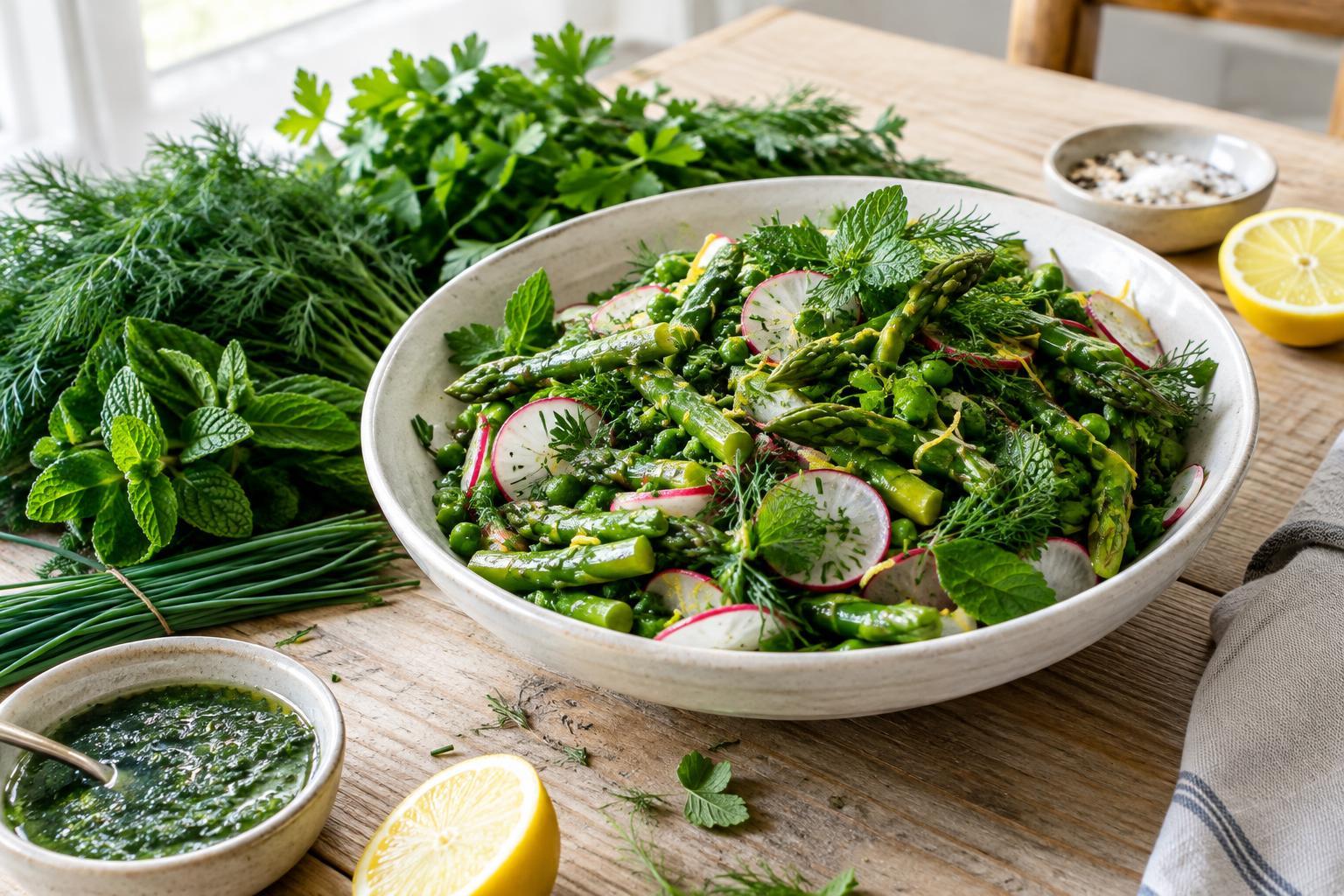
Herbs feel most purposeful when the rest of the plate gives them something to work with. In spring, dill or chives can lift peas, potatoes and tender greens without covering their mild flavors. In warmer months, basil or mint can bring contrast to ripe tomatoes, cucumbers and grilled vegetables. When cooler weather calls for longer cooking, thyme, rosemary or sage can add depth to squash, beans and sturdy greens.
Availability varies by garden, market and climate, so there is no need to follow a fixed herb calendar. Instead, notice which herbs look lively when you shop and pair them with produce that needs a similar amount of handling. Delicate leaves often suit vegetables served raw or briefly cooked. Firmer leaves can stand alongside ingredients that roast or simmer. A simple plate of vegetables and grains can feel distinct from week to week when its herb pairing changes.
Use a generous quantity with a clear purpose
If you have a large bunch of tender herbs, make a spoonable sauce rather than scattering a few leaves on top. Finely chop the leaves with a little tender stem, then stir in olive oil, a squeeze of lemon or another acidic ingredient, and salt. Add water if you want a looser consistency. Spoon the mixture over warm vegetables, eggs or beans just before serving. The goal is not a rigid recipe but a balance you can adjust after tasting.
Herbs can also form part of the body of a dish. Fold chopped parsley and dill through cooked grains with sliced spring onions and a few crunchy vegetables. Add a handful of basil to a tomato salad rather than two decorative leaves. For a warm dish, cook a little rosemary or sage in oil first, then use that fragrant oil to coat potatoes or squash. Begin with modest amounts of strong herbs and add more if the dish needs them.
Keep the rest of the seasoning straightforward when the herbs are the focus. Salt brings their flavor forward, acidity can brighten a rich dish, and a little fat helps carry their aroma. If several strong flavors compete, it becomes harder to notice what the herbs contribute.
Plan for the rest of the bunch
Fresh herbs are easiest to use when you decide on a second meal before putting them away. Parsley left from a grain dish might go into a vegetable omelet. Dill used with potatoes can be stirred into yogurt for a sauce. Mint from a salad might finish a bowl of fruit. Choosing two uses makes a generous bunch feel less like an obligation and more like the beginning of a short, flexible meal plan.
For storage, remove leaves that are already damaged and avoid packing the rest tightly while wet. Many tender herbs keep better with their stems in a little water and their leaves loosely covered; others do well wrapped in a barely damp towel in the refrigerator. Check them periodically, since the best method depends on the herb and how fresh it was when purchased. If leaves begin to wilt, use the sound ones promptly in a cooked dish or sauce.
Stems need not always be discarded. Tender stems can be chopped with the leaves, while tougher stems may flavor a pot of beans or a simple broth and then be removed. You do not have to use every scrap to make seasonal cooking worthwhile. The practical aim is to let a fresh ingredient shape several enjoyable meals while it is still at its best.