Make the moment smaller
A glass tips over just as everyone sits down. A serving dish slips on its way to the table. The first task is not to restore a spotless room; it is to help everyone feel at ease. Pause, check whether anyone is hurt, and say something simple, such as “No worries, I’ll take care of it.” If a guest caused the accident, avoid making them explain it. Spills and breakages are ordinary parts of sharing a table.
Give yourself permission to deal with the immediate problem rather than the entire aftermath. Move a chair away from a wet patch, lift a clean platter out of reach, or ask someone to hold a door while you fetch a towel. A brief, specific request is easier for a guest to answer than an anxious call for help. If the meal can continue safely, let it.
Set up for the accidents that happen most often
Before guests arrive, put a small cleanup kit somewhere you can reach without searching: absorbent cloths or paper towels, a dustpan and brush, a sturdy bag or container for broken pieces, and a spare tablecloth or a few extra napkins. Keep a towel handy in the kitchen, too. The goal is not to anticipate every mishap, but to avoid leaving a spill unattended while you hunt through cupboards.
Think about the table as well as the supplies. Give glasses a stable place away from crowded serving dishes, and leave enough room for hands to pass plates. A jug is often easier to manage than an open bottle passed around a busy table. None of this needs to look like accident prevention; it simply makes serving and conversation more comfortable.
Deal with spills according to where they land
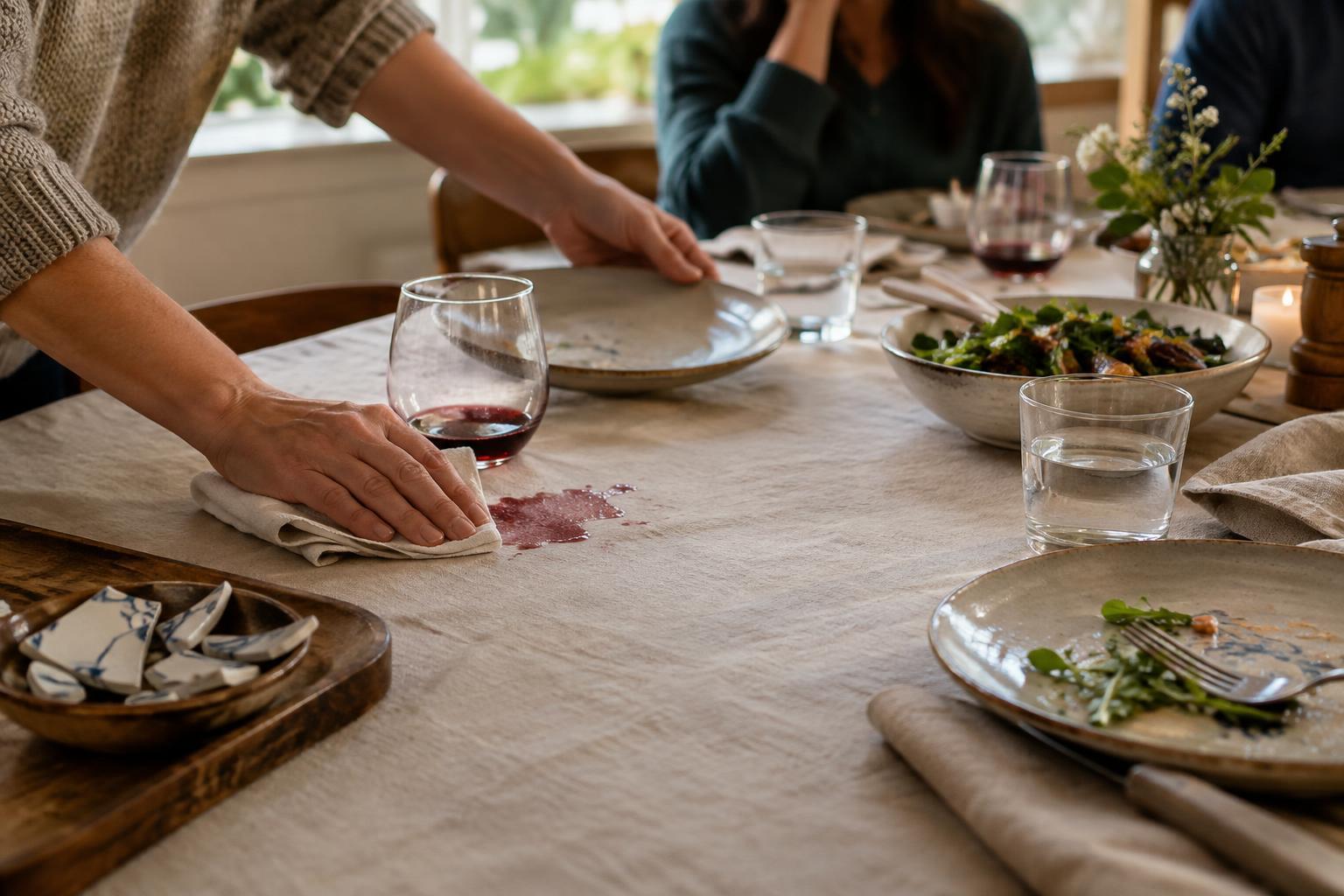
For a spill on the table, move nearby food, phones and paper items first. Blot liquid with a cloth rather than sweeping it across the surface. If the table covering is soaked, you can remove it after the dishes are clear, or cover the area with a folded napkin until there is a natural break in the meal. A small mark rarely needs an immediate, elaborate cleaning session.
For a spill on the floor, ask people to stay clear until the surface is dry enough to walk on safely. If liquid lands on someone’s clothing, offer clean napkins and a private place to check it; let the guest decide what help they want. Fabrics and finishes respond differently to cleaning products, so avoid promising that a mark will come out or applying a treatment to someone else’s belongings without asking.
Treat broken dishes as a safety task
When glass or ceramic breaks, stop foot traffic around the area. Ask guests, especially anyone wearing thin-soled shoes or no shoes, to step back. Pick up large pieces carefully, then use a brush and dustpan for smaller fragments. Check under chair legs and along the edge of a rug, where pieces can hide. If fragments may have reached nearby food or drink, discard the affected portion rather than trying to pick them out.
Put sharp pieces into a rigid container or wrap them securely before placing them in the rubbish, following any local disposal rules that apply. Do not press loose shards into a thin bag with your hands. After sweeping, a damp paper towel can help collect fine fragments from a hard floor; dispose of it carefully. If someone has been cut, pause the meal and attend to the injury before continuing. Cleanup can wait until people are safe.
Return to the table without making a ceremony of it
Once the area is safe, replace only what the meal needs. A different plate, an extra glass or a serving bowl from the cupboard is enough; matching sets are not a requirement for a good evening. If a dish has been lost to a spill or breakage, offer what remains rather than rushing to cook a replacement. Bread, a salad or another shared dish can help the meal move forward.
Guests usually take their cue from the host. A calm “All sorted” signals that no one needs to keep apologizing or revisiting the accident. Later, when the table is clear, you can finish cleaning and check for any missed fragments or marks. During the meal, hospitality is less about preserving a perfect setting than about making sure everyone can relax and enjoy being there.