Set a welcoming expectation
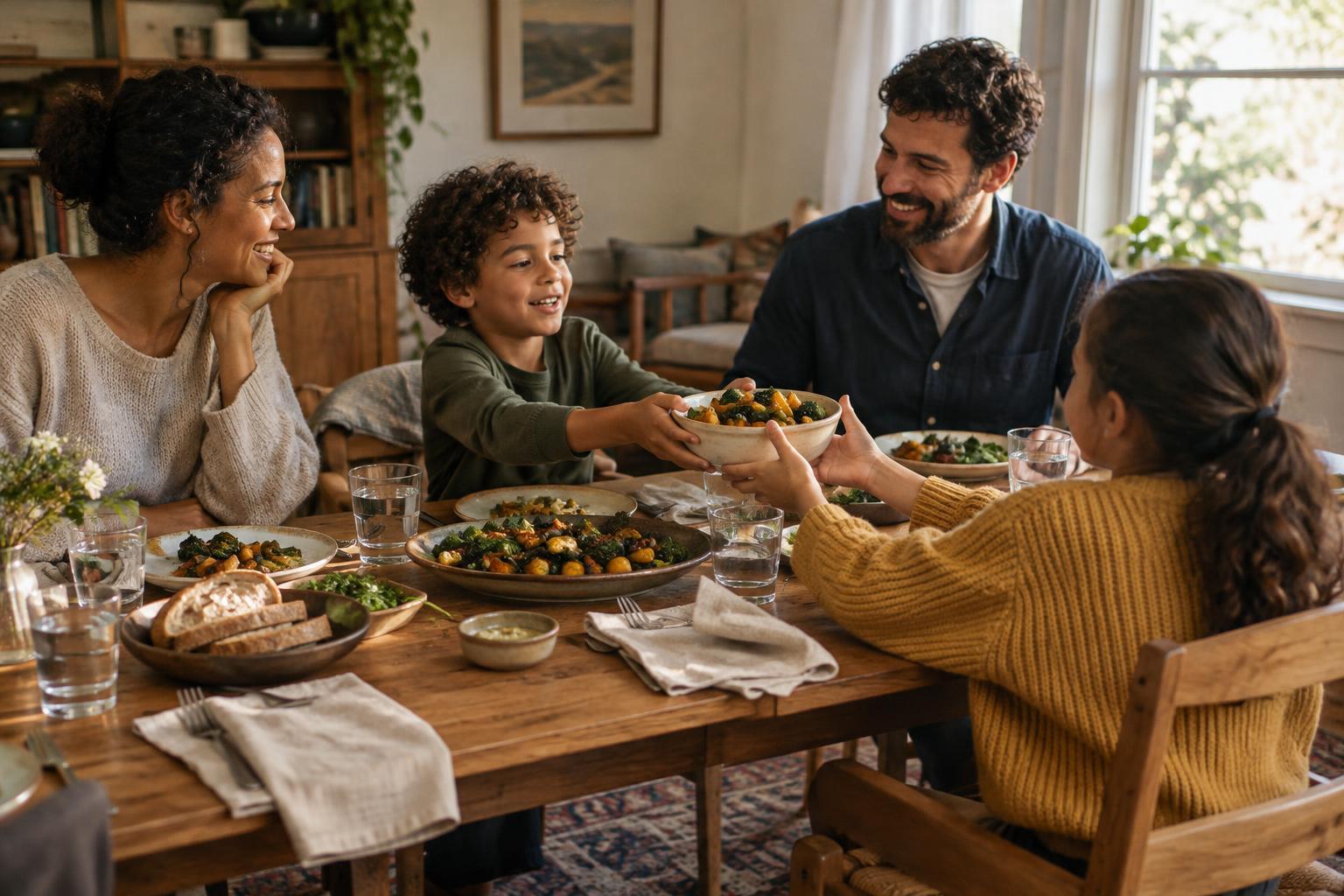
Including children at dinner does not mean expecting them to behave like adults. It means giving them a place in the gathering and making that place workable. A meal may feel smoother when the goal is participation rather than perfect stillness: children can share food and conversation, then take a break when they need one.
If you are hosting, ask the adults bringing children what would help. A suitable chair, space for a stroller or an earlier serving time may matter more than a special menu. If you are the guest, let the host know what you plan to bring, such as a booster seat or a quiet activity. A brief exchange beforehand prevents much of the uncertainty that can interrupt dinner.
Make the table easy to join
Seat children where an adult can comfortably help with serving, spills and conversation. A place at the end of the table can leave room to step away, while a spot beside a familiar person may help a child settle. There is no universal best seat; choose one that fits the child, the room and the pace of the meal.
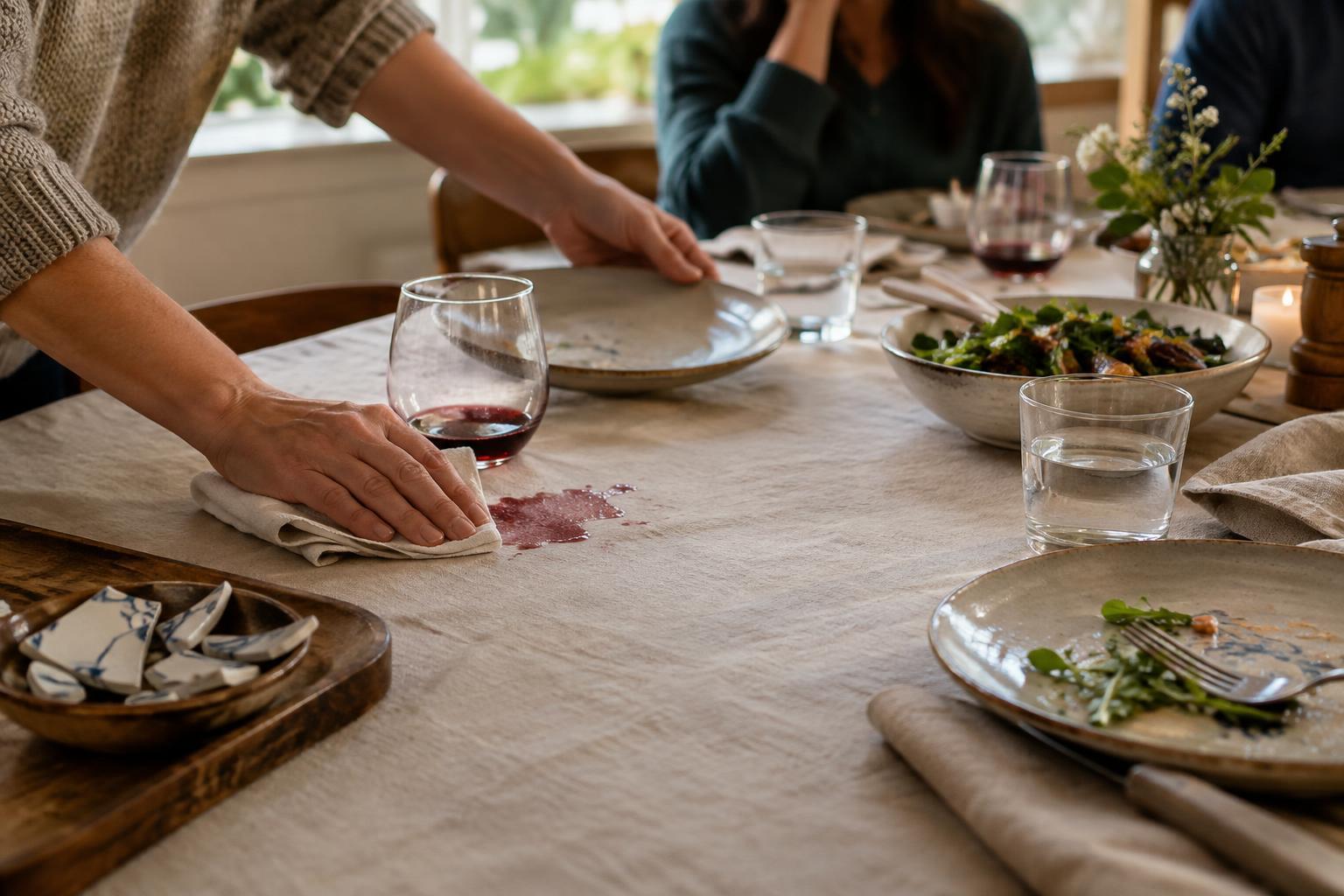
Set out the basics before guests sit down: a reachable water glass, a napkin and utensils the child can use. If a table has delicate pieces or crowded place settings, simplify the child’s spot rather than spending dinner guarding it. Sharing dishes can stay within adult reach, with small portions passed along as needed. These modest adjustments protect the table’s flow without making the child’s place feel separate.
Serve with flexibility, not a second production
A long wait before the first bite can be harder for children than the meal itself. Consider putting bread, cut vegetables or another simple part of the planned dinner on the table early. When possible, serve children alongside everyone else, even if they begin with a smaller portion. They can try another dish later without the host preparing an entirely different meal.
A welcoming menu offers some choices without turning the evening into a negotiation. For example, keep a sauce on the side or serve a shared dish in parts that guests can combine on their plates. Ask caregivers about food needs in advance rather than guessing. At the table, let the adults responsible for the child handle how much they eat; the host’s role is to offer food graciously and keep the meal moving.
Give children a role in the conversation
Children are more likely to feel included when someone speaks to them, not only about them. Ask an accessible question about the food or invite them to choose between two napkin colors. A small job, such as placing bread on a plate or carrying unbreakable items to the table, can give an older child a reason to participate. Offer the job as an invitation, not a test.
Conversation need not revolve around children all evening. Adults can continue talking while making room for short contributions, just as they would for any guest. If a child interrupts, a calm acknowledgment and a promise to return to their thought may be more useful than a lengthy correction. Caregivers can help guide these moments, so the host does not have to manage every exchange.
Plan for a change of pace
Children may be ready to leave the table before everyone has finished. Agree ahead of time on a nearby place where they can draw, look at books or play quietly, if the space allows. Put materials there before dinner rather than searching for them mid-meal. The plan should suit the child’s age and the adults available to supervise; it is not a substitute for attention where attention is needed.
When a pause becomes necessary, keep it ordinary. A caregiver can step away with a child and return without an announcement or apology on the child’s behalf. Likewise, the host can continue serving and welcome them back when they are ready. The measure of a successful dinner is not an uninterrupted stretch of silence. It is a table where guests of different ages can share the meal, adjust when needed and still feel invited.