Make the first offer easy
Drinks are part of a guest’s welcome, but they need not become a decision that holds up dinner. Set drinking glasses before people sit down and have water ready to offer as they settle in. A simple “Would you like some water?” gives each person a choice without requiring an explanation. If you are serving chilled and room-temperature water, name the options briefly rather than presenting them as a test of preference.
Offer other drinks in the same straightforward way. Mention what is actually available, including a nonalcoholic option that feels as considered as anything else on the table. “There’s sparkling water, iced tea and wine” is easier to answer than a long tour of the kitchen. Once guests have chosen, leave room for them to change their minds later; an initial choice does not have to last the whole evening.
Set up the table for quiet refills
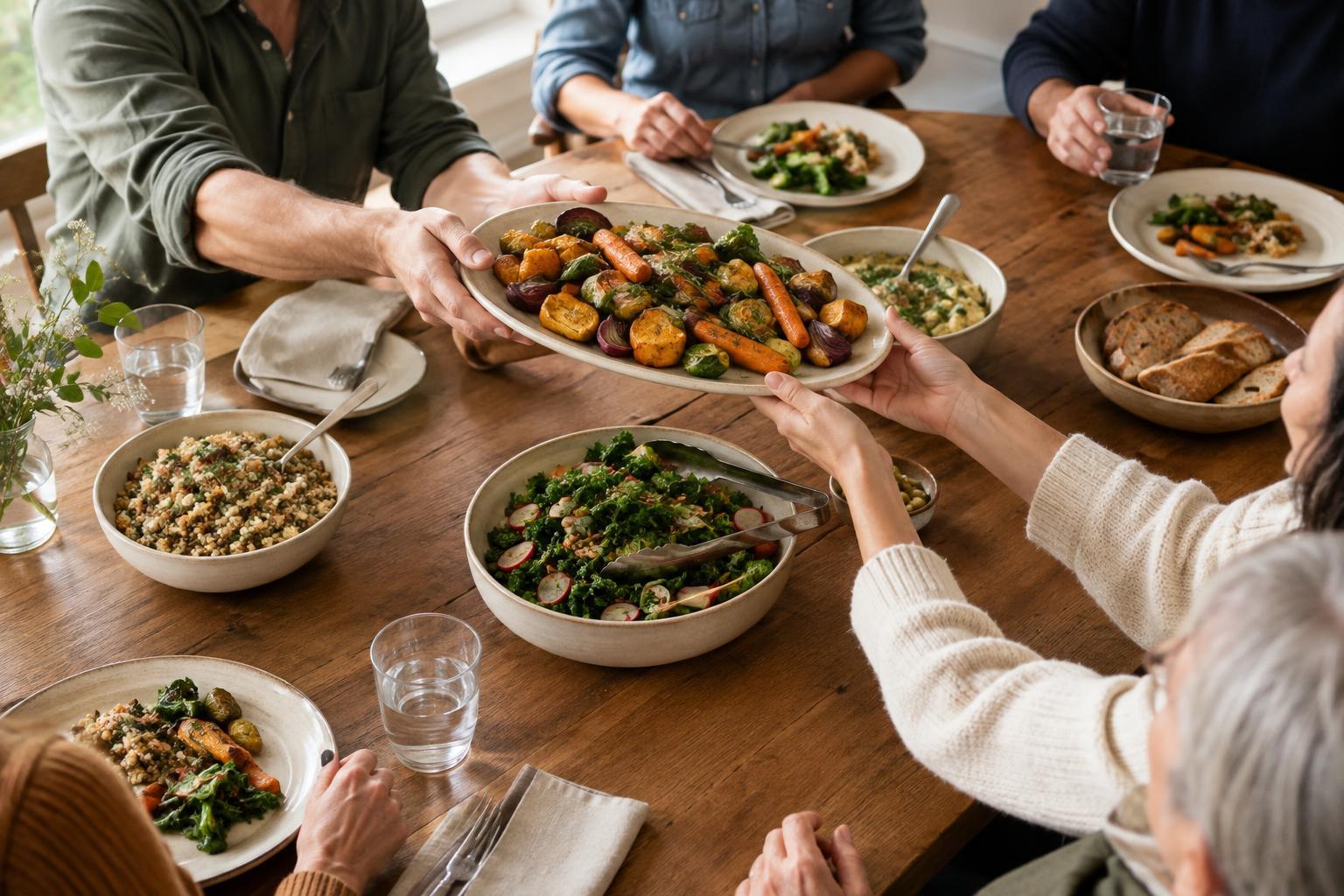
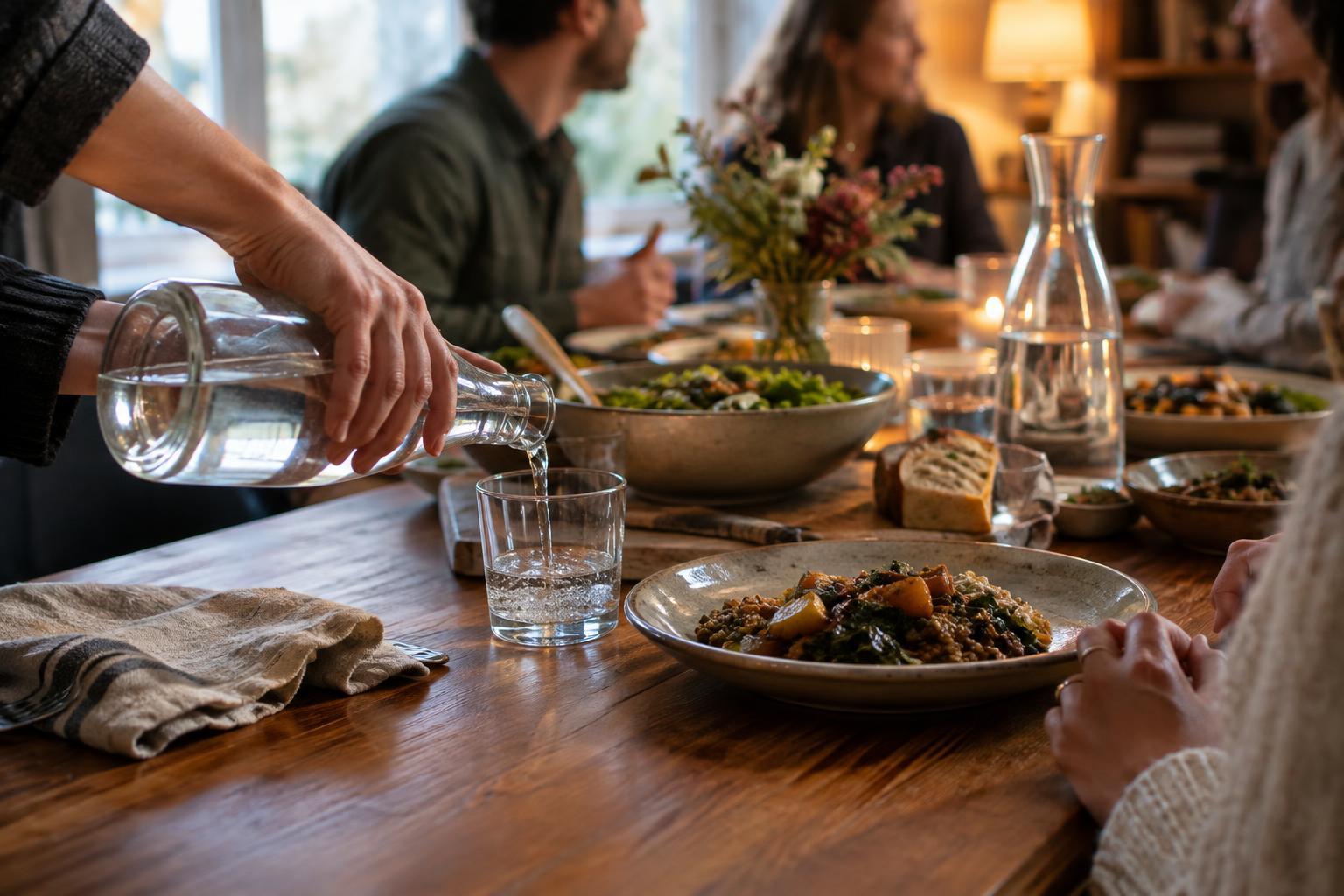
A little preparation reduces the need to ask questions mid-conversation. Place a water pitcher or carafe where guests can reach it comfortably, without making anyone stretch across another person’s plate. At a small table, you can keep it on a nearby surface instead. Check that pitchers pour cleanly and that there is a stable place to set them down. A folded cloth within reach helps with the occasional drip.
If several drinks are being served, keep their containers distinct and easy to identify. A guest should not have to guess whether a carafe holds still or sparkling water, or whether a pitcher contains sweetened tea. You can identify them when first offered, then position them consistently. This also makes it easier to refill the right glass without stopping to ask each time.
Notice the glass, then notice the person
An empty glass is a cue to offer a refill, not an instruction to pour one. Someone may have finished a drink because they want something different, or because they are ready to stop. Before reaching in, make brief eye contact or ask quietly, “More water?” If the guest is speaking, wait for a natural pause. At a lively table, a small gesture toward the glass may be enough to ask without breaking the conversation.
Refilling when a glass is low rather than completely empty can feel attentive, especially with water. Still, avoid hovering or topping up after every sip. A reasonable rhythm is to check when you rise to clear a course, bring food to the table or refill your own glass. These moments are already part of the meal, so a quick offer feels less like an interruption.
Keep pours considerate
When you do pour, approach from a comfortable angle and give guests space to move their hands or glasses. Pour slowly enough to avoid splashes, and leave room below the rim so the glass is easy to lift. If a glass is close to a plate or an elbow, it is better to ask the guest to pass it than to thread a heavy pitcher through a crowded setting.
For drinks other than water, permission matters even more. Ask before adding wine, a mixed drink or a flavored beverage to a glass; the guest may be pacing themselves or may not want the same drink again. If someone declines, accept it without comment. An offer of water later is hospitable, but repeated invitations can make a simple choice feel public.
Let guests help themselves when it suits the meal
Not every dinner needs a dedicated person watching the glasses. At a relaxed gathering, a reachable water carafe and a clearly indicated spot for other drinks can let guests take care of themselves. Say where to find things once, then allow them to use the setup. Keep a spare bottle or pitcher ready so replenishing the supply takes only a brief trip away from the table.
The aim is not to maintain perfectly full glasses. It is to make a drink available when someone wants one, without repeatedly pulling attention from the food or the people sharing it. A clear first offer, an accessible table and a quiet check at natural pauses are usually enough. Guests can then accept, decline or pour for themselves with equal ease.