What a thermometer can tell you
Color, firmness, and cooking time can offer clues about doneness, but none gives a dependable picture of the temperature at the center of a piece of food. A browned chicken breast may still need more time inside; a thick fish fillet may be cooked through before it looks deeply colored on the surface. An instant-read food thermometer gives you a more useful answer at the point you measure.
Temperature is only one part of judging a finished dish. Texture and appearance still matter, especially for foods such as vegetables, bread, and custards. For foods with safety considerations, use the appropriate recommended internal temperature from a reliable food-safety authority rather than relying on appearance alone. The thermometer helps you reach that target without adding unnecessary minutes “just in case.”
Put the probe where the answer matters
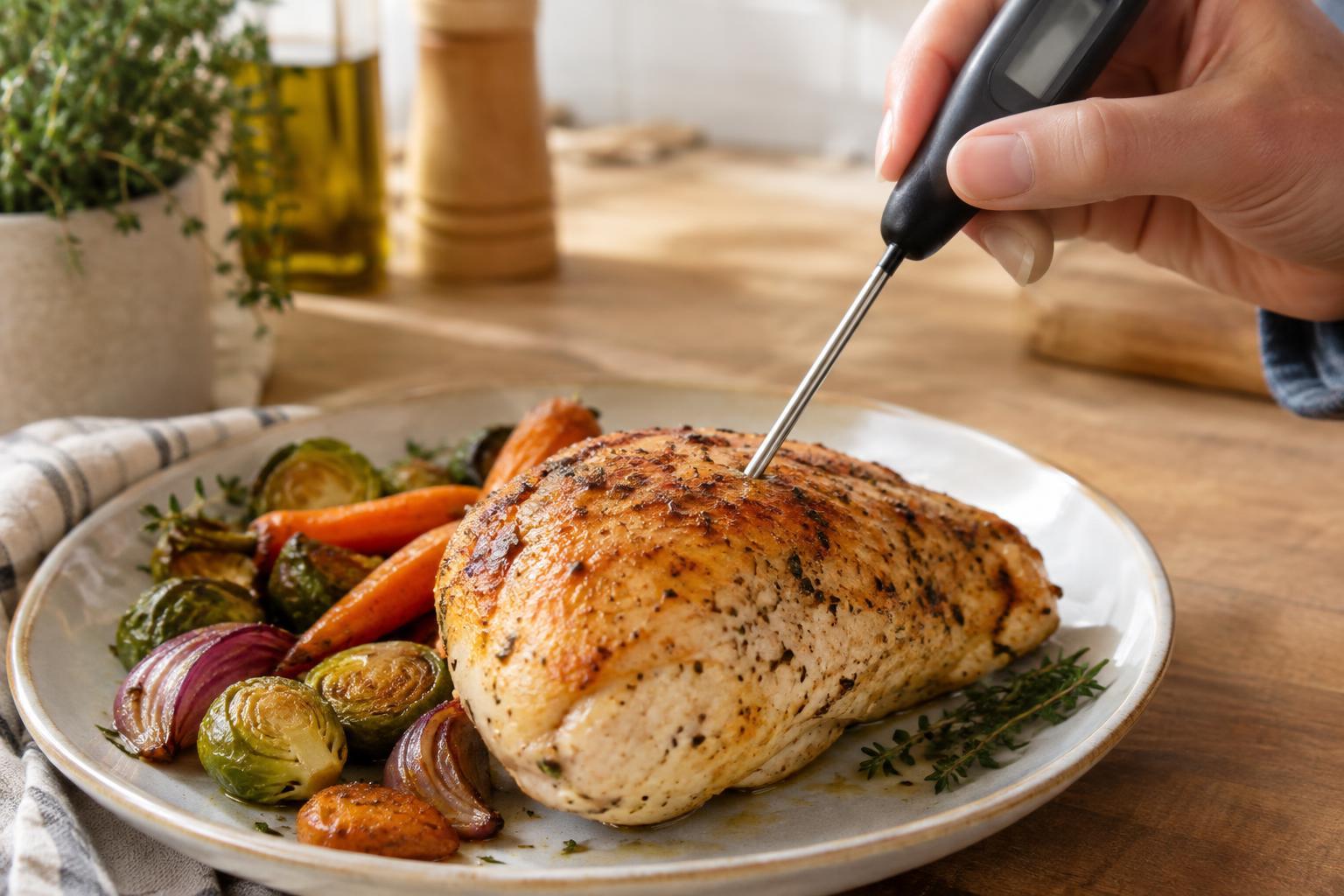
Insert the probe into the thickest part of the food, aiming for its center. Avoid touching bone, a pan, or a pocket of stuffing, since each may give a reading that does not represent the surrounding food. For a thin fillet or cutlet, insert the probe from the side so its sensing tip sits in the middle rather than passing straight through. Check the instructions for your thermometer if you are unsure where its sensing area is.
One reading may not tell the whole story. Large roasts, whole poultry, and unevenly shaped pieces can have warmer and cooler areas, so check more than one spot. When cooking several pieces together, test pieces of different sizes rather than assuming they will finish at the same time. Clean the probe between checks as needed, particularly after it touches raw meat, poultry, or seafood, to avoid transferring raw juices to cooked food.
Start checking before you expect food to be done
A thermometer is most helpful when it gives you time to respond. Begin checking as food approaches its expected finish, not only after a timer rings. Cooking times are estimates: thickness, starting temperature, cookware, and oven behavior can all affect the result. If the reading is below your target, return the food to the heat and check again after a suitable interval. Shorter intervals make sense when a thin piece is close to done.
Keep the oven or pan conditions in mind while measuring. Opening an oven repeatedly can slow cooking, while leaving a delicate piece in a hot pan as you decide what to do can push it past the texture you want. For quick-cooking foods, have a clean plate or resting spot ready before you take a reading. Once the food has reached its target, you can remove it promptly instead of waiting for a stronger visual cue.
Allow for heat that keeps moving
Food does not always stop warming the moment it leaves the heat. In a thick roast, heat near the surface can continue moving toward the center during a rest, raising the internal temperature. The size of that rise varies with the food, its shape, and the cooking method. A thin piece of fish generally has less stored heat than a large roast, so it is better to observe how your own dishes behave than to assume one fixed amount of carryover cooking.
For dishes where carryover is noticeable, take a reading when you remove the food and another after it rests. Those two numbers can help you plan next time. If a safe minimum internal temperature applies, make sure the food reaches that temperature as recommended; do not assume a predicted rise will occur. Resting can also make a roast easier to carve, but a long rest is not a remedy for food that has already overcooked.
Make the thermometer part of your routine
Keep the thermometer accessible, with a clean probe and a display you can read easily. Follow its instructions for use, cleaning, and any calibration check. A slow or inconsistent reading is worth investigating before you depend on it for a safety decision. For oven cooking, a leave-in probe can let you monitor a large piece without repeatedly opening the door; an instant-read model is useful for checking several spots and smaller items.
Over time, pair the readings with what you notice on the plate. Note the temperature and texture of a chicken breast you liked, or how a custard looked when it set. Those observations make the thermometer more than a pass-or-fail tool: it becomes a way to understand your equipment, recognize when food is nearly ready, and serve it at its best.