Start with the mushrooms you have
A good mushroom dish begins before the stove is on. Look over each mushroom and remove any packaging or loose bits of growing medium. If a stem end looks dry or tough, trim just that portion rather than discarding the whole stem. Many stems are pleasant to eat when sliced thinly, though the stems of some varieties are noticeably firmer than their caps.
For everyday cooking, this approach works well with cultivated mushrooms such as button, cremini, oyster and shiitake. Their shapes differ, so prepare them accordingly: slice button and cremini mushrooms for even cooking, tear oyster mushrooms into manageable pieces, and remove shiitake stems if they feel too woody for the dish. If you are handling foraged mushrooms, do not rely on general cooking guidance to determine whether they are safe to eat.
Clean them without overcomplicating it
The idea that mushrooms must never touch water can make cleaning harder than it needs to be. For a little surface dirt, wipe them with a clean, damp cloth or soft brush. When dirt is caught in folds or clinging to a large batch, give the mushrooms a quick rinse under cool running water. Avoid leaving them to soak; the goal is to remove grit, not hold them in a bowl of water.
After rinsing, shake off excess water and spread the mushrooms on a clean towel. Pat them dry, paying attention to any pockets where droplets collect. They do not have to be bone-dry, but drying the surface gives the pan less water to evaporate before browning can begin. Clean mushrooms shortly before cooking when possible, especially if they were rinsed.
Give moisture room to escape
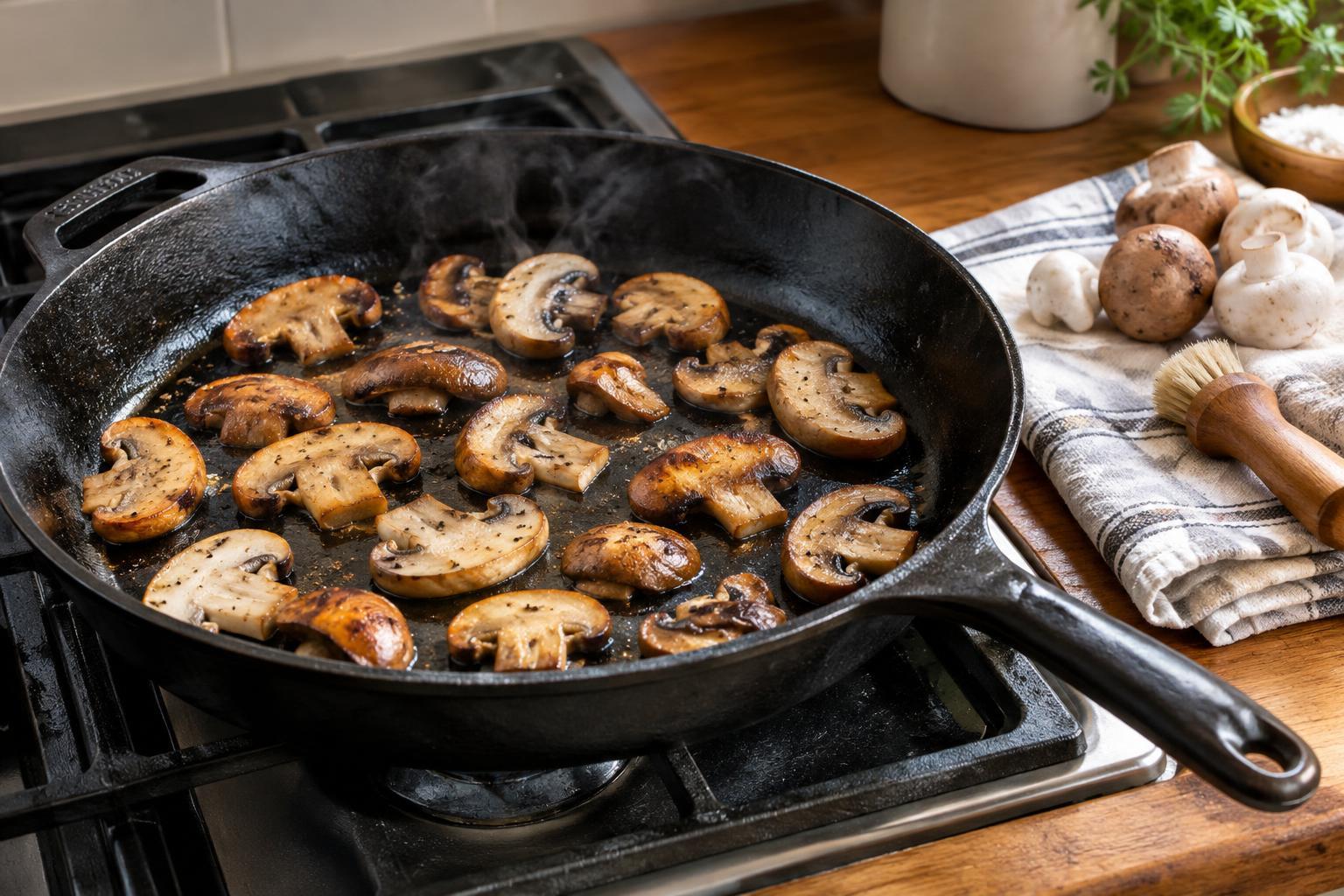
Mushrooms contain plenty of water, and they release some of it as they heat. That is normal, not a sign that cleaning went wrong. Sogginess is more likely when liquid collects in the pan and the mushrooms sit in it for too long. Use a skillet wide enough to hold the pieces in a fairly loose layer, or cook a large quantity in batches. A crowded pan tends to steam its contents rather than brown them.
Heat the skillet over medium-high heat, then add a modest amount of oil and the mushrooms. Let them sit briefly before stirring so their surfaces have contact with the pan. As liquid appears, keep cooking; it can evaporate. Stir occasionally to expose new surfaces, adjusting the heat if the pan threatens to scorch. Once the visible liquid has mostly gone, the mushrooms can take on more color and a pleasantly concentrated flavor.
Season for the dish, not by a rigid rule
You may hear that salting mushrooms early always makes them soggy. Salt can draw moisture to the surface, but the final texture depends more on whether that moisture has room and time to cook away. If you are seeking well-browned pieces, it is convenient to add most of the salt after the initial liquid has evaporated. If the mushrooms will finish in a sauce, earlier seasoning is also workable.
Add butter, garlic or delicate herbs toward the end of a hot sauté. Butter can deepen the flavor, but it may brown faster than the mushrooms do; garlic can burn before their moisture has cooked off. A small squeeze of lemon or splash of vinegar just before serving can brighten the finished dish. Add it after browning rather than pouring extra liquid into the pan at the start.
Match the method to the result you want
For browned mushrooms to spoon over toast or fold into pasta, use the open-skillet method and stop when the edges are golden and the pieces no longer look wet. For a softer filling or a sauce, cook them until their liquid reduces, then add the other ingredients. Roasting is another option: spread mushrooms across a baking sheet with a little oil, leaving space between pieces, and turn them as needed for more even color.
If the first batch looks pale, resist the urge to add more oil immediately. Check whether liquid is pooling, whether the pan is crowded, and whether the heat is high enough to keep moisture evaporating without burning. Often, a little more space or cooking time makes the difference. The useful goal is not to keep mushrooms away from every drop of water; it is to decide where that water goes before you serve them.