Think in conditions, not just containers
A crisp lettuce leaf, a ripe peach and a whole potato respond differently to the same kitchen. Lettuce loses its snap as it dries out; a peach may need time at room temperature to ripen; a potato keeps best away from light. Before putting groceries away, ask three questions: Does this item need to stay cool? Does it need protection from drying out? Will trapped moisture encourage spoilage?
Most refrigerators are cool and relatively dry. Produce drawers help create a more sheltered space, but their settings and temperatures vary. A higher-humidity drawer generally suits vegetables that wilt, while a lower-humidity setting gives fruit more airflow. These are starting points rather than strict rules. Packaging, ripeness and the condition of the produce when you bought it also matter.
Give greens moisture without leaving them wet
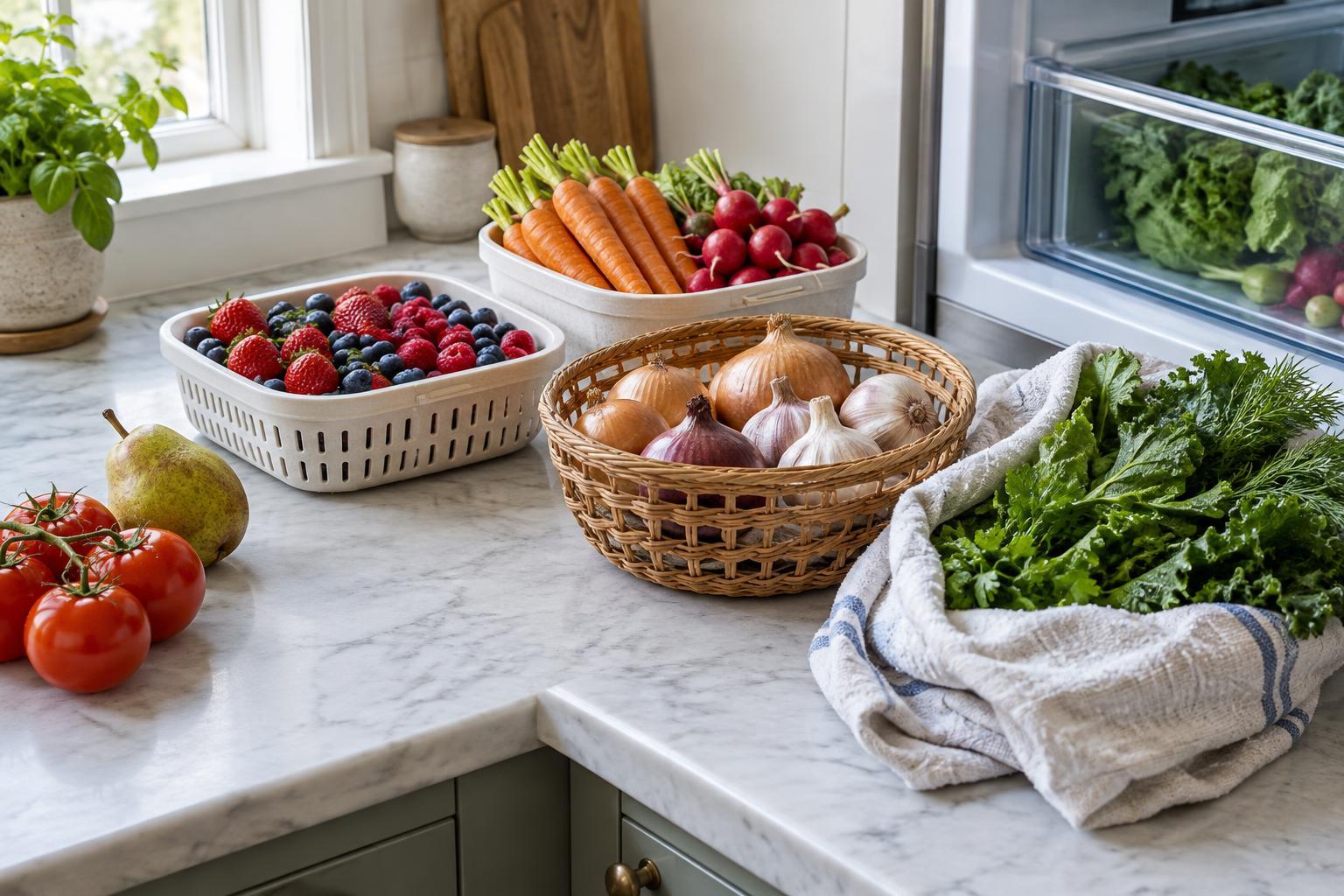
Leafy greens, tender herbs and many crisp vegetables benefit from refrigeration and some humidity. Remove damaged leaves, then store the rest in a container or loosely closed bag with a clean towel to absorb stray condensation. The aim is to slow water loss without leaving leaves pressed against pooled water. Check the towel and replace it if it becomes soaked.
For most greens, wait to wash until you are ready to use them; extra surface water can make storage harder. If you prefer to wash ahead, dry them thoroughly before packing. Bunches of parsley or cilantro can also stand with their stems in a little water in the refrigerator, with the leaves loosely covered. Tender basil is more sensitive to cold and may fare better for a short time on the counter, away from direct sun. Whatever the method, inspect herbs often and remove any decaying stems.
Keep berries dry and give ripening fruit room
Berries and other delicate fruit are especially vulnerable when moisture collects around them. Refrigerate berries in a shallow, breathable container, and sort out any crushed or moldy pieces so they do not sit against sound fruit. Washing just before eating is a simple way to avoid adding water during storage. A container that allows some airflow is usually more useful than a tightly sealed bag full of condensation.
Some fruit, including pears, peaches and avocados, can finish ripening at room temperature. Once they reach the texture you want, moving them to the refrigerator may help hold them there a little longer. Apples generally keep well in the refrigerator, but they release ethylene, a gas that can speed ripening in nearby produce. Keeping ripening fruit apart from greens and other items you want to stay firm makes the drawer easier to manage.
Find the right place for roots, alliums and tomatoes
Not everything benefits from the coldest available spot. Store whole potatoes and onions in separate, ventilated places that are cool, dry and dark, rather than in sealed plastic bags. Light can turn potatoes green; discard green areas and any potato that is extensively green, soft or spoiled. Garlic also needs airflow and a dry place. These storage choices are for whole produce: once an item is cut or peeled, refrigerate it promptly in a covered container.
Carrots, radishes and similar roots are different from potatoes. They tend to stay crisp in the refrigerator, with protection against drying. Remove leafy tops if attached, since the greens can draw moisture from the roots. Whole tomatoes are often kept at room temperature while they ripen; refrigeration can affect their texture, though it can be useful once a tomato is fully ripe and you cannot use it soon. Let a chilled whole tomato come toward room temperature before serving if flavor is the priority.
Make storage a small, repeatable routine
When you unpack groceries, separate produce into three groups: items to refrigerate, items to ripen on the counter and dry goods that need a dark, ventilated place. Use containers you can see into, and avoid packing drawers so tightly that air cannot circulate or delicate pieces get crushed. Keep produce away from raw meat and its juices, and refrigerate cut fruit and vegetables promptly.
A quick check before cooking prevents forgotten produce from becoming waste. Feel for soft spots, look for condensation and move anything ready to eat to the front. Plan meals around the most perishable items first: tender greens and berries before sturdy roots, for example. Good storage will not restore produce that has already deteriorated, but matching each item to its moisture and temperature needs gives it a better chance of reaching the table in good condition.