What blooming does
Blooming means briefly heating spices, often in oil, butter or another cooking fat, before adding the rest of a dish. The heat releases aroma, while the fat helps carry spice flavor through sauces, soups and vegetables. It is a small step, but it can make the spices taste more integrated than they would if stirred into a finished dish.
The goal is fragrance, not a dark color. A spice that smells warm and distinct is usually ready for the next ingredient. One that smells sharp, smoky or acrid may already be scorched. Because the change can happen quickly, prepare the ingredients that will follow the spices before you turn on the heat. A bowl of chopped onions, tomatoes or other moist ingredients within reach lets you cool the pan at the right moment.
Start with the pan and fat
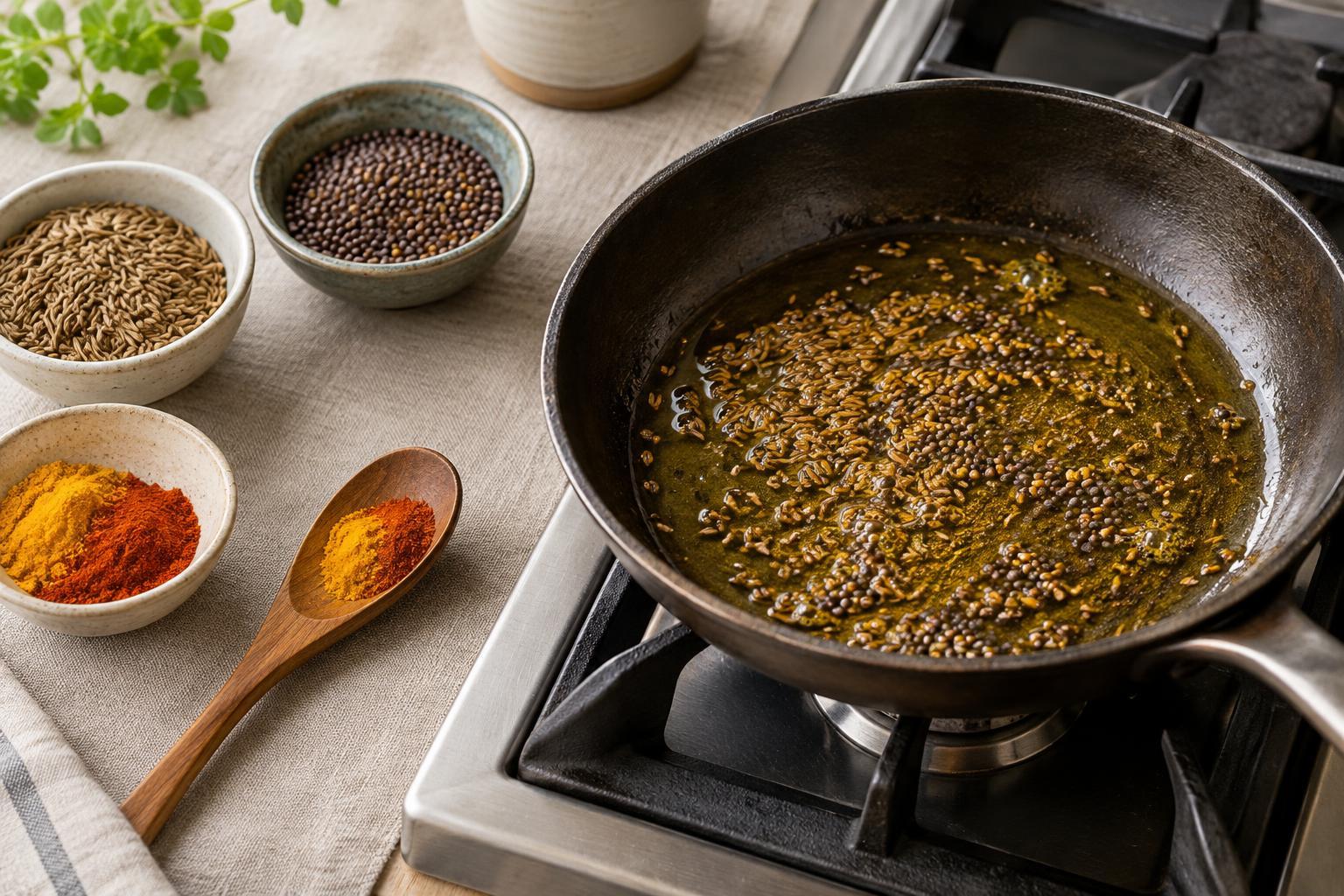
Use a pan with enough room to spread the spices in a thin layer. Add just enough fat to coat them and make it easy to stir; a dry patch of powder against hot metal is more likely to burn. Neutral oil gives the spices room to stand out, while olive oil, butter or ghee adds its own flavor. If using butter, watch it closely because its milk solids can brown alongside the spices.
Begin over moderate heat rather than heating the fat until it smokes. A single whole seed can serve as a test: it should sizzle gently, not snap violently or turn black on contact. If the pan seems too hot, lift it off the burner for a moment. Lowering the heat before adding spices is easier than trying to rescue them afterward. Keep a spoon or spatula ready so nothing sits against one hot spot.
Give whole spices a head start
Whole cumin, mustard or coriander seeds generally tolerate heat longer than their ground counterparts. Add them to warm fat first and stir or swirl the pan so they heat evenly. Watch for gentle sizzling, a change in aroma and, with some seeds, a slight deepening of color. Mustard seeds may begin to pop, so use a lid or splatter screen if needed. Remove the pan from the heat briefly if the popping becomes fierce.
Not every whole spice behaves the same way. A cinnamon stick or bay leaf will not offer the same visual cues as a small seed, so rely more on its scent and the overall heat of the fat. Whole spices can remain in the dish for a gradual infusion, though you may want to remove large pieces before serving. If combining whole and ground spices, bloom the whole ones first; adding everything at once often leaves the powders overcooked before the seeds are fragrant.
Treat ground spices as a quick step
Ground spices expose more surface area to the pan, so they can release aroma and scorch in a short span. Lower the heat before adding them, stir continuously and be ready to add the next ingredient as soon as they smell fragrant. Paprika and finely ground chile are especially worth watching: their color can look appealing even as their flavor turns harsh. Rather than timing this step by the clock, use your nose and keep the pan moving.
A splash of water can help when you want to cook a mixture of ground spices more gently. Stir a little into the pan to form a loose paste, then cook while stirring until the raw, dusty smell softens. The water slows browning, but it does not make the mixture burn-proof; add more if it dries out before the spices smell ready. This approach is useful when a recipe calls for several powders that would be difficult to bloom separately.
Know when to stop—and when to start over
Adding onions, tomatoes or another moist ingredient cools the pan and moves the cooking into a new stage. Have that addition measured and ready, then stir well to distribute the spices. If the pan is racing ahead, taking it off the heat while you add the ingredient gives you more control. Remember that a heavy pan holds heat even after the burner is turned down.
If a few spices have merely darkened, you may be able to cool the pan and taste the dish before deciding what it needs. If the spices are blackened or smell bitter and smoky, starting that small step again is usually better than building an entire meal on a scorched base. Wipe out the pan, reduce the heat and try again with fresh fat. With practice, the most reliable cue becomes simple: bloom until the aroma opens up, then move on.