Start with the meal, not the rules
Before arranging anything, think through what you plan to serve. A soup starter needs a spoon; a meal eaten entirely with a fork does not. If bread will be passed, a small plate may be helpful, but there is no need to add one simply to fill space. Setting out only what guests will use keeps the table clear and makes the arrangement easier to understand.
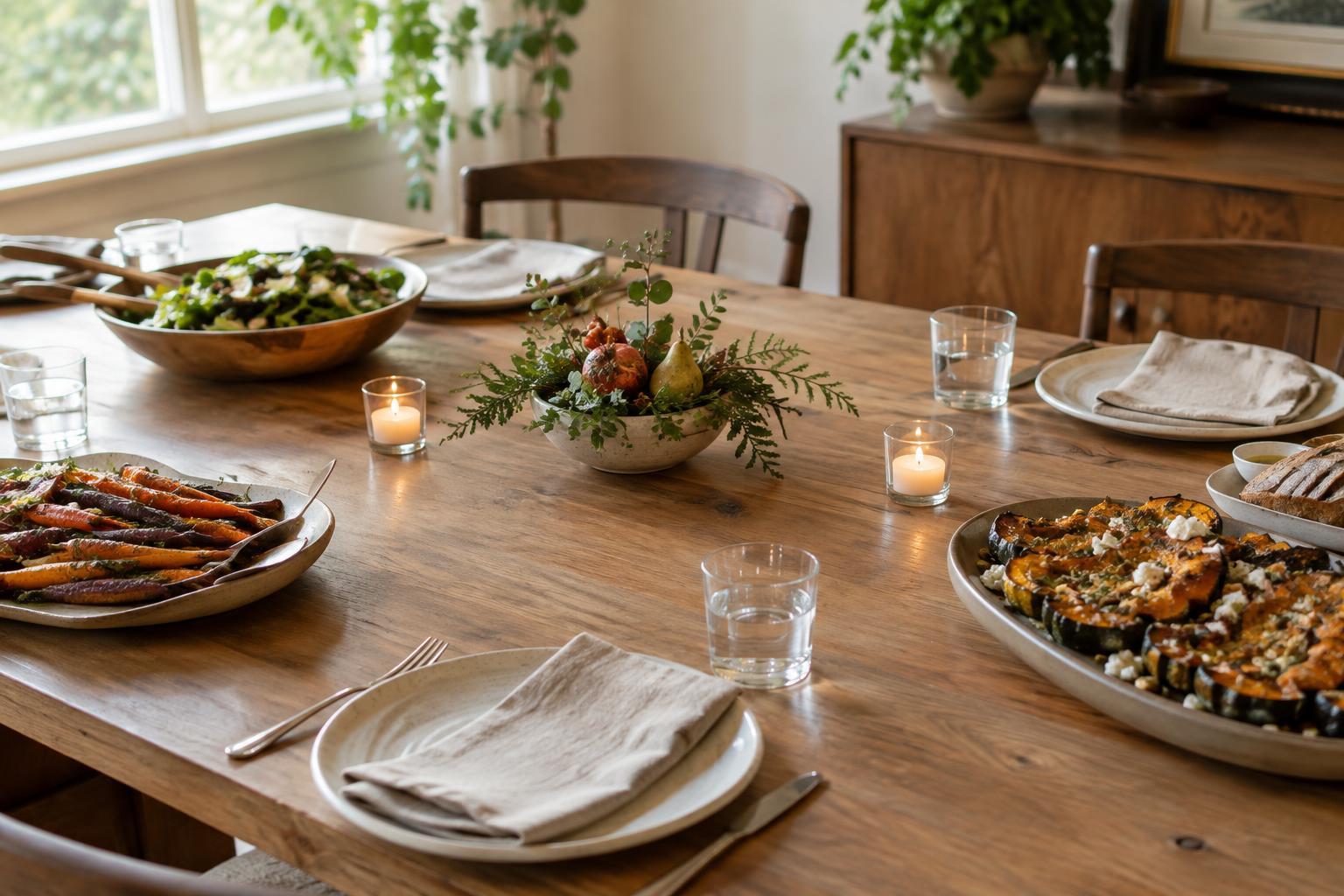
Give each person enough room to eat comfortably, then decide where serving dishes, water pitchers or shared condiments will go. For a casual dinner, those items might sit in the middle of the table. For a more formal meal with several courses, keeping the center relatively open can make it easier to clear and replace plates. Either way, the aim is the same: guests should be able to reach what they need and talk without leaning around a crowded centerpiece.
Build a comfortable casual setting
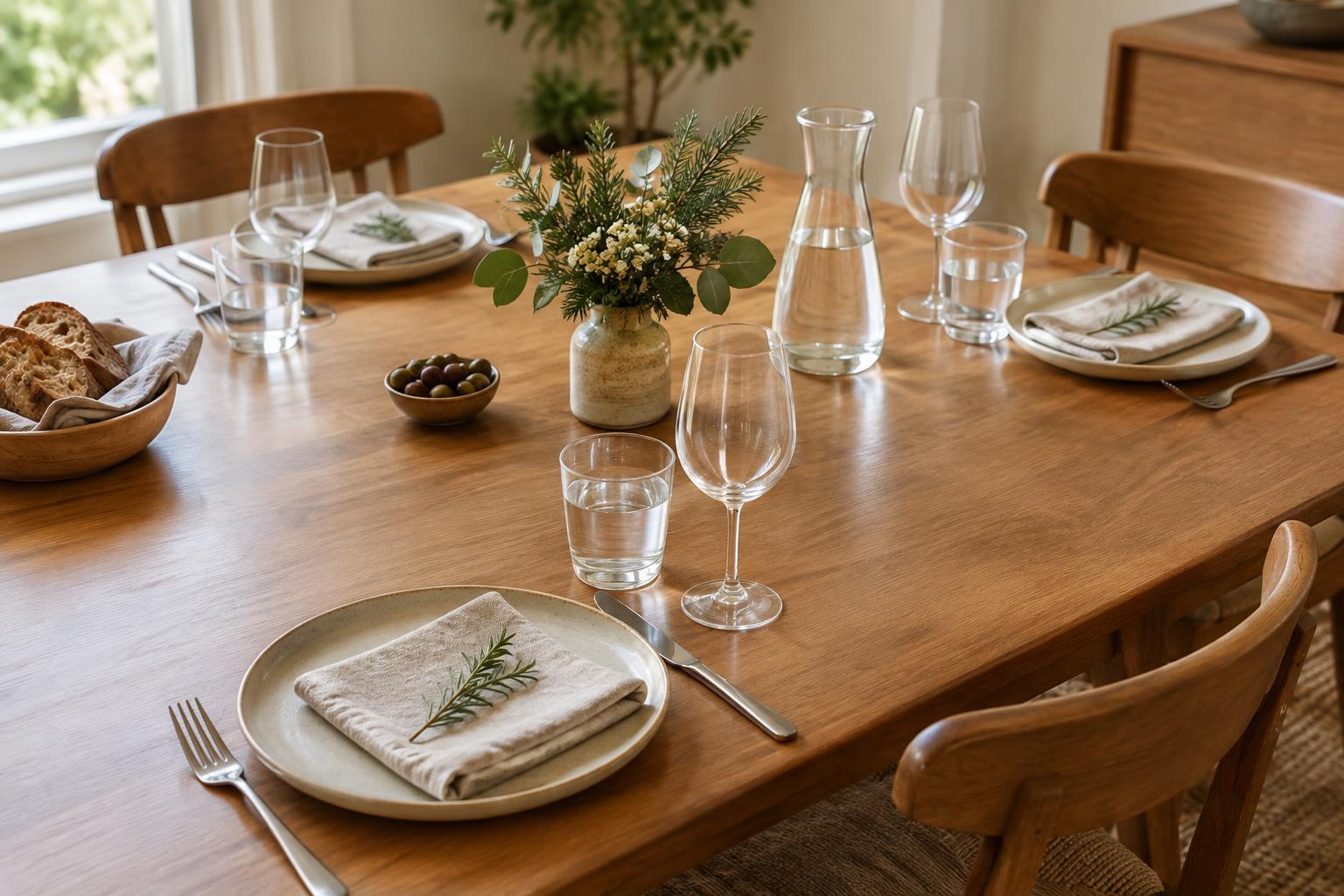
For an everyday dinner, start with a dinner plate at each seat. Put a fork to the left and a knife to the right, with its blade facing the plate. If the meal calls for a spoon, place it to the right of the knife. A drinking glass goes above the knife, where it is easy to find without interrupting the eating space. Set the napkin beside the fork or on the plate.
A placemat can define each person's space, while a tablecloth can soften the whole table; neither is required. Choose whichever surface is easy to clean and suits the food. If you are serving from bowls at the table, leave a clear path for passing them. If guests will help themselves elsewhere, you can set the table with glasses and cutlery and bring plates over with the food.
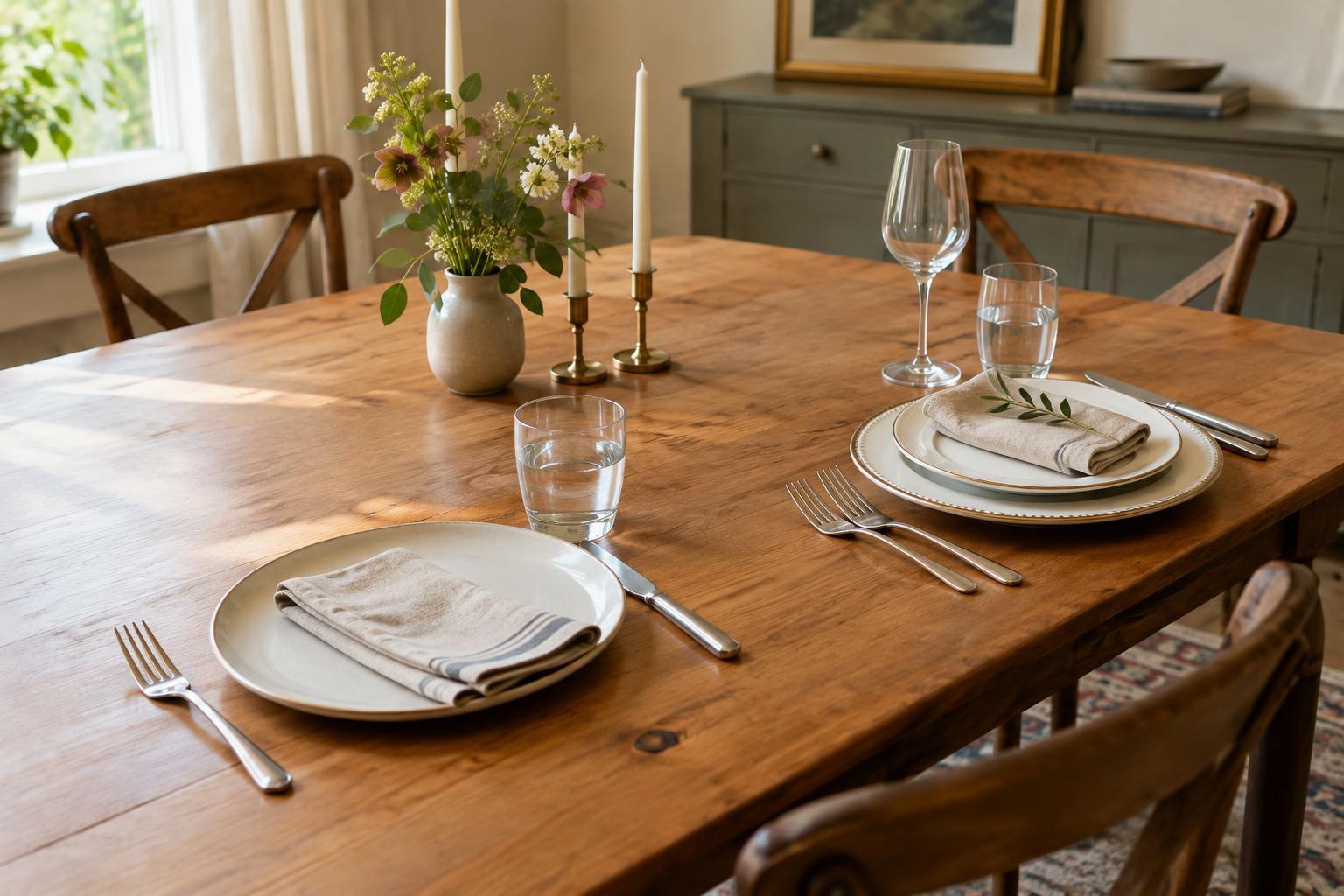
Casual does not have to mean careless. Straightening the chairs, checking that glasses are clean and making sure every guest has a napkin often does more for the table than adding extra objects. Mixed plates or cutlery can feel deliberate when each place setting has what its guest needs.
Add structure for a formal dinner
A formal setting usually reflects the order of courses. Place the dinner plate in the center of each setting, or use a base plate if you plan to bring out course plates separately. Forks sit to the left; knives and spoons sit to the right, with knife blades facing inward. When several utensils are needed, arrange them so guests can work from the outside toward the plate as courses arrive. If a course needs a utensil you do not have room for, you can bring it out with that dish.
A bread plate, if used, sits above the forks, with a small butter knife resting on it. Drinking glasses sit above the knives. Put the water glass in the most accessible position and add any other glassware only if you will use it. A dessert fork or spoon may be placed above the dinner plate, but bringing dessert utensils out later is often simpler, especially on a smaller table.
Formal service benefits from a little advance planning. Walk through the meal in your mind: where will guests put a used napkin if they step away, how will you clear each course, and where will the next plates wait? You do not need a large collection of matching pieces. A consistent layout and an unhurried transition between courses can provide a sense of occasion on their own.
Make room for conversation and comfort
The center of the table should support the gathering rather than compete with it. Low flowers, a small bowl of seasonal fruit or a few candles can add warmth without blocking faces. Keep flames away from loose fabric and anything guests will need to reach across. If the table is narrow, one modest arrangement may work better than several.
Consider how guests will actually use the space. Leave room for arms beside plates, keep water within easy reach and offer a place for serving utensils when they are not in use. A guest who needs extra space may be more comfortable at an end seat or with fewer decorative items nearby. These adjustments are part of setting a good table, not departures from it.
Finish with a quick check
Once the table is set, sit down in one of the chairs. From that position, check whether the glass is easy to reach, the cutlery matches the food and the centerpiece allows you to see the person opposite. Make any changes before guests arrive. You can also set out water early and keep spare napkins close by.
The difference between a casual and a formal table is mostly one of detail and timing. Casual settings put the essentials close at hand and leave room for sharing. Formal settings guide guests through courses with a more deliberate arrangement. Both succeed when people can relax into the meal without having to wonder where things go.