Start with the people at the table
Good dining light helps guests see their food, read a menu if there is one, and recognize one another’s expressions. A table can feel dim even when the room is bright if the light falls behind the diners. It can also feel uncomfortably exposed when a bare bulb shines into someone’s eyes. Before changing a fixture or buying a lamp, sit in each chair at the time you usually eat. Notice where shadows fall, whether anyone faces a bright bulb or window, and whether the center of the table is noticeably darker than the edges.
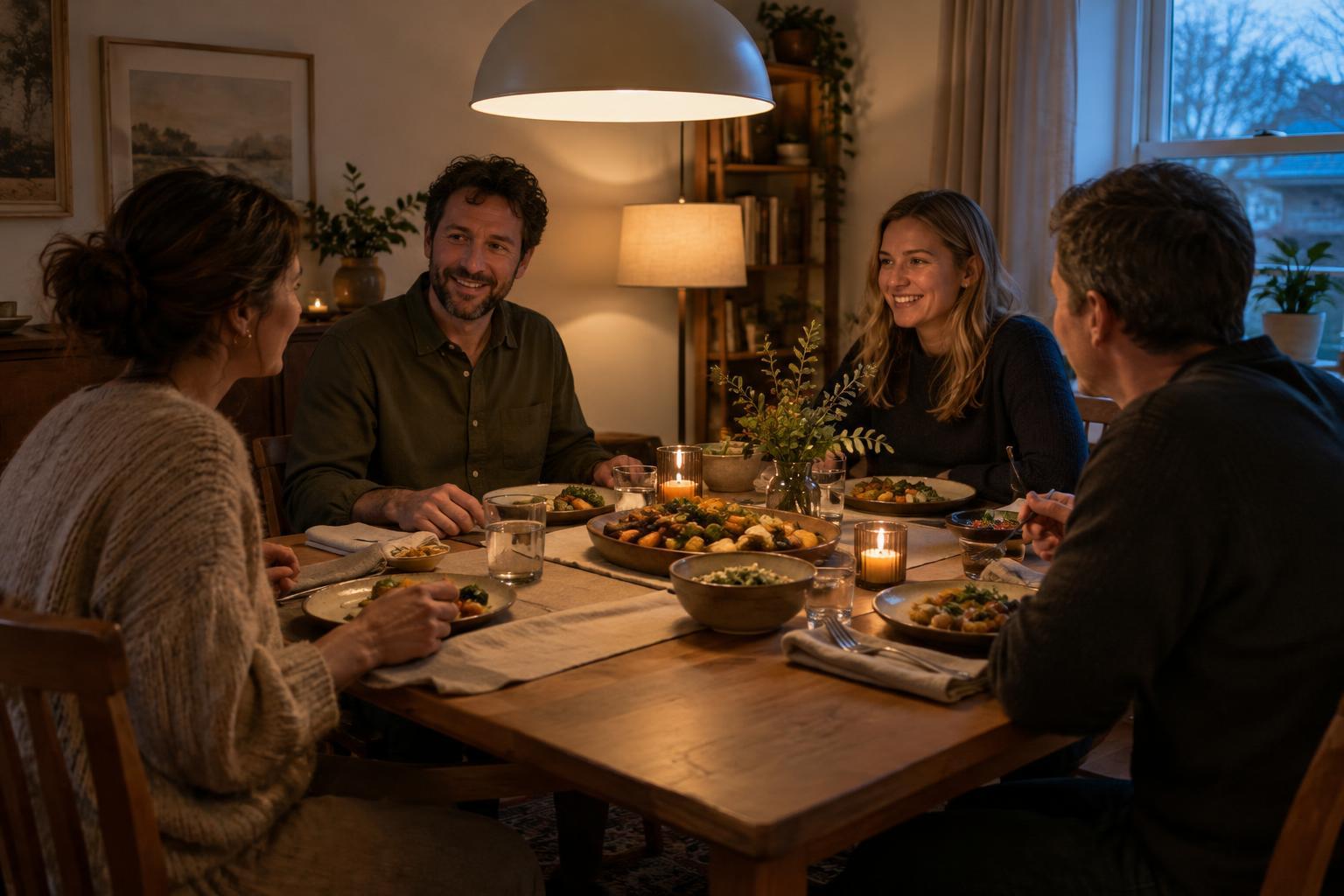
Aim for a balance rather than a dramatic effect. The table should be the visual focus, but people should not feel stranded in a pool of light while the rest of the room disappears. A little light on nearby walls, shelves or a sideboard helps the space feel settled. This matters especially when dinner moves beyond the meal: guests may shift chairs, reach for a serving dish or linger over conversation.
Give the overhead light a softer job
A pendant or chandelier can define the table, but it does not need to provide every bit of light in the room. A shade or diffuser can soften the view of a bulb and spread light across place settings. If the fixture is adjustable, try it at different heights while someone sits at the table. The goal is to illuminate the surface without blocking sightlines or putting a bright light source directly in anyone’s view.
A dimmer, where compatible with the fixture and bulbs, makes it easier to adapt the same setup to different meals. Keep the light brighter while setting the table, carrying dishes and clearing plates; lower it once everyone is seated if the food and faces remain easy to see. Without a dimmer, you can often get a gentler result by turning off an overly strong ceiling light and using a combination of smaller lights instead. Check bulb and fixture guidance before making changes.
Use nearby lamps to make the room feel inviting
A shaded lamp on a sideboard or shelf can add a warm-looking glow without taking up dining space. It may also ease the contrast between a lit tabletop and a dark corner. If one side of the table feels shadowy, a lamp placed off to that side can help, provided its bulb is hidden from seated eyes. Floor lamps and wall lights can serve the same purpose when surfaces are limited.
Try to keep neighboring lights visually compatible rather than matching them exactly. Bulbs described as warm white often suit relaxed evening meals, while very cool-looking light may make a cozy setting feel stark. What matters most is how the combination looks in your room. Turn on the lights you plan to use, set out a plate and glass, and check whether colors look appealing and faces are comfortably visible. Adjust one light at a time so you can tell what helps.
Work with daylight, not against it
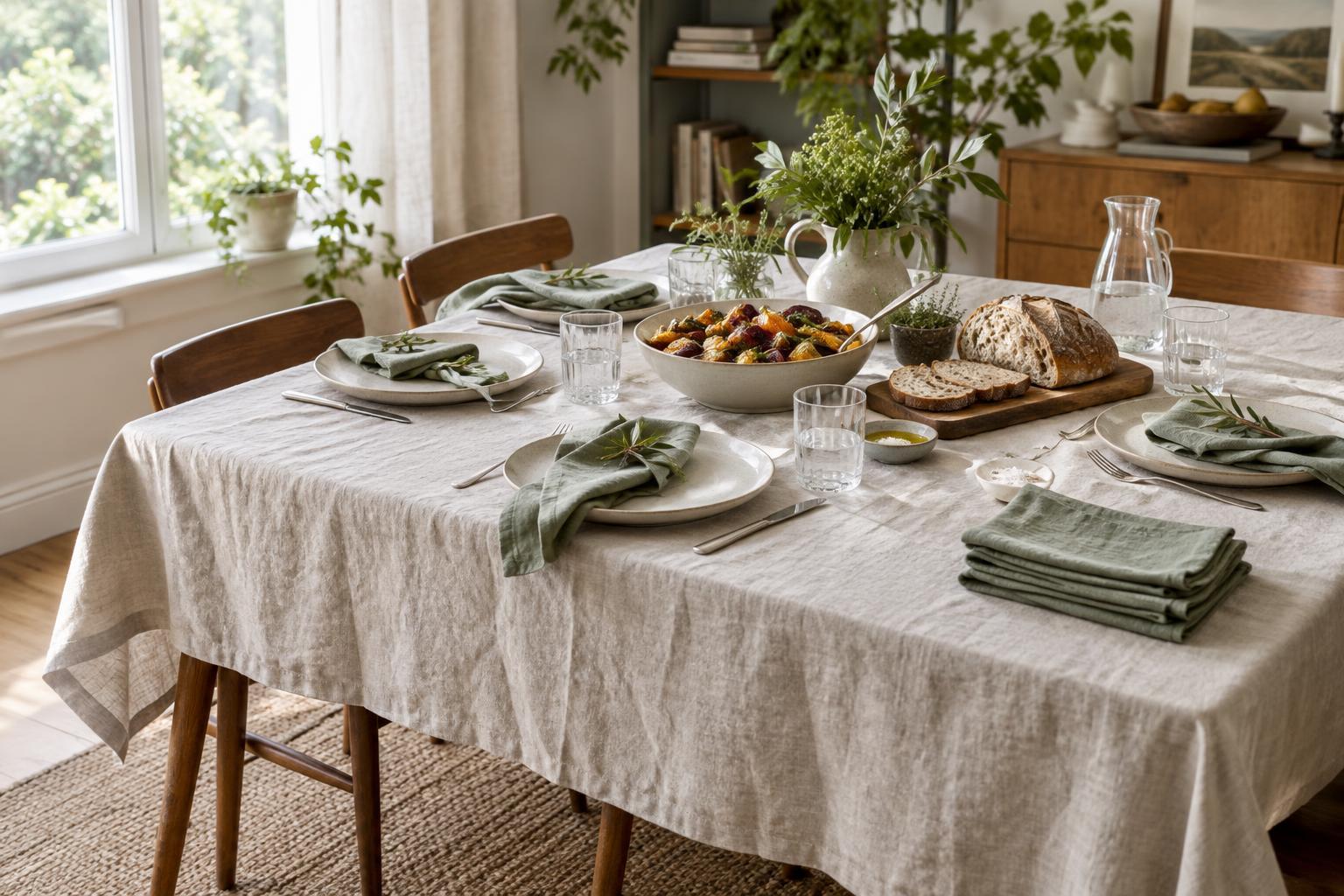
Daytime dining brings its own challenges. A table beside a window may look pleasant until low sun reaches a guest’s eyes or throws a hard shadow across their plate. Curtains, blinds or a sheer layer can diffuse direct light while preserving a sense of daylight. If the table can move, even a small shift may make one seat more comfortable.
As daylight fades, turn on room lights before the table becomes difficult to see. This gradual change is usually more comfortable than waiting until the room feels dark and then switching on a strong overhead fixture. For a meal that begins in daylight and continues into evening, a nearby shaded lamp offers a simple transition without interrupting conversation.
Add atmosphere without sacrificing ease or safety
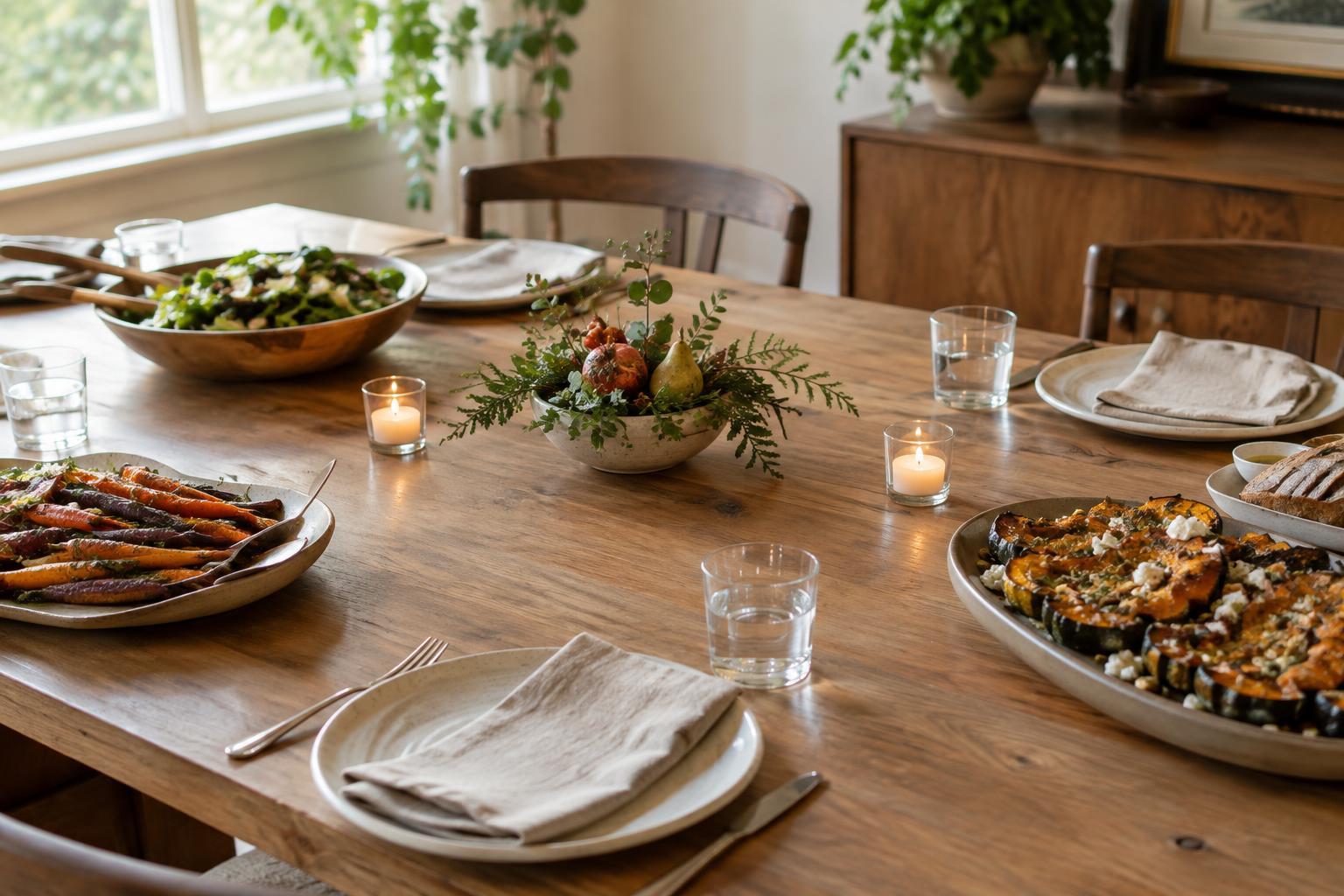
Candles can add a gentle point of light, but they work best as an accent, not the sole way to see dinner. Keep flames away from napkins, greenery, loose sleeves and anything guests need to reach across. Stable holders and a clear spot on the table are more useful than an elaborate arrangement that crowds serving dishes. Where open flames are impractical, battery-operated candles can create a similar visual cue.
The final test is a full place setting and a few minutes in a chair. Can you see the food clearly? Is the person across from you easy to look at? Can everyone move around the table without stepping into darkness or catching a cord? Comfortable lighting rarely calls attention to itself. It gives the meal enough visibility, leaves room for conversation and makes people glad to stay a little longer.