Start with the meal, not the tablecloth
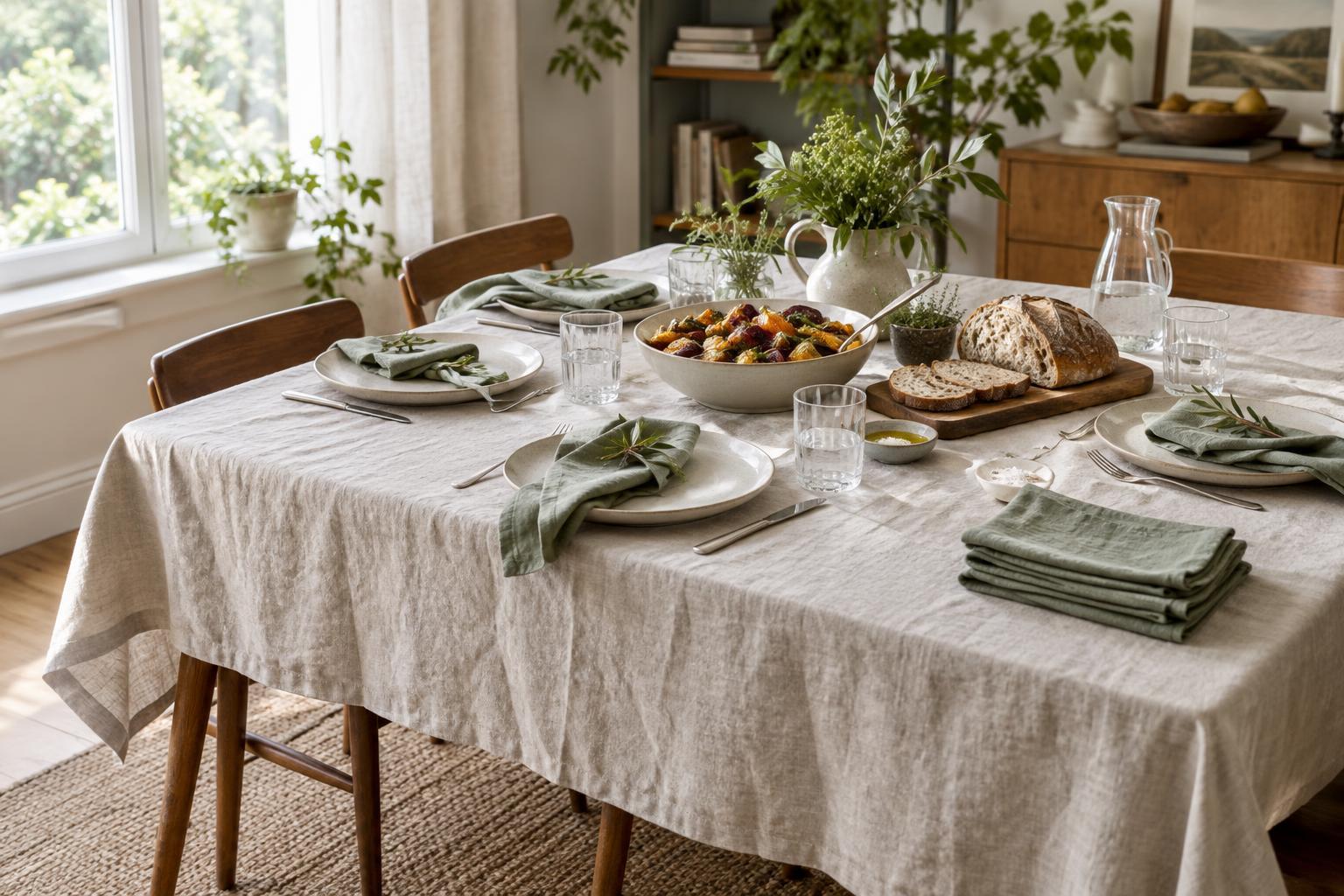
A tablecloth can soften a room, but it is not the right starting point for every meal. Think first about how people will serve and eat. A shared meal with bowls passed around the table calls for room to move dishes and wipe up small spills. A quieter dinner with individual plates may leave more space for a full cloth, layered napkins or a runner.
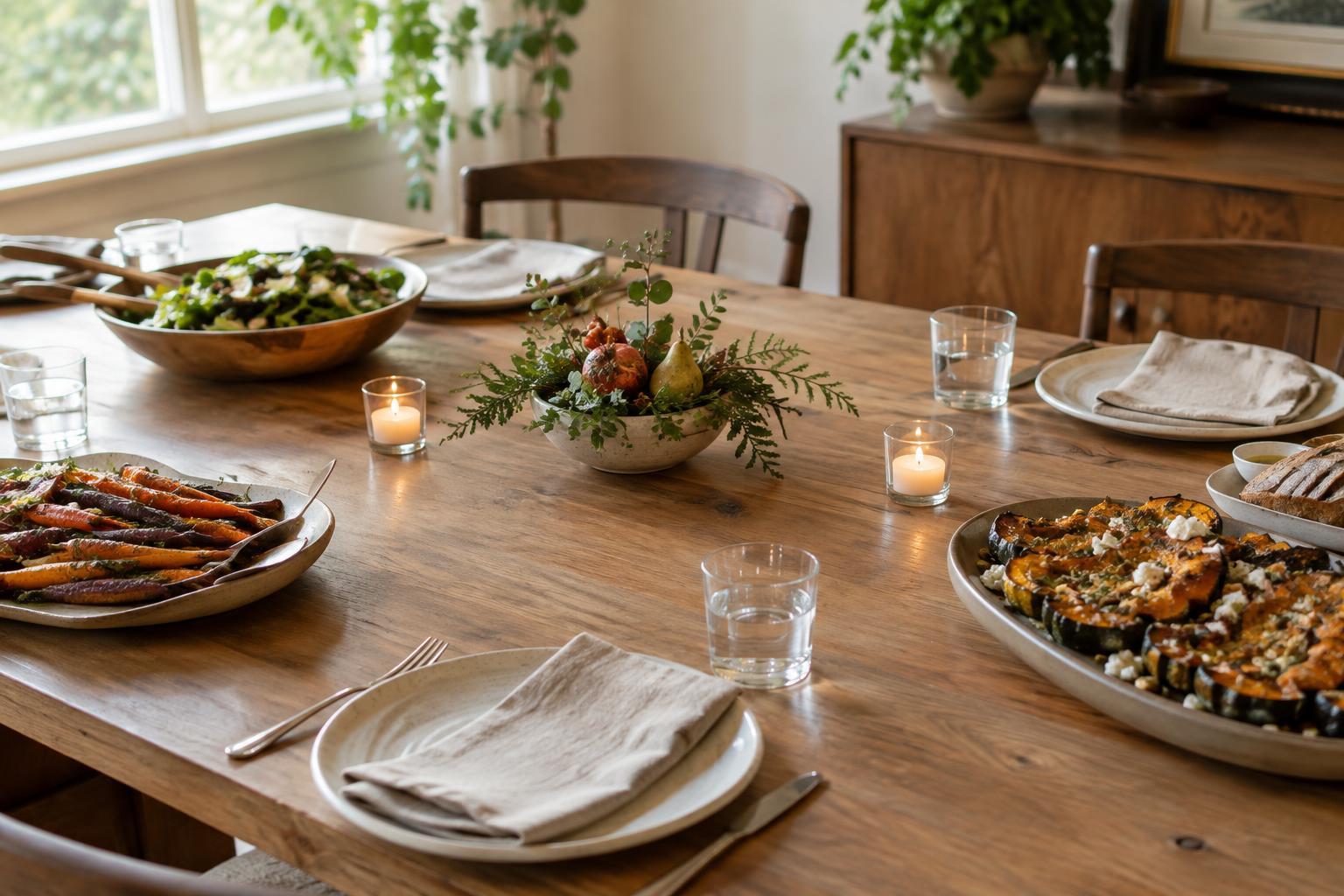
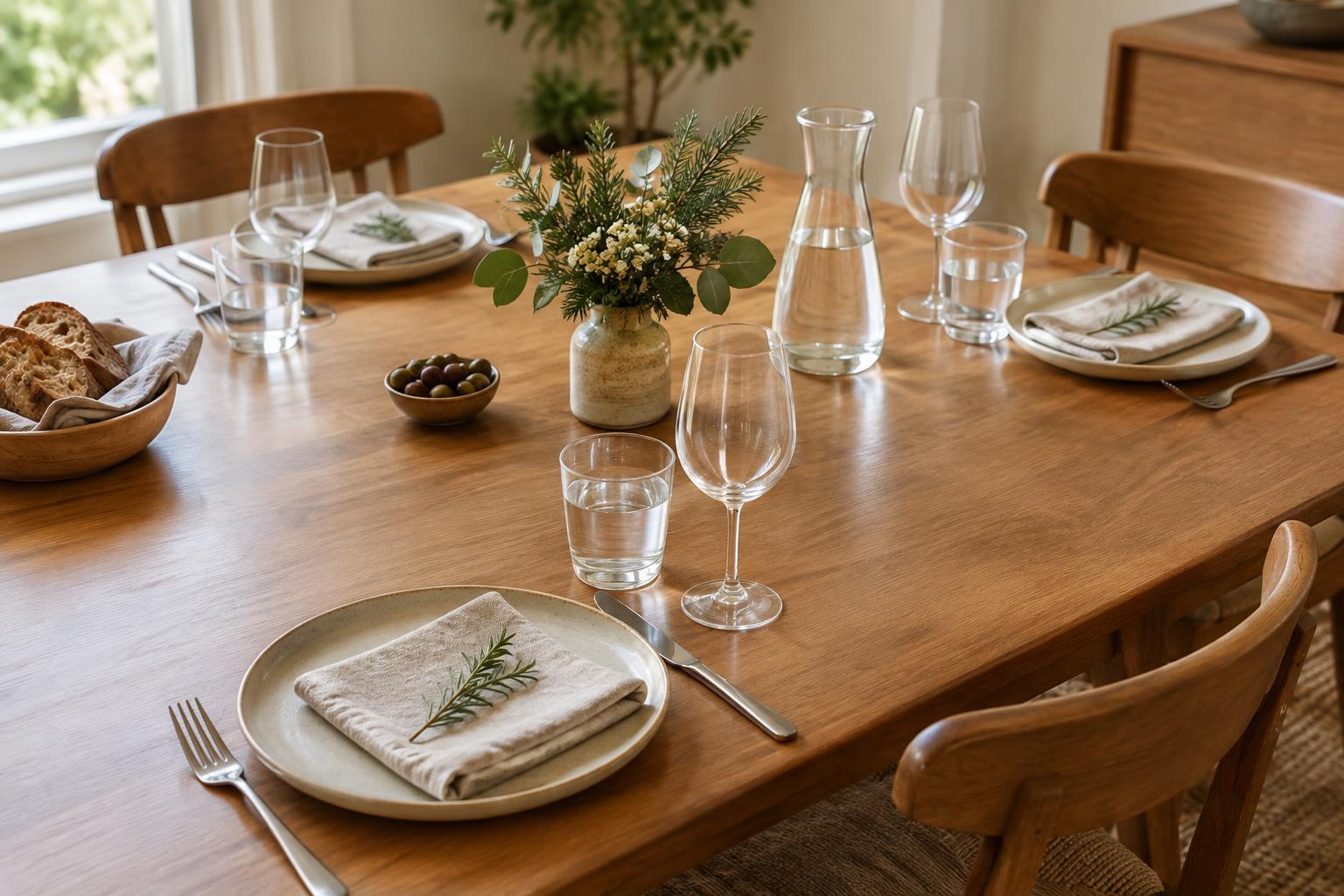
The mood matters too. A relaxed lunch can feel inviting with a bare tabletop and washable cloth napkins. A longer dinner might benefit from a cloth that visually gathers the place settings together. Neither arrangement is more hospitable by default. The useful question is whether guests can settle in, reach what they need and eat without worrying about the linens.
Choose the pieces you will actually use
You do not need a separate set for every occasion. A small collection might include napkins for everyday meals, a tablecloth for gatherings and a runner for times when you want to dress the table without covering it. If your table has a surface you enjoy seeing, placemats or napkins alone may be enough.
Measure before buying a tablecloth. Its dimensions should allow a drop that looks intentional without catching on diners’ laps or chairs. For a runner, leave enough clear space for plates and serving dishes; a narrow strip of fabric should not force everything else to the edge. At a small table, setting out the dishes you expect to use can tell you more than an empty-table measurement.
Consider quantity as well as size. Having a few extra napkins makes it easier to replace one during a meal and to keep using cloth while the rest are in the wash. Matching pieces can look orderly, but a limited mix of colors or textures is often easier to build over time.
Let fabric and color work with real food
Cotton and linen are familiar choices because they can feel comfortable against the hands and are often washable at home, though care requirements vary by item. Linen tends to develop a relaxed, creased look; cotton may give a smoother appearance depending on its weave and finish. Blends can be worth considering if you want a particular feel or easier wrinkle management. Check the care label rather than assuming that a fabric name guarantees a washing method.
Color and pattern can make maintenance feel less demanding. A patterned cloth may make a small mark less noticeable during dinner, while a pale, solid cloth puts the focus on the plates and food but may call for more attention to stains. Dark colors have their own appeal, though they can show lint or fading. Before choosing a vivid set, consider whether you are willing to wash it separately at first in case the dye runs.
Texture deserves a practical test. A napkin should be pleasant to unfold and use, not merely attractive beside a plate. A very loose weave or decorative fringe may require more care than you want to give it. If a fabric needs careful ironing to look the way you like, decide whether that step fits your routine before making it your everyday choice.
Build a low-effort care routine
The easiest linens to maintain are the ones you can deal with soon after the meal. Shake out crumbs, check for stains and follow the item’s care label for washing and drying. If something spills, gently blotting it before it sets is usually more helpful than rubbing it into the fibers. Avoid applying heat to a visible stain until you have checked whether it has come out.
Sort linens with their fabric and color in mind, especially when washing new, deeply colored pieces. Wash napkins often enough that food residue does not sit on them between uses. Dry and put them away according to their care instructions; if you prefer a softer, less formal look, folding them neatly may be all the finishing they need. Reserve ironing for the pieces or occasions where a crisp finish genuinely adds something for you.
Set a table people can relax around
Linens should support the meal rather than become something to protect from it. For saucy dishes, easy-wash napkins may be more valuable than a delicate tablecloth. For a meal with many shared plates, a simple runner can add color while leaving the tabletop available for serving. If children are joining, pieces that can be washed without special handling may help everyone feel more at ease.
Try one arrangement before committing to a larger set. Lay the table, sit down and notice whether the cloth shifts, the napkin feels useful and the serving dishes have a natural place to land. The right linens are not necessarily the most formal ones. They are the pieces that make a meal feel considered while remaining simple enough to bring out again.