Give the meal first claim on the table
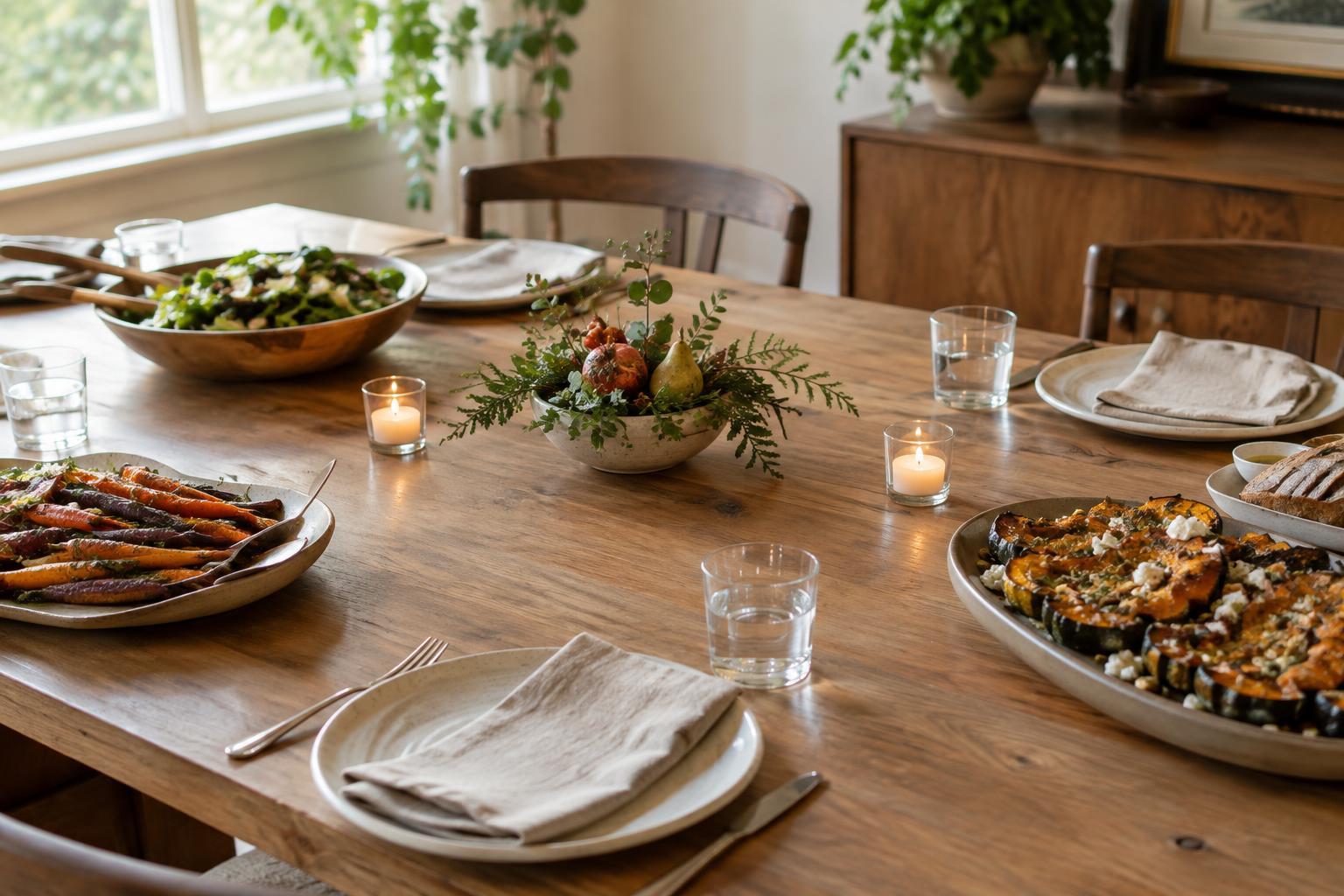
The most useful centerpiece begins with a question: what else needs to fit? Set out plates, glasses, napkins and any shared dishes before arranging flowers or candles. A table can look generous when it is empty and feel cramped once a bread basket and water jug arrive. Planning around the meal lets the centerpiece add atmosphere rather than compete for space.
If food will be passed around, leave open stretches near each place setting and a clear landing area for serving bowls. If you expect to keep most dishes on a sideboard, the center can carry a little more detail. Either way, make a quick rehearsal with the objects you intend to use. You need not measure every gap; check that guests can reach their glasses, put down a serving spoon and move a dish without rearranging the display.
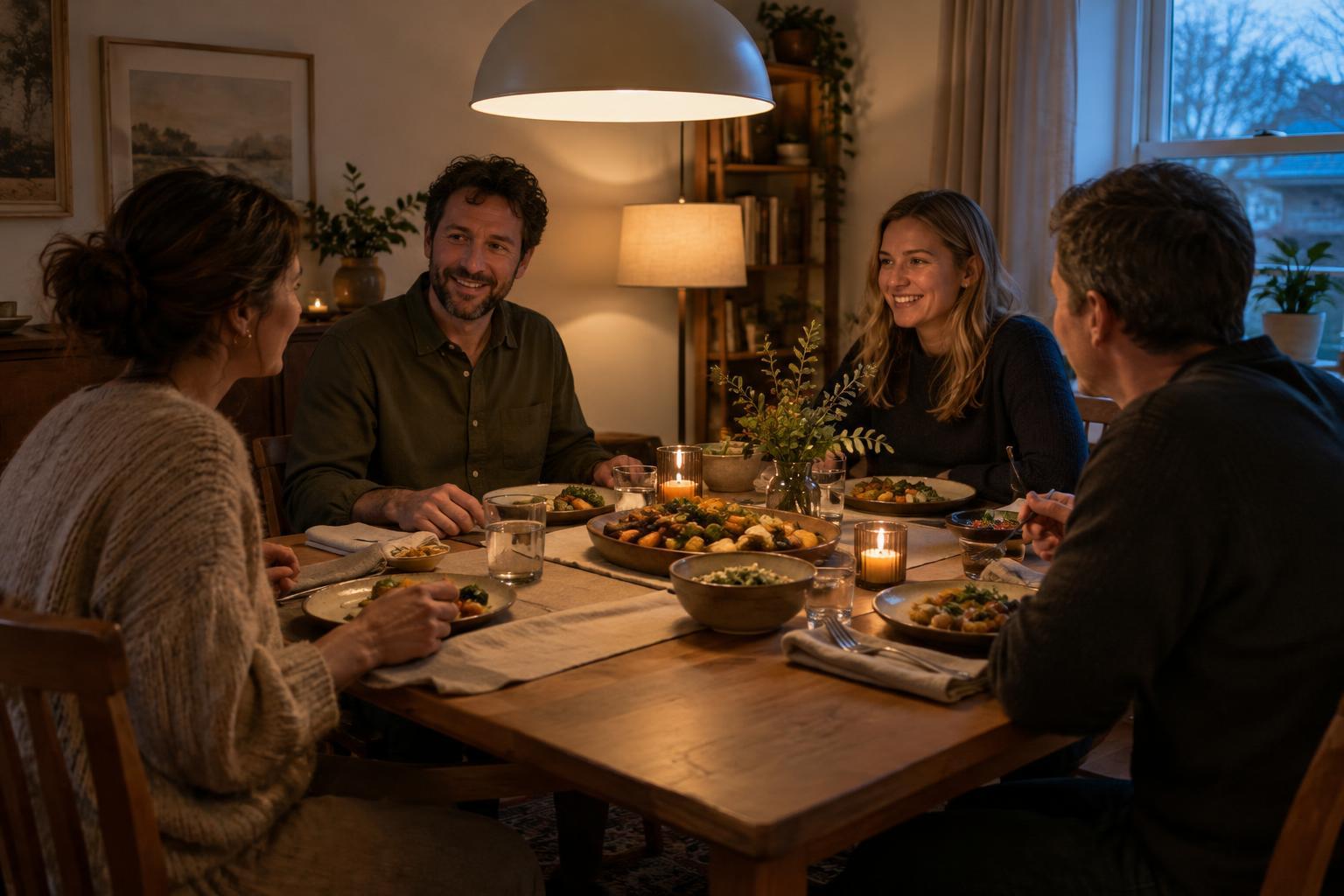
Keep faces in view
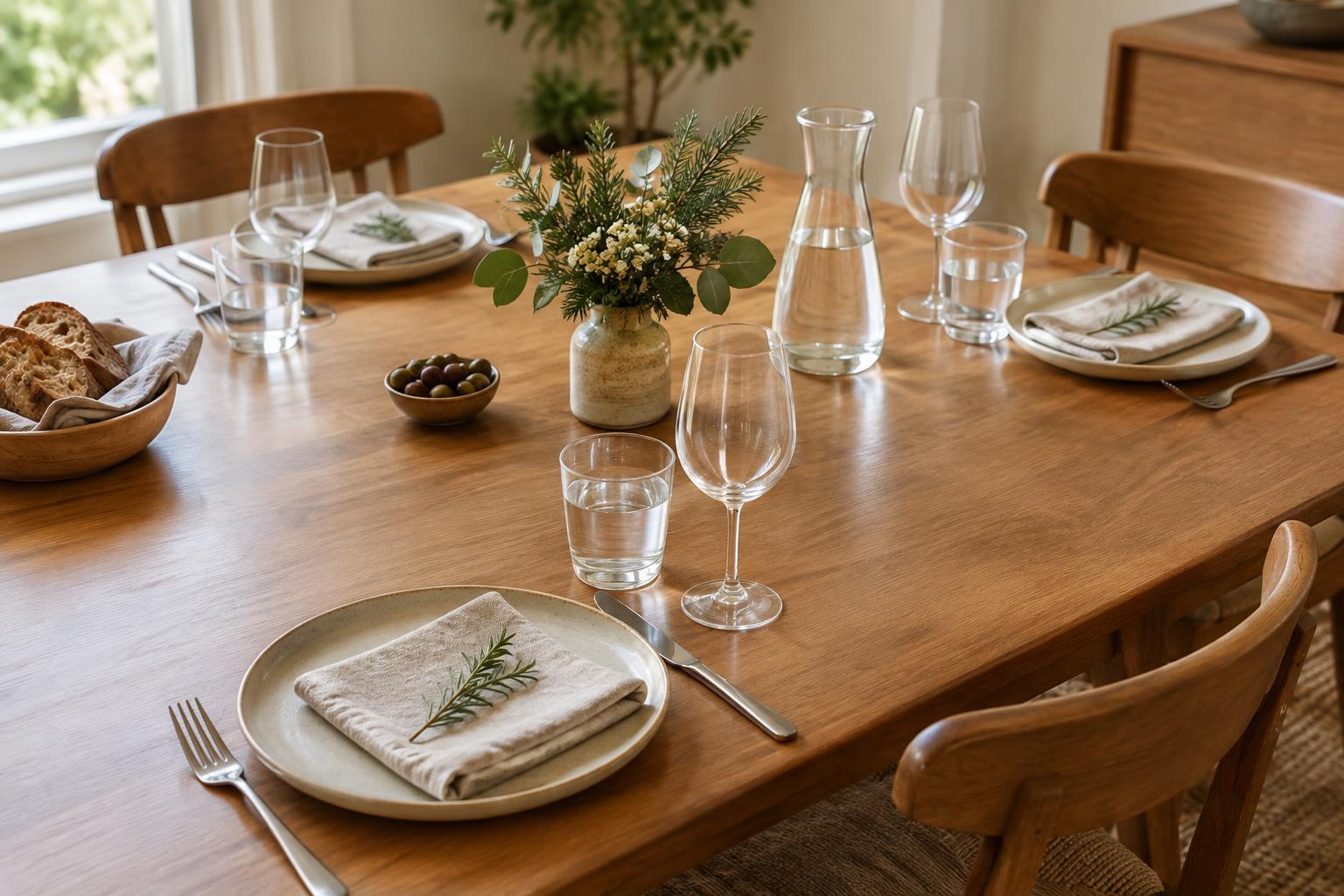
Conversation is easier when people can see one another across the table. Low vessels are a dependable choice: try a shallow bowl, a small cluster of bud vases or greenery laid loosely along the middle. A single tall arrangement can also work if its visual weight sits above eye level, but it is worth testing from a seated position. What looks airy from the doorway may block someone’s view once everyone sits down.
Shape matters as much as height. A narrow arrangement can make a long table feel connected while leaving room beside it for plates and platters. On a round table, a compact grouping usually gives each guest a similar view. Avoid delicate branches that spread into the space above plates or lean toward a neighbor; guests should not have to navigate the centerpiece while reaching for dinner.
Choose materials that behave well during dinner
A centerpiece should be stable, comfortable to sit near and simple to maintain. Use vessels with enough weight and a broad enough base that an accidental brush is unlikely to tip them. Check for drips beneath recently watered flowers and for loose leaves or petals that may fall onto food. If the tablecloth is important to you, a discreet tray beneath grouped vessels can make clearing and cleanup easier.
Scent deserves similar attention. Strongly fragrant flowers, candles or herbs may compete with the aromas of the meal, particularly at a small table. Unscented candles, a bowl of seasonal produce or a few clipped stems can create texture without adding much fragrance. Keep flame away from foliage, sleeves and passing dishes, and choose another source of light if candles would be awkward to manage.
Build interest without filling every gap
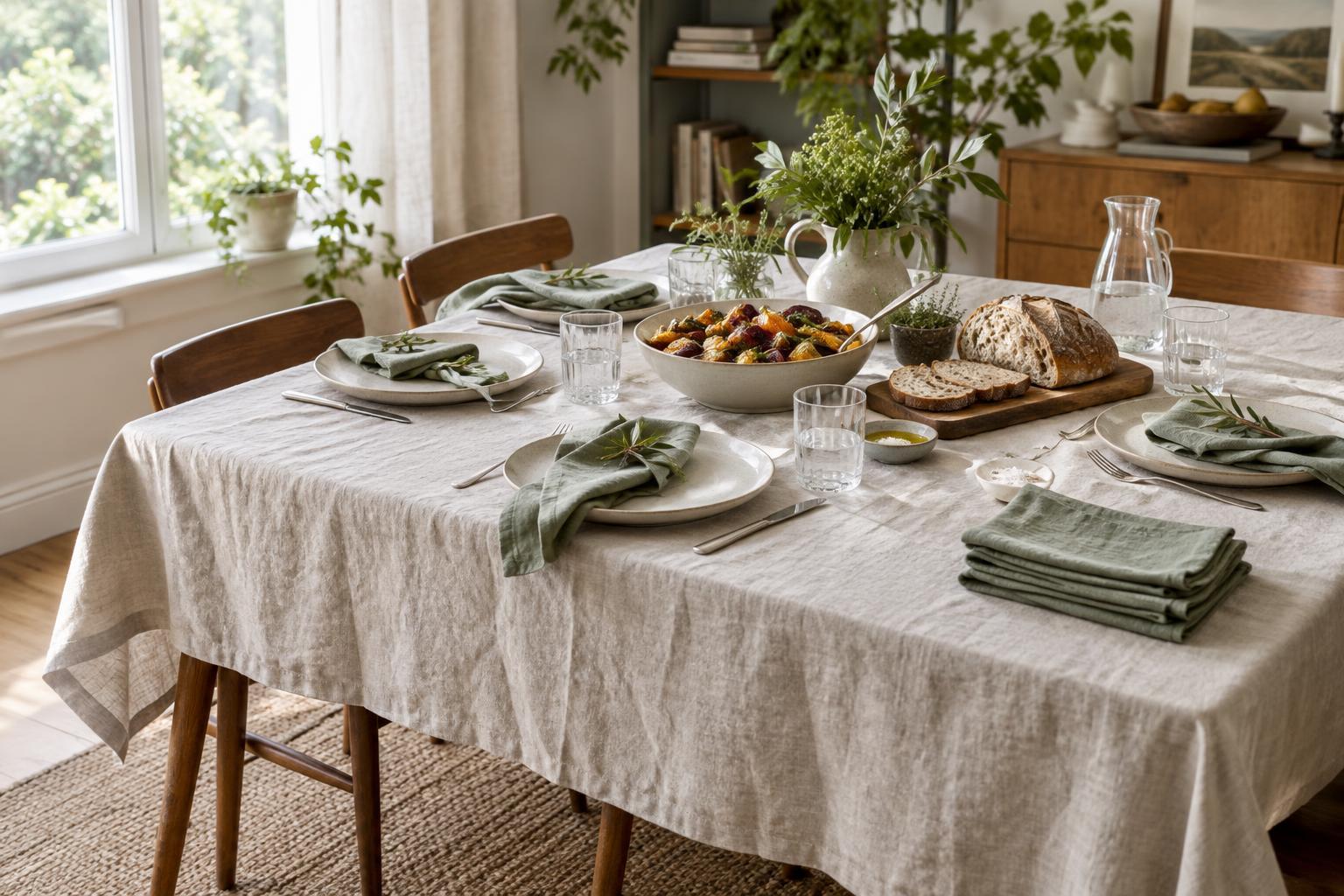
A restrained arrangement need not feel sparse. Repeat one material, color or shape in small variations: several clear vessels holding individual stems, for example, or a low bowl paired with a few smaller objects. Varying texture can do more work than adding more pieces. Smooth ceramics beside leafy stems, or linen beneath a simple bowl, give the eye somewhere to rest.
Let the table setting contribute to the composition. A colorful serving dish, folded napkins or the food itself may provide all the contrast you need. Leave some bare tabletop visible so each element has room to register. If a centerpiece feels unfinished before dinner, resist filling every opening; the table will change as glasses, bread and shared plates join it.
Make it easy to adapt
The best test comes just before guests sit down. Take a seat at several places and look across the table. Reach for an imagined platter and notice whether your hand would catch a stem or candleholder. If something is in the way, move it rather than asking guests to work around it. A centerpiece is part of hospitality, not a display that must remain untouched.
Small, separate pieces are especially flexible. You can shift a vase to make room for a main dish or remove a candle when the table gets busy. Keep a nearby shelf or counter clear for anything you may need to relocate. When the arrangement can change with the meal, the table stays welcoming from the first glass of water through the last shared plate.