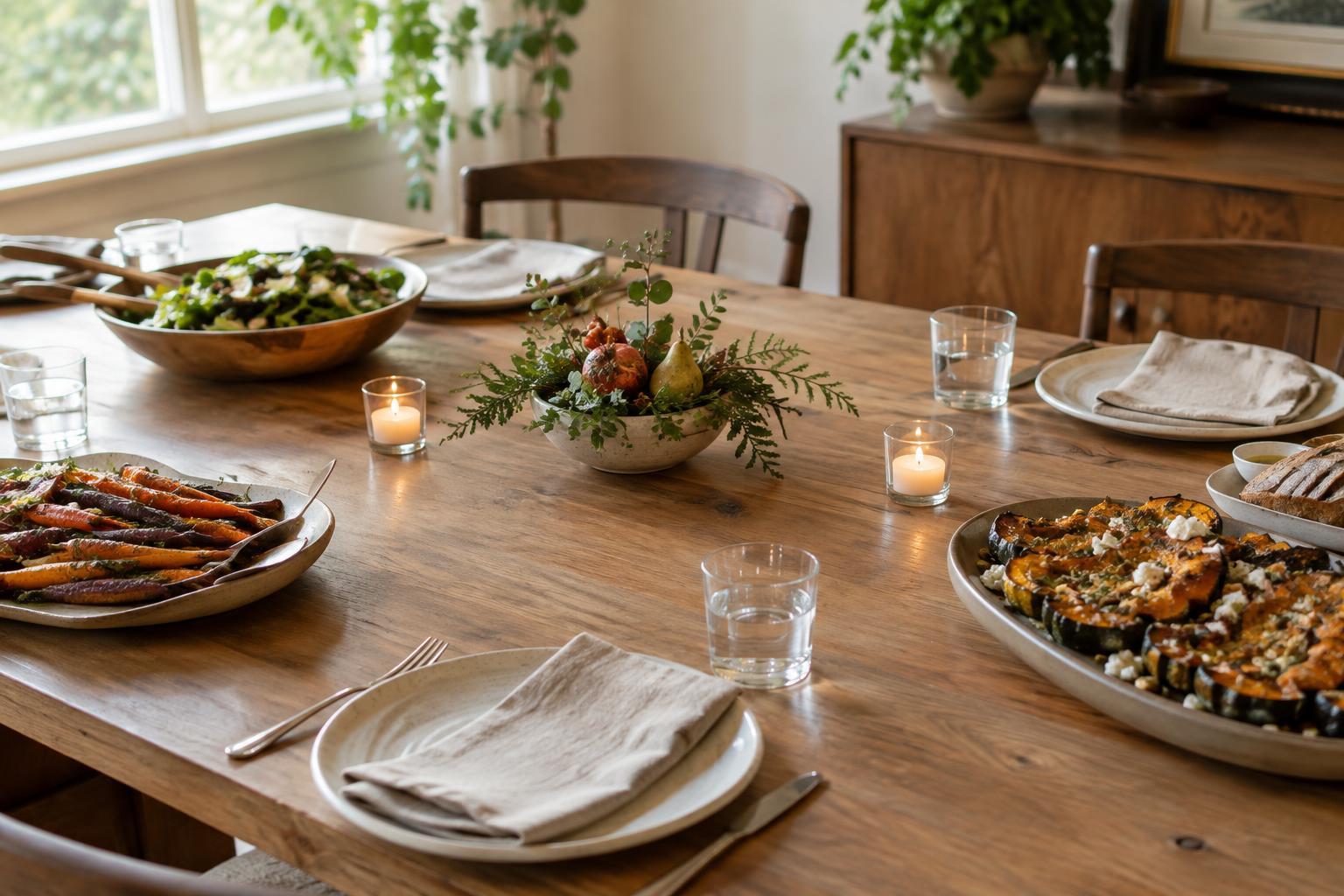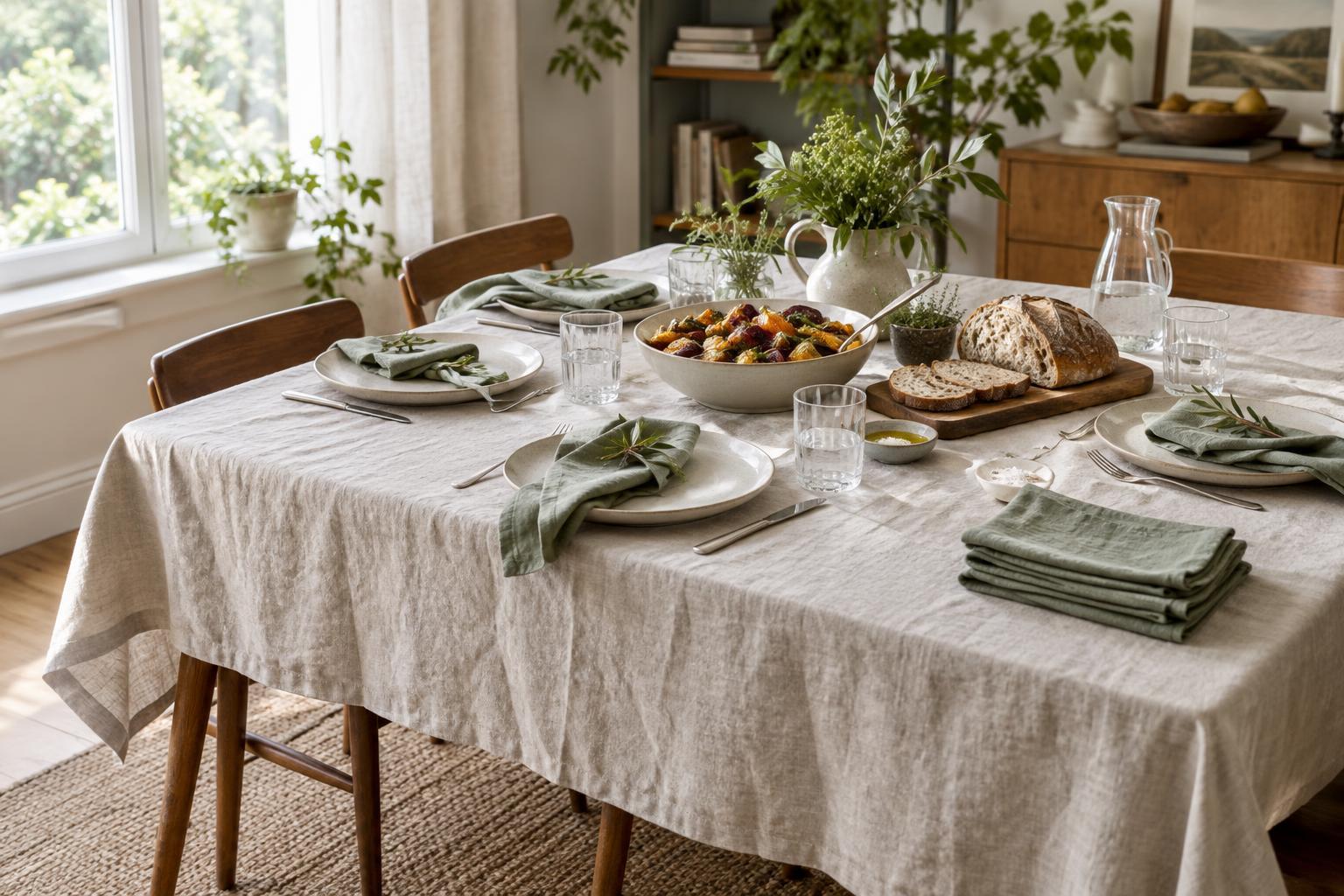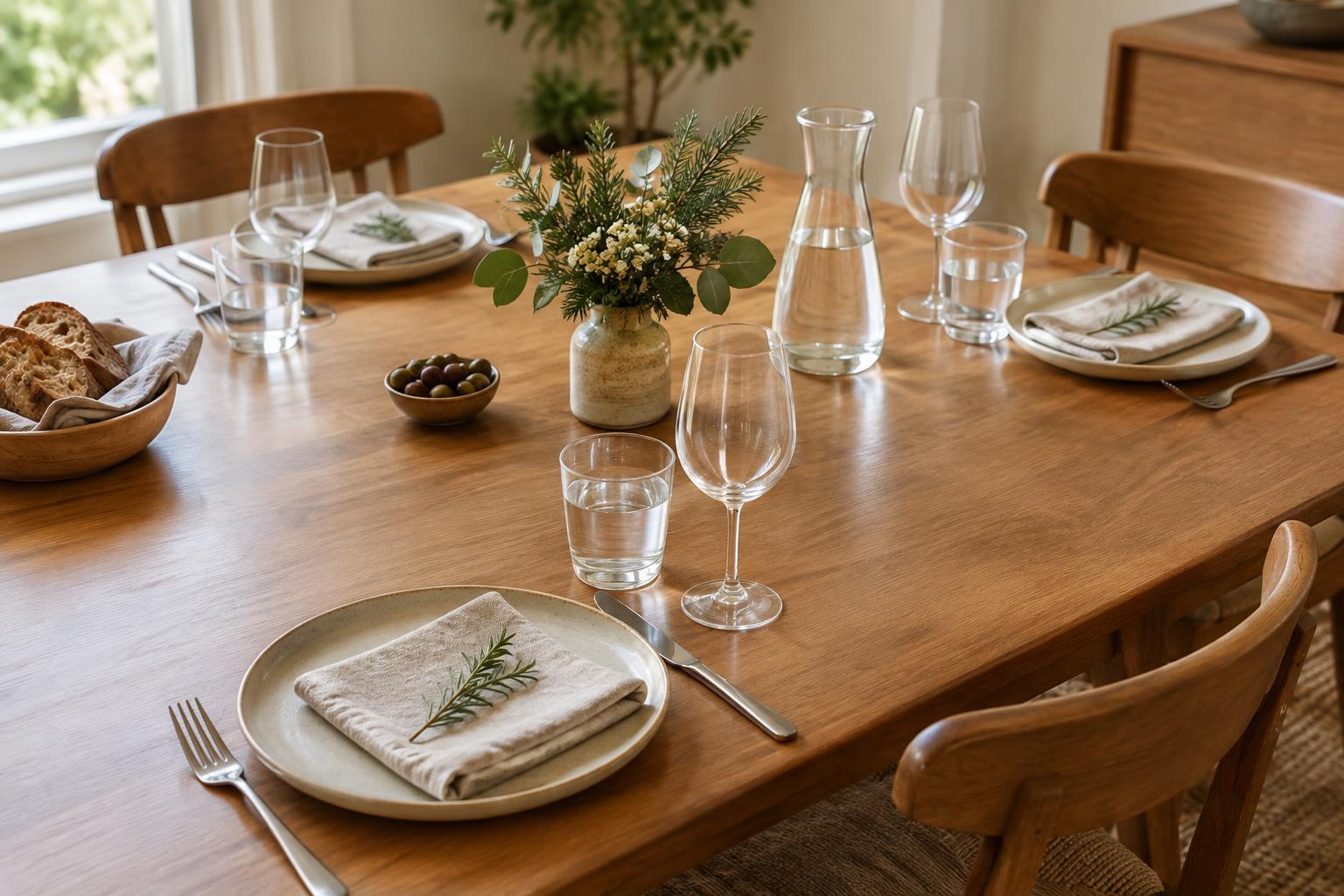
Start with the drinks you will serve
Before setting out glasses, decide what guests will need during the meal. Water is the simplest starting point: give each person a water glass, even if other drinks are planned. Add a glass for another beverage only when you expect to serve it or have offered it as a choice. A table does not feel more hospitable because it holds every type of glass you own. Unused pieces can crowd the setting and make it harder to pass dishes.
Think about how drinks will reach the table. If guests will pour their own water, place a carafe where people can reach it without leaning across someone else’s plate. If you plan to offer several drinks, you can keep extra glasses nearby and bring them out when guests choose. That approach works especially well when some people prefer a nonalcoholic option or want only water.
Give every glass a clear, comfortable place
For a conventional place setting, put the water glass above and slightly to the right of the plate, near the tip of the dinner knife. This gives it a recognizable place without putting it in the path of the meal. If you are using a second glass, set it beside or a little behind the water glass, toward the upper right. Guests should be able to lift either glass without moving the other one.
Treat that arrangement as a starting point, not a strict rule. A narrow table, shared platters, or a guest’s preferred reach may call for a small adjustment. Check the setting from a seated position: can you pick up the glass without stretching over cutlery or another person’s space? Is there room to set it down confidently? If not, move it closer to the diner or remove a glass that is not needed yet.
Choose glasses that fit the meal and the table
A stable, comfortable glass often serves guests better than a specialized one. For a casual supper, a tumbler can hold water, juice, or a mixed nonalcoholic drink. Stemmed glasses may suit a more formal meal, but their height and delicate bases need more space. You do not have to match every glass perfectly; similar sizes and a consistent arrangement can make a mixed collection feel intentional.
Consider what else will occupy the tabletop. Tall centerpieces, candles, serving bowls, and bottles all compete with glassware for room and sightlines. Leave enough open space for guests to talk across the table and for dishes to be passed. On a small table, a single glass at each place and a few additional glasses within easy reach may be more useful than a fully laid-out setting.
Make the arrangement work during service
Place glasses on a steady surface, away from the table’s edge and from spots where a serving dish is likely to land. Before guests sit down, check that each glass is clean, dry, and free of strong cupboard or detergent odors. Handle glasses by their base or lower portion where practical, rather than touching the rim. These small preparations make the setting pleasant to use without drawing attention to it.
As the meal unfolds, watch for what the arrangement needs. Refill water at a comfortable moment, or make it easy for guests to refill their own. If a new drink calls for a different glass, bring it when the drink is offered rather than leaving it on the table throughout the meal. Clear an empty glass only when you are reasonably sure the guest has finished with it; a quick question is better than taking away something they still need.
Let hospitality guide the final edit
The best glassware layout is legible at a glance. Each guest should know which glass is theirs, be able to reach it easily, and have somewhere to put it down between sips. Before the meal, look along the table for crowded settings or glasses that could be knocked during conversation or serving. A few inches of breathing room can matter more than perfect symmetry.
It also helps to leave assumptions off the table. Not everyone wants the same beverage, and no guest should have to explain a choice in order to feel included. Offer water readily, describe any other options simply, and set out the glass that suits the drink a person selects. Arranging glassware this way keeps the table orderly while making room for the people around it.