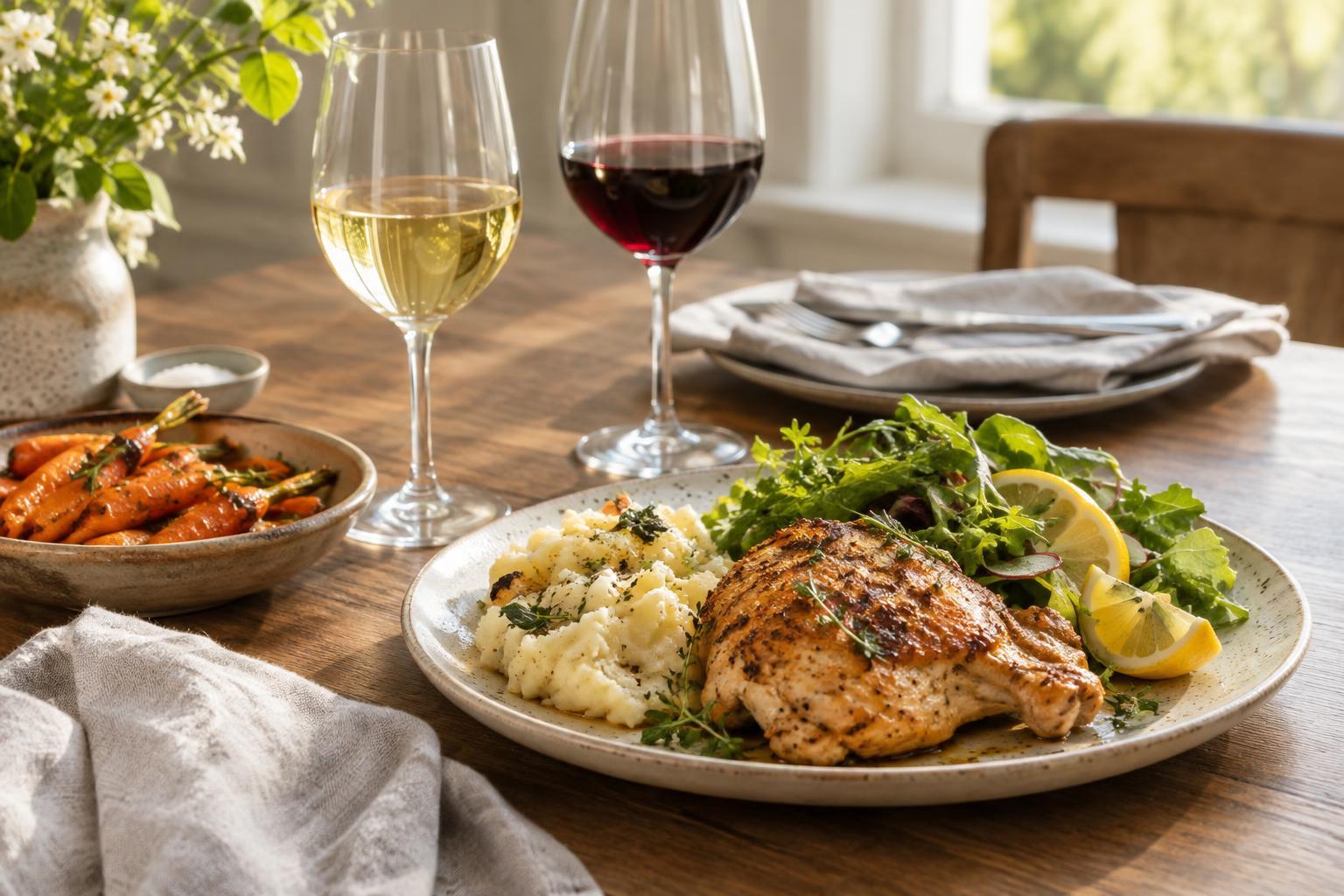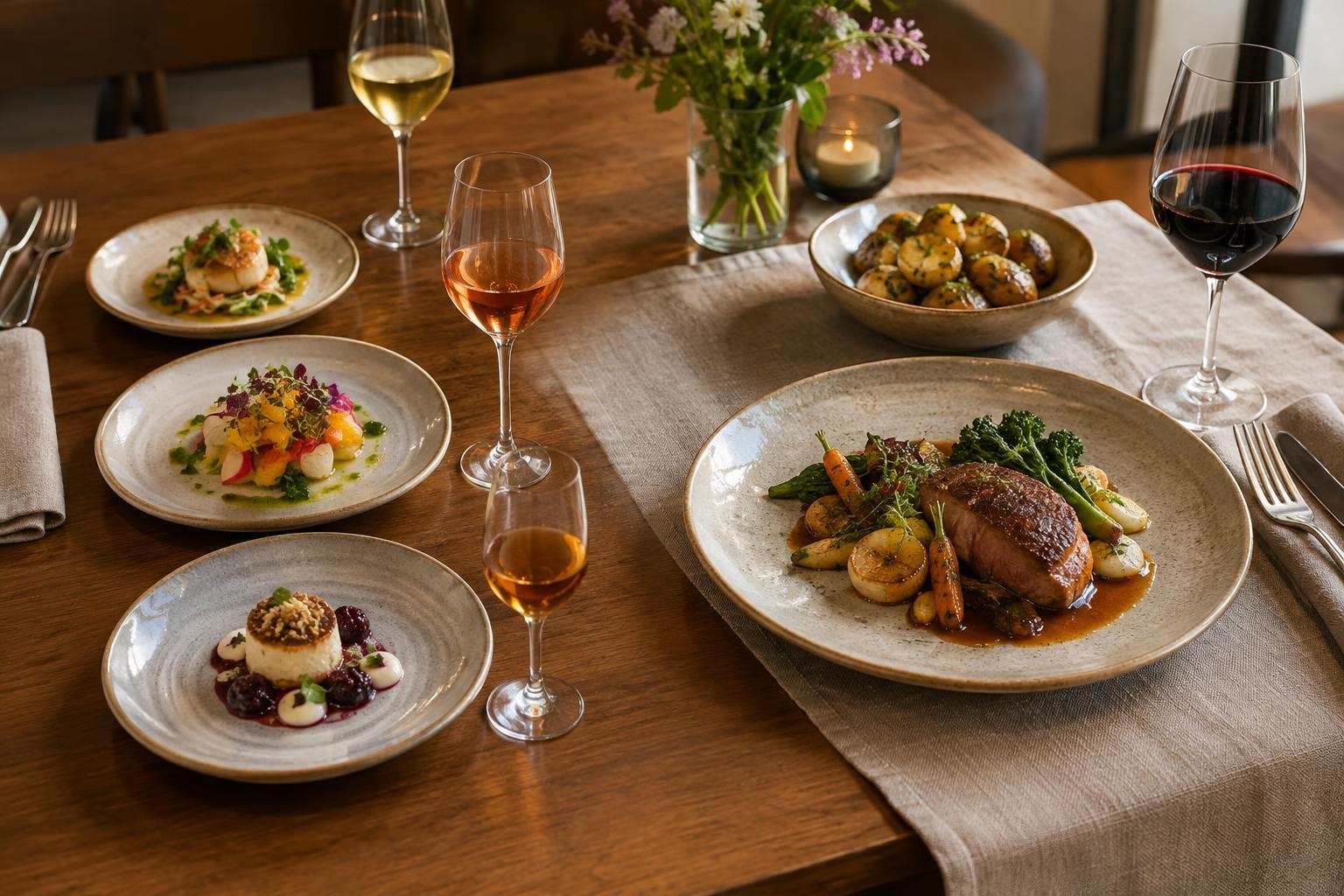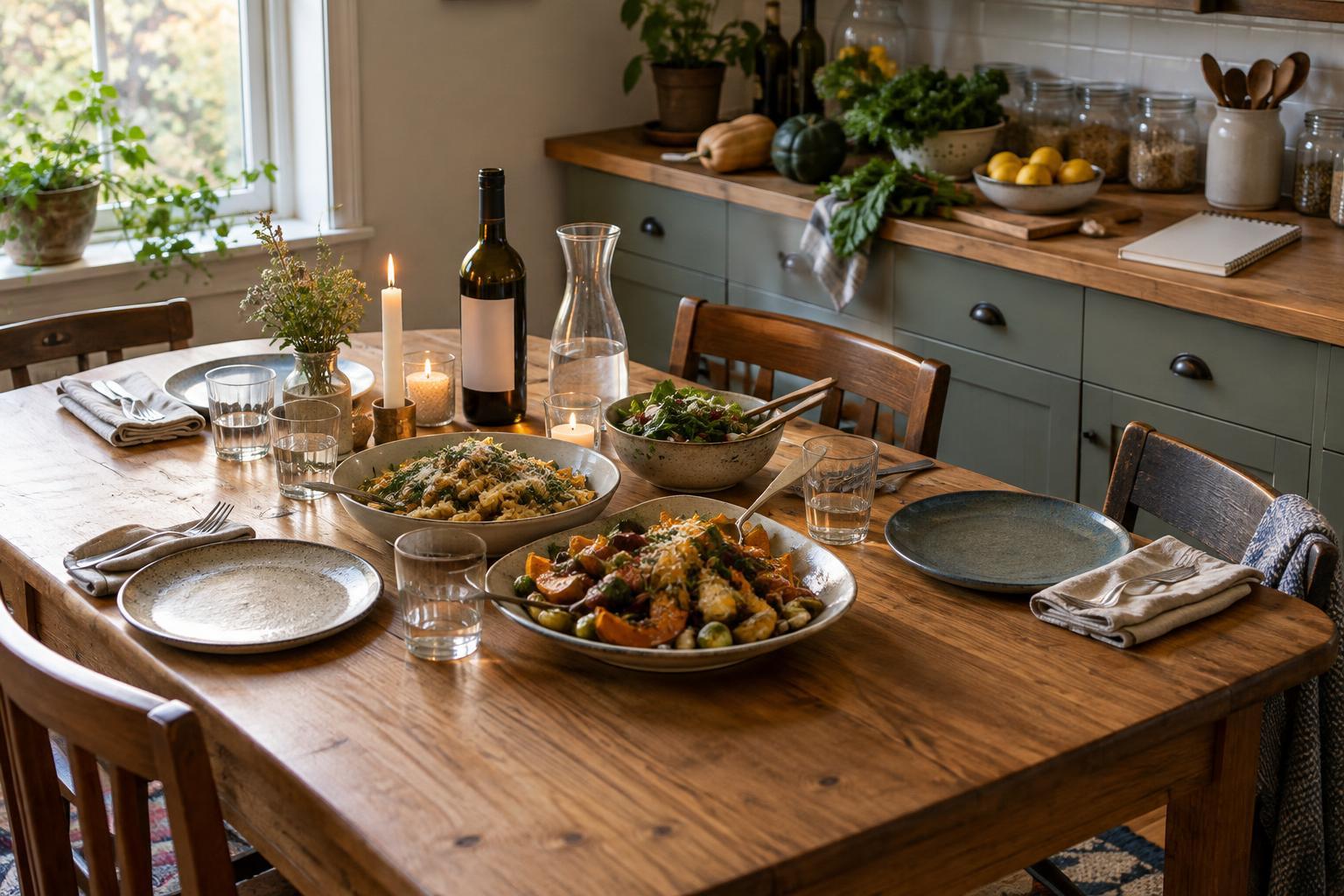
Start with the whole evening, not the main course
It is easy to price a dinner party by looking at the main dish alone. But a menu also needs something to drink, a few accompaniments and perhaps dessert. Before choosing recipes, decide what you are comfortable spending in total and how many people you expect to feed. Then look at the amount per guest as a planning guide, not a target you must spend.
Write down everything you intend to serve, including snacks before dinner, bread, garnishes, tea or coffee and drinks. If guests are bringing something, confirm what it is before leaving it out of your plan. A simple menu served generously usually feels more complete than an ambitious one that leaves no room in the budget for the small things that make dinner comfortable.
Give each part of the menu a purpose
A realistic budget is easier to keep when every dish earns its place. Choose one element to anchor the meal, then build around it with less costly ingredients that suit the same flavors. A roast vegetable platter, for example, can become the centerpiece when paired with a hearty grain, a bright sauce and a crisp salad. If the main course is more expensive, consider a modest starter and a dessert made from everyday ingredients.
You do not need a separate course for every moment of the evening. A bowl of olives or spiced nuts can welcome guests while you finish cooking; fruit with cream can close a substantial meal. Skipping a course is often more effective than making several dishes in portions too small to satisfy anyone.
Think about repetition, too. An herb bought for a sauce might also finish a salad, while citrus used in a dressing can flavor a dessert. Sharing ingredients across dishes helps reduce the number of items you buy just to use a small amount.
Price the shopping list as you will actually buy it
Recipe quantities and shopping costs are not always the same. A dish may call for a spoonful of spice, but you might need to buy a whole jar. Check the pantry before making your list, then account for full packages of any ingredients you lack. Note which leftovers you expect to use later, but do not rely on future meals to make tonight's spending feel affordable.
Portions deserve the same attention. Count guests, include yourself, and consider whether the meal has several filling sides or just one main dish. Choose a serving plan that allows people to eat comfortably without requiring an excessive amount of the priciest ingredient. When a recipe's yield is unclear, compare its ingredient amounts with the rest of your menu before committing to it.
If you can, check prices for your actual list before the shopping trip and identify an easy substitution for costly items. Seasonal produce can be good value, but availability and price vary; let what looks appealing and fits your budget guide the final choice.
Make a separate plan for drinks and extras
Drinks can quietly take up a large share of a dinner party budget. Decide in advance whether you will offer wine, beer, a batch drink or a small selection of options. Plenty of chilled water and one appealing nonalcoholic choice are useful regardless of what else is served. You can also invite guests to bring a drink if that suits your style of hosting; clarity matters more than an elaborate selection.
Set aside a little of the total for items that are easy to forget: ice, lemons, extra butter, candles or a last-minute replacement if an ingredient is unavailable. This buffer does not need to become another shopping list. Its purpose is to keep one overlooked item from forcing an awkward change to the meal.
Edit the menu before you shop
Once you have a rough total, look at the menu as a whole. If it costs more than you want to spend, remove or simplify a dish before cutting every ingredient slightly. One well-seasoned salad is better than two underdressed ones; a single satisfying dessert is better than an assortment that strains both the budget and your preparation time.
Finally, consider the work involved. A lower-cost menu is not necessarily realistic if it requires many last-minute tasks or equipment you do not have. Dishes you can prepare partly ahead make it easier to serve dinner at a relaxed pace. The goal is not to make the cheapest possible meal, but to choose a menu you can afford, cook and share with confidence.