Start with the whole dish, not just the main ingredient
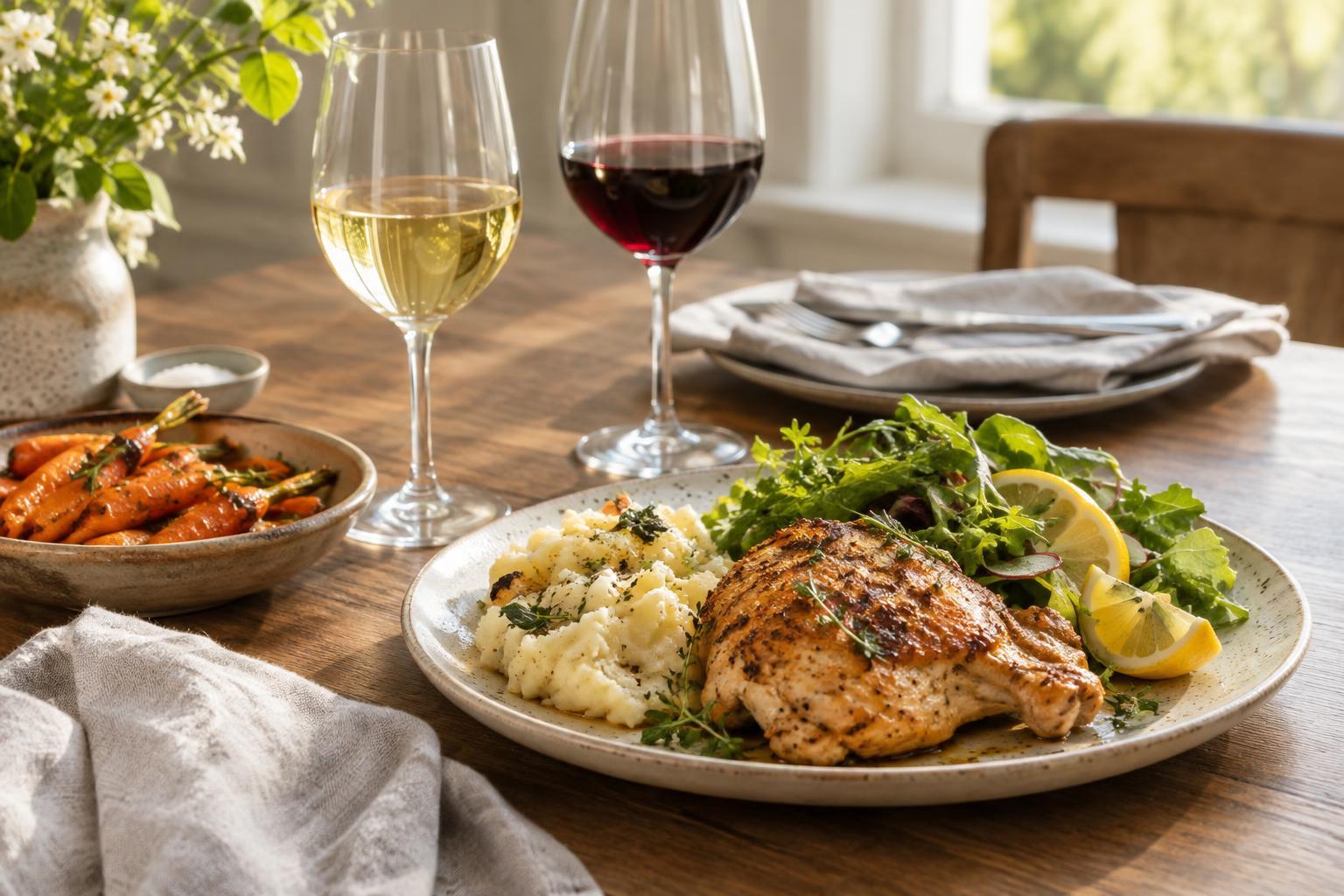
Wine pairing becomes easier when you treat a dish as a combination of sensations rather than a single item on a plate. Roast chicken with lemon and herbs calls for a different choice than chicken in a rich cream sauce. The protein is the same, but the sauce, cooking method and sides change what you notice most with each bite.
Before choosing a bottle, ask three questions: How substantial does the dish feel? Is there a sharp or tangy element? Is anything noticeably sweet? Weight, acidity and sweetness give you a useful starting point. They are not strict rules; seasoning, temperature and personal taste still matter. If a pairing sounds appealing but breaks a familiar convention, it may be worth trying.
Match weight so neither side disappears
Weight describes the impression of lightness or richness in both food and wine. A crisp salad with delicate greens feels lighter than a bowl of mushroom risotto. In wine, a light-bodied option generally feels less full in the mouth than a richer, fuller-bodied one. Pairing similar weights helps keep either the dish or the drink from overwhelming the other.
For a lightly dressed fish dish, consider a lighter white wine or a delicate red served slightly cool. For slow-cooked beef with a deeply flavored sauce, a fuller-bodied red may feel more balanced. Look beyond the featured ingredient: grilled vegetables with olive oil and a generous spoonful of creamy sauce may have more weight than the word “vegetables” suggests. Likewise, a simple cut of meat served with a bright, spare garnish may welcome a less powerful wine.
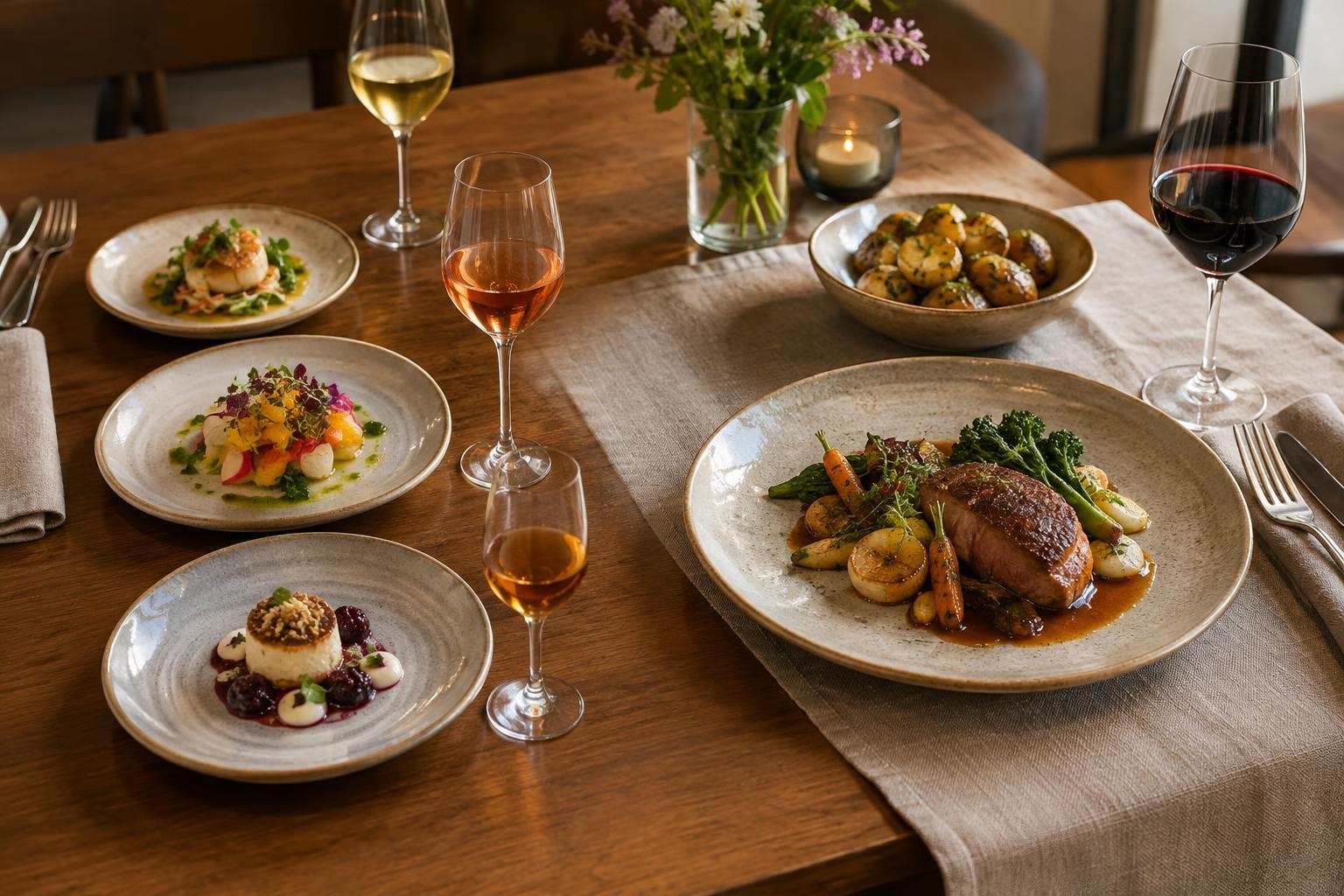
When planning several courses, you can use weight to create a comfortable progression. Begin with lighter food and wine, then move toward richer dishes. This is a guide, not a requirement for a good dinner; it simply helps prevent a subtle course from feeling muted after an especially intense one.
Use acidity to meet bright flavors and refresh rich ones
Acidity gives wine a tart, mouthwatering edge. In food, you might notice it in tomatoes, citrus, pickles or a vinaigrette. A dish with a pronounced tang can make a low-acid wine seem flat by comparison. A wine that also tastes lively is often a useful place to start, especially with tomato-based dishes or salads dressed with lemon.
Acidity can also offer contrast. With fried food or a buttery sauce, a crisp wine may make the next bite feel more inviting. Think of the squeeze of lemon often served alongside a rich dish: the wine can play a similar role. You do not need to find a wine that tastes exactly like the food. Instead, consider whether its brightness supports the dish’s tang or provides a welcome break from its richness.
If a dish has several strong acidic elements, taste it before settling on a pairing. A tomato sauce finished with vinegar, for example, may seem sharper than one softened by slow cooking and cheese. Small details in preparation can matter more than a broad label such as “pasta” or “seafood.”
Account for sweetness, even in savory courses
Sweetness can come from dessert, but it also appears in savory cooking: a honey glaze, caramelized onions, sweet barbecue sauce or fruit in a salad. A noticeably sweet dish may make a dry wine taste harsher or less fruity. When sweetness is prominent, consider a wine with some sweetness of its own, or choose a different drink if no wine you have seems comfortable alongside the food.
Dessert is the clearest test. A sweet fruit tart paired with a very dry wine can leave the wine tasting thin. A wine at least as sweet as the dessert is often a more harmonious starting point, though tastes vary. You can also reduce the dessert’s sweetness with tart fruit or choose a lightly sweet finish to the meal. The goal is to compare what is actually on the plate with what is in the glass, not to match names on a menu.
Put the three cues together at the table
Imagine a meal of tomato salad, roast chicken with a creamy herb sauce and peach tart. For the salad, prioritize acidity and a lighter weight. For the chicken, give the sauce more attention than the bird: a wine with enough body to stand beside the cream and enough freshness to keep the pairing lively could work well. For the tart, consider its sweetness before choosing a wine, rather than assuming the dinner wine will suit the final course.
You do not need a different bottle for every plate. If serving one wine across a meal, look for a middle ground and let small adjustments help: a little less dressing on the salad, lemon served on the side or dessert enjoyed after the wine. The most useful pairing habit is to taste, notice what changes and remember what you enjoy. Weight, acidity and sweetness provide a framework; your table supplies the final answer.