Start with the result you want
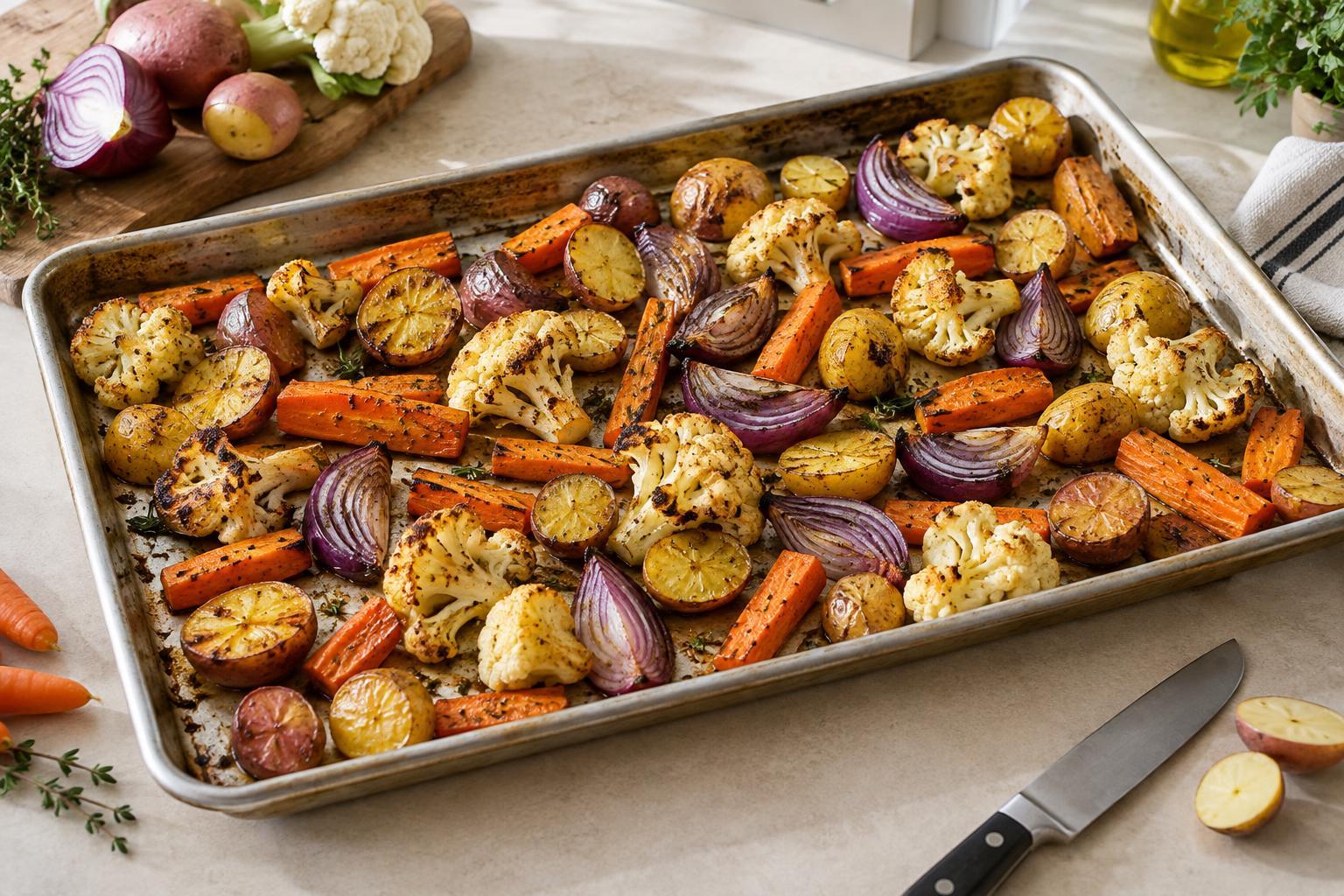
Good roasted vegetables have tender centers and some browned edges. Reaching both at once can be tricky: a small piece may darken before a large one softens, while a crowded pan can leave everything tender but pale. Rather than looking for one rule that fits every vegetable, think of roasting as a balance between cooking the inside and drying and browning the surface.
Size, spacing and temperature work together. Smaller pieces cook through faster but can dry out; larger pieces take longer and offer less browned surface in each bite. A roomy pan helps moisture escape, while oven heat determines how quickly exposed edges color. Once you know which factor is holding a batch back, the next adjustment becomes easier.
Cut pieces for similar cooking times
Aim for pieces of roughly similar thickness within a batch. They need not be geometrically identical, but a thin carrot tip and a thick carrot top will behave differently if left whole. Cut the thicker end into smaller pieces, or leave the thin end a little longer. For round vegetables such as potatoes, flat cut sides give pieces steady contact with the pan and a place to brown.
Shape matters as much as size. Thin slices expose more surface and may turn crisp or leathery before their centers become pleasantly tender. Thick wedges tend to keep a softer interior. Choose a cut that suits the texture you want, then make it consistent enough that you can check the pan without rescuing individual pieces throughout cooking.
Vegetables with very different textures are often easier to roast on separate pans. Dense roots generally need more time than tender vegetables such as zucchini. If they must share a pan, start the slower-cooking pieces first and add the quicker-cooking ones later. This is more reliable than cutting everything into the same size and expecting it to finish together.
Leave room for browning
Spread vegetables in a single layer, with a little space between most pieces. When they are piled up, moisture has a harder time escaping and the vegetables are more likely to steam against one another. Crowding does not ruin a dish, but it changes the result: expect softer vegetables and less color. If a pan looks packed, a second pan is usually a better fix than turning up the heat.
Toss the pieces with enough oil to coat them lightly, not so much that oil collects in the corners. A sturdy, shallow baking sheet gives vegetables broad exposure to the oven; a deep dish holds in more moisture. Set pieces with flat cut sides against the pan when you want browning on those faces. You can turn them partway through cooking for more even color, but moving them constantly makes it harder for any one side to brown.
Choose a useful oven temperature
For many vegetables, a preheated oven around 400–425°F (200–220°C) is a useful starting point. It is hot enough to encourage browning while giving the centers time to soften. It is not a universal setting: very small pieces or delicate vegetables may benefit from less heat, while sturdy pieces can sometimes tolerate more. Your cut size, pan material and oven all affect the result.
Place the pan where heat can circulate, often near the middle of the oven. If you use two pans, leave space between them and swap their positions partway through if one is coloring faster. Check the vegetables rather than relying only on a timer. Look for browned edges and test a thick piece with a fork or knife; it should give with the amount of resistance you prefer.
Adjust the next batch, not just the timer
If the edges brown before the centers soften, cut the pieces smaller next time or use a slightly lower temperature. If the vegetables are soft but pale, give them more space, dry them before oiling and check that the oven was fully preheated. If one side colors much faster than the other, turn the pieces once or move the pan to a different oven position.
Roasting evenly does not mean every piece must look identical. A mix of darker edges and tender centers is part of its appeal. Keep the cuts reasonably consistent, give the pan breathing room and use the oven temperature as a starting point rather than a promise. Those habits make it much easier to get the texture you want across different vegetables.