Start with the beans you have
Dried beans are economical and adaptable, but they do not all cook on the same schedule. Variety, size and age affect how quickly a bean becomes tender. Even two bags of the same variety may behave differently, so treat any cooking time as a point at which to start checking, not a promise.
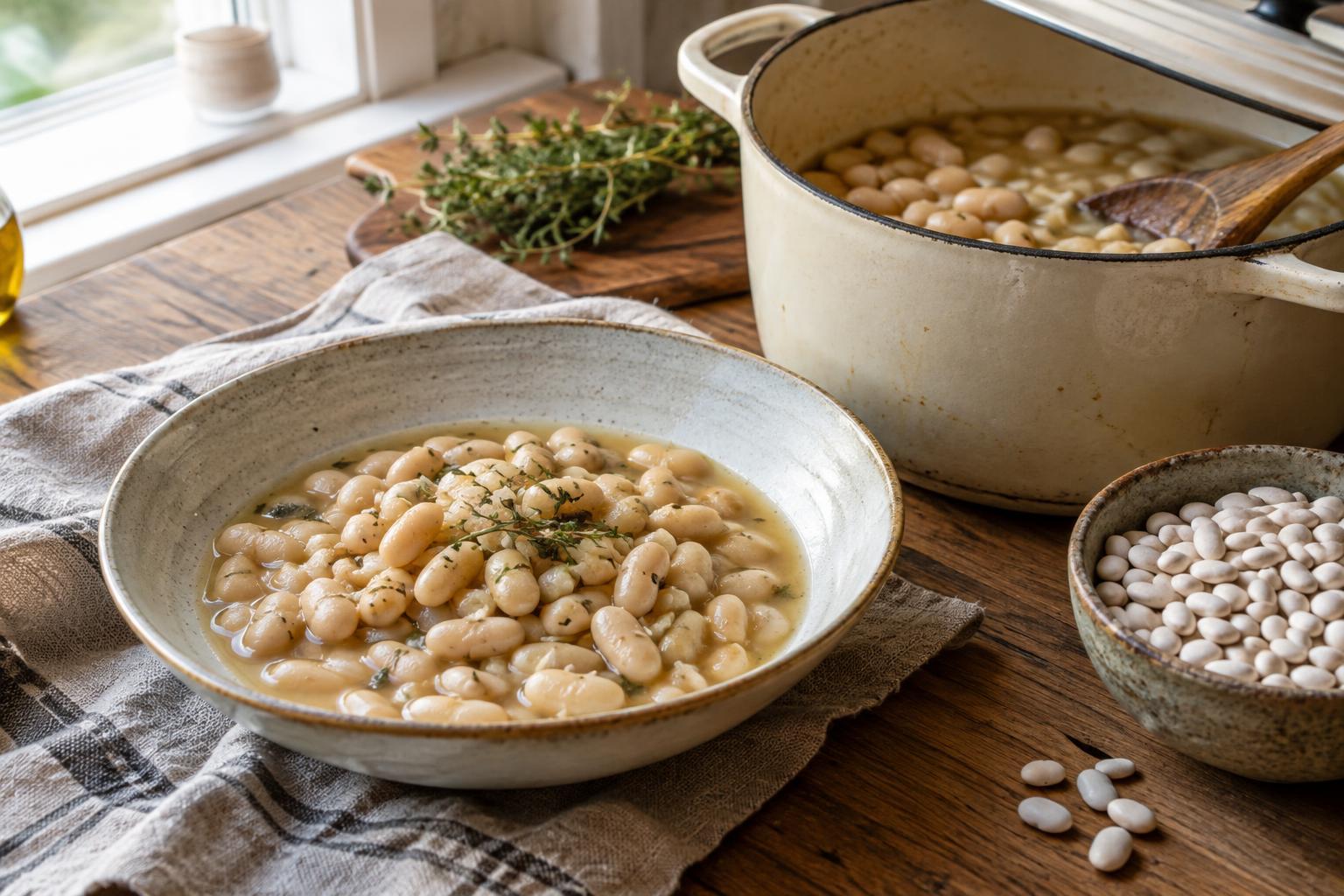
Before cooking, spread the beans out briefly and remove any small stones, damaged beans or other debris. Rinse them in a colander. Use a roomy pot: beans expand as they cook, and they need enough liquid to stay submerged. If the water level drops, add more hot water so the simmer does not stop.
Choose whether to soak
Soaking hydrates beans before they reach the stove. It can shorten and even out cooking, particularly for larger beans, but it is not essential for every variety. For an overnight soak, cover the beans generously with cool water and leave them for several hours or overnight. If your kitchen is warm or the soak will be lengthy, put the bowl in the refrigerator. Drain and rinse before cooking.
For a quicker start, cover the beans with water, bring them to a boil for a couple of minutes, turn off the heat and let them stand, covered, for about an hour. Drain, rinse and proceed with fresh water. Skipping the soak is also reasonable when you have time to let the beans simmer. In that case, check the pot more often early on and expect a longer, less predictable cooking time.
Simmer gently, then taste
Cover the beans with fresh water by a few inches and bring the pot to a boil. Then reduce the heat to a steady, gentle simmer. A hard, rolling boil can knock beans against one another and split their skins before the centers are tender. Stir occasionally, especially near the bottom of the pot, and add hot water as needed. Keep the lid slightly ajar if the pot tends to boil over.
Salt can go in near the beginning; it seasons the beans as they cook. Aromatics such as onion, garlic or a bay leaf can go in too. If you are adding tomatoes, vinegar or another acidic ingredient, wait until the beans are nearly tender, since acidity can slow softening. To check doneness, taste several beans from different parts of the pot. They should be tender through the center, without a chalky bite. Letting them rest briefly in their cooking liquid can help them finish evenly.
Red kidney beans need extra care: bring them to a vigorous boil for at least 10 minutes before reducing the heat to a simmer. Do not rely on a slow cooker alone to cook them from dried, as its temperature may not be sufficient for this initial boil.
Diagnose beans that stay firm
If the beans have simmered for a long time and still feel hard, first check that they have remained covered with liquid and that the pot has actually been simmering. Add hot water if necessary and keep cooking, testing periodically. A firm center is a sign that the beans need more time, even if the skins look loose.
Beans that are old or have been stored poorly may soften slowly or unevenly. Very hard cooking water can also make softening more difficult. If a batch remains stubborn despite extended cooking, try fresh beans next time; for a recurring problem, consider using filtered water. Do not add a large amount of baking soda as a shortcut. It may speed softening, but it can also leave beans mushy or affect their flavor.
Prevent splitting and mushiness
Split skins are not necessarily a failure. Beans may still taste good in a soup, mash or dip. To keep more of them intact next time, lower the heat once the water boils, use a pot with enough room, and stir gently rather than frequently. Check small or thin-skinned varieties sooner than large beans.
Mushy beans usually mean the pot cooked past the texture you wanted. As soon as several sampled beans are tender, turn off the heat. If they are destined for a salad or another dish where shape matters, drain them once they have cooled enough to handle. For soups and stews, the cooking liquid is worth keeping: it brings bean flavor and body to the finished dish. Cool leftovers promptly and refrigerate them in a covered container.