What the two steps actually do
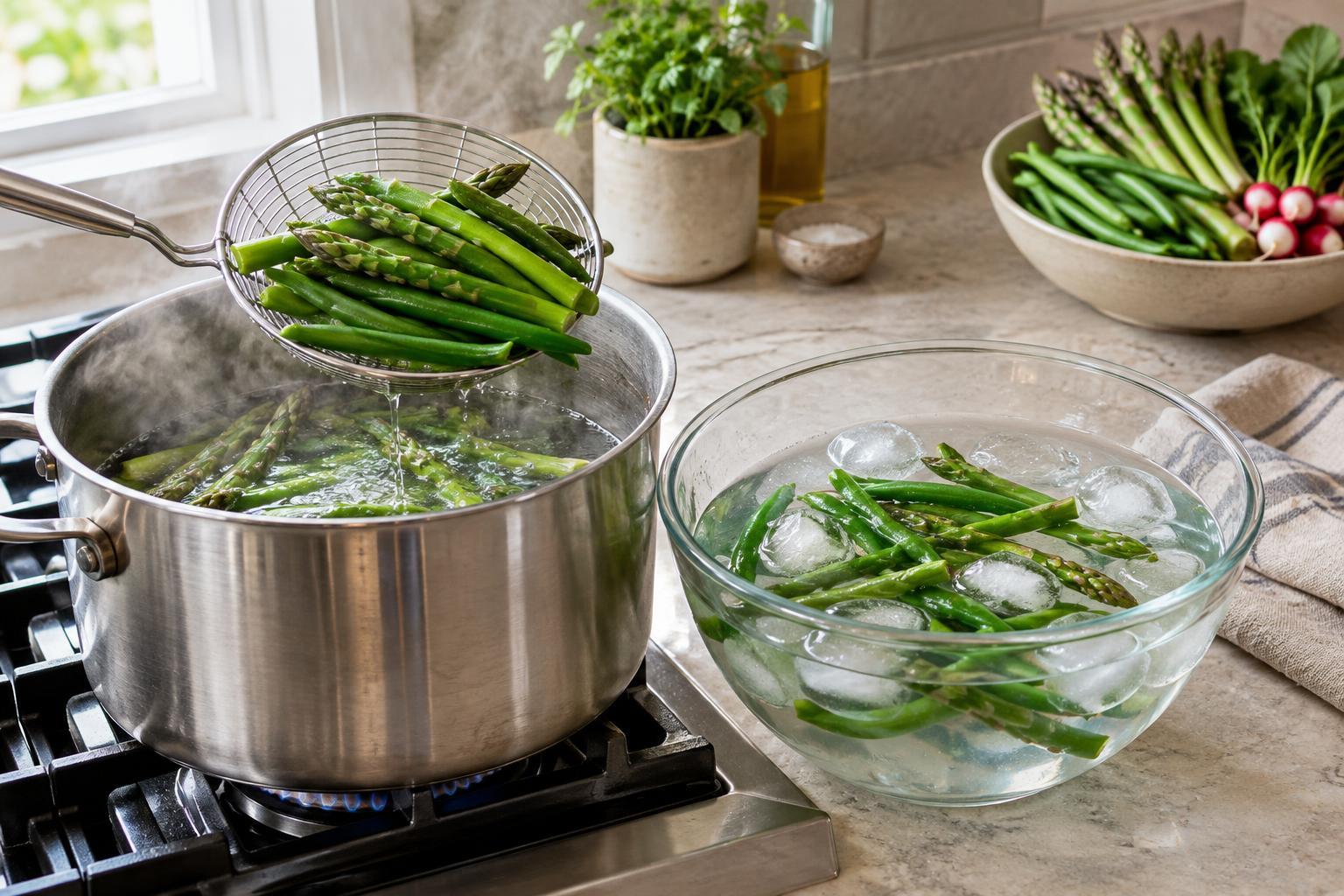
Blanching means briefly cooking a vegetable in boiling water. Shocking means moving it straight into very cold water to halt most of that cooking. Together, the steps let you bring a vegetable partway—or all the way—to your preferred tenderness, then pause before serving or using it in another dish.
That pause is the main advantage. Green beans for a salad can be cooked in advance without sitting in their own heat and turning softer while the rest of the meal comes together. Broccoli destined for a quick stir-fry can get a head start, so it spends less time in the pan. Blanching also wilts sturdy greens, making them easier to squeeze dry and fold into fillings.
The method is often associated with bright green vegetables, but a cold bath does not permanently preserve their color. Long cooking, acidic dressings, and time can still dull it. Think of blanching and shocking as a way to control texture and timing, with appealing color as a possible bonus.
A dependable way to do it
Set up the cold bath before heating the pot: fill a large bowl with cold water and plenty of ice. Bring a generous pot of water to a full boil. Cut vegetables into reasonably even pieces so they cook at a similar rate. Salt the water if you want the vegetables seasoned throughout; for a small batch or a dish with a salty sauce, it is optional.
Add the vegetables in batches rather than crowding the pot. Start checking early, because size and freshness affect cooking time. A green bean should lose its raw bite but still have the snap you want; a broccoli floret should be tender enough at the stem for its intended dish. Lift the vegetables out with a slotted spoon or strainer and put them directly into the cold bath.
Once cool, drain thoroughly. For vegetables that will be sautéed or dressed, spread them on a clean towel and pat them dry. Water clinging to the surface can dilute a vinaigrette or make a hot pan steam instead of sear. If you are preparing vegetables ahead, refrigerate them promptly rather than leaving them at room temperature while you finish other tasks.
Where the extra step earns its place
Blanching and shocking are useful for vegetables served chilled or at room temperature. Green beans, asparagus, peas, and broccoli can be cooked to the texture you like, cooled, dried, and added to salads or platters shortly before serving. Drying matters especially when the dressing is light: a thin coating of oil and lemon has a harder time clinging to wet vegetables.
The method also helps when several ingredients need different cooking times. You can blanch dense broccoli stems a little longer than the florets, then bring both together in a fast final sauté. For leafy greens such as spinach or chard, a brief blanch can reduce their volume before they go into a filling. Squeeze the cooled greens well to keep excess water out of a pie, omelet, or dumpling mixture.
Some vegetables are blanched for a different reason. A brief dip in boiling water can loosen tomato skins; cooling the tomatoes makes them easier to handle and helps keep the flesh from cooking more than intended. If you are preparing suitable vegetables for freezing, blanching followed by rapid cooling can help them retain quality better than freezing them raw. Drain and dry them well before packing.
When to skip the cold bath
Not every vegetable needs two pots of water and an ice bath. If you are cooking asparagus to eat immediately, steaming or sautéing it until just tender may be simpler. If broccoli is going straight into a soup, stopping its cooking in cold water only to heat it again adds work without much benefit. In a roasted dish, the dry heat and browned edges may be the point; a preliminary boil can leave the vegetables too damp.
Shocking is also unnecessary when you want cooking to continue gently after the vegetable leaves the heat. Root vegetables headed for a mash, for example, are better cooked until tender and drained hot. Potatoes parboiled before roasting may need their surfaces to dry and roughen, rather than being cooled in water.
Use the technique to solve a specific problem: advance preparation, precise tenderness, easier peeling, or a quick final cook. When it does not serve one of those purposes, a single cooking method will often make a better dish with less cleanup.