Start with what the main course already provides
Before choosing sides, describe the main course in a few plain words. Is it rich or light, crisp or soft, strongly seasoned or mild? A creamy pasta already brings starch and richness; it may need something fresh rather than another buttery dish. A simply cooked piece of fish might welcome a more substantial side. The goal is not to make every plate follow a formula, but to notice what would make the next bite satisfying.
Consider the sauce as part of the main, too. A tomato-braised dish may not need a second sharp, acidic component. A roast with plenty of pan juices, on the other hand, gives you a reason to serve potatoes, grains or bread that can catch them. When the main has several strong flavors, keep at least one side straightforward so the meal has a place to rest.
Use contrast without creating a competition
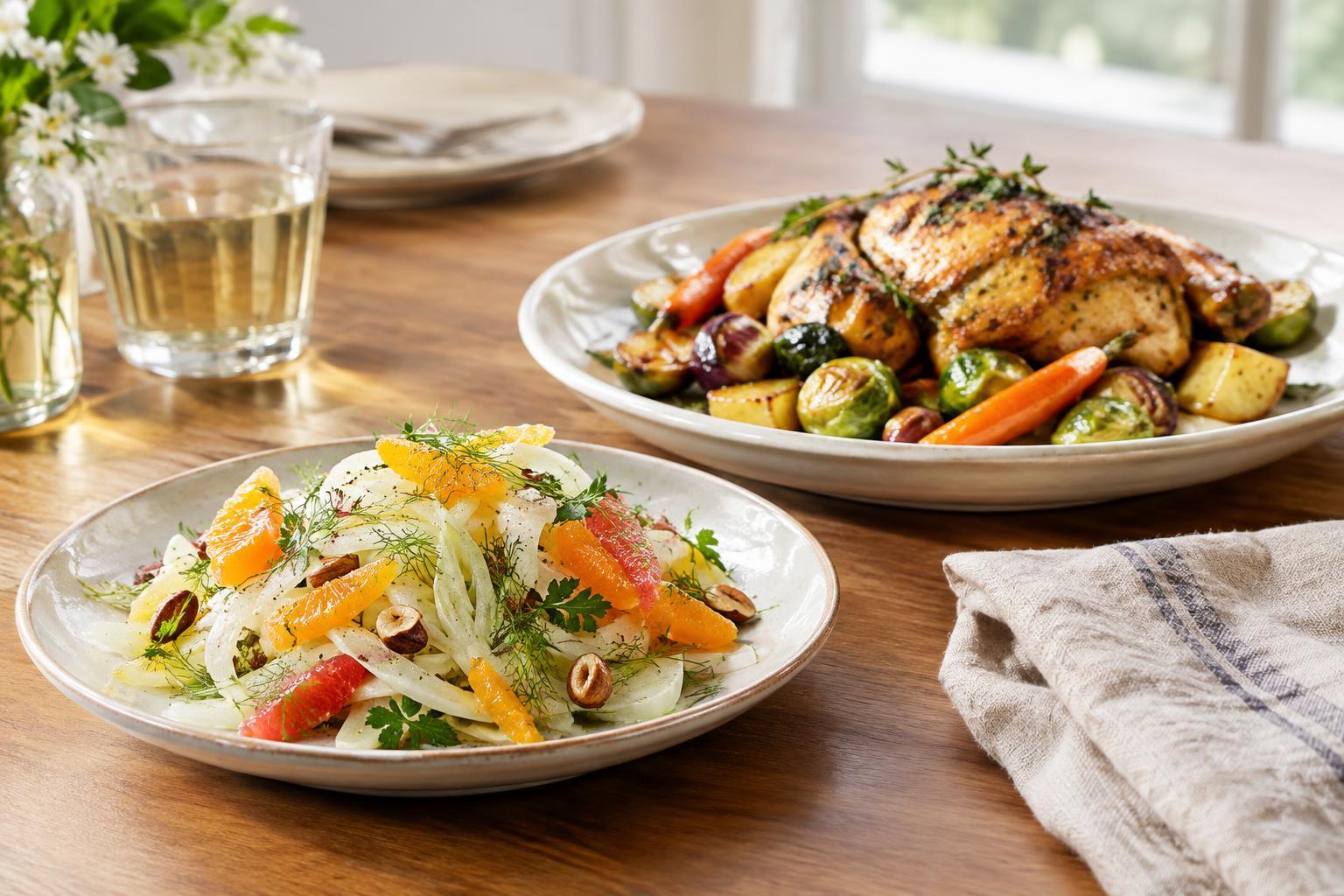
Useful contrasts include warm and cool, tender and crunchy, rich and bright. Crisp green beans with a lemon dressing can lift a slow-cooked stew; a soft bean purée can make a plate of roasted vegetables feel more complete. Contrast works best when the dishes still share a common thread, such as an herb, a cooking style or an ingredient in season.
Avoid giving every side the same finishing touch. If the main is coated in a punchy garlic sauce, the salad does not also need a strong garlic dressing. Try a simple vinaigrette or lightly dressed greens instead. Likewise, when a main is deliberately spicy, a cooling cucumber salad or plain rice may be more useful than another dish competing for attention.
Give each side a job
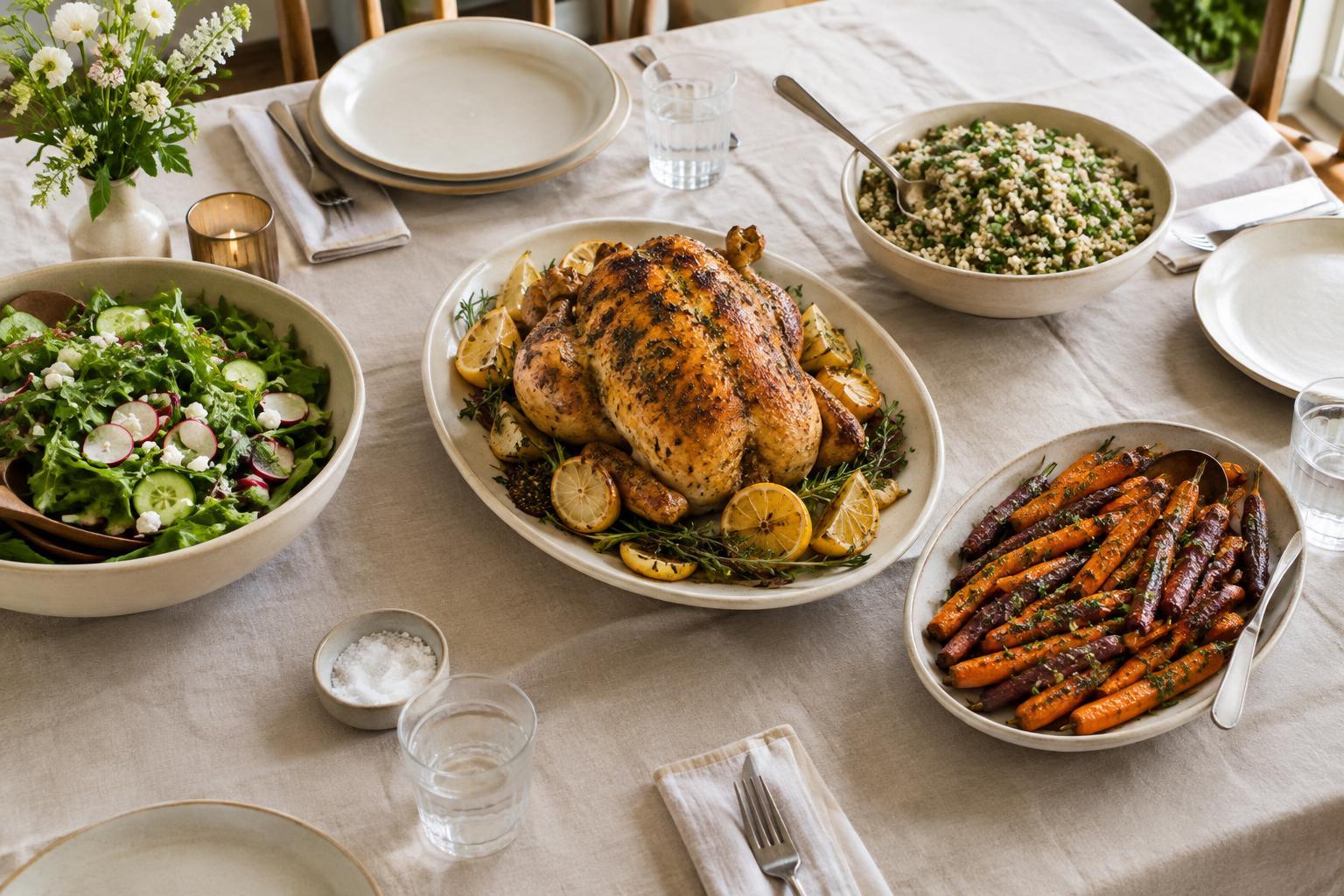
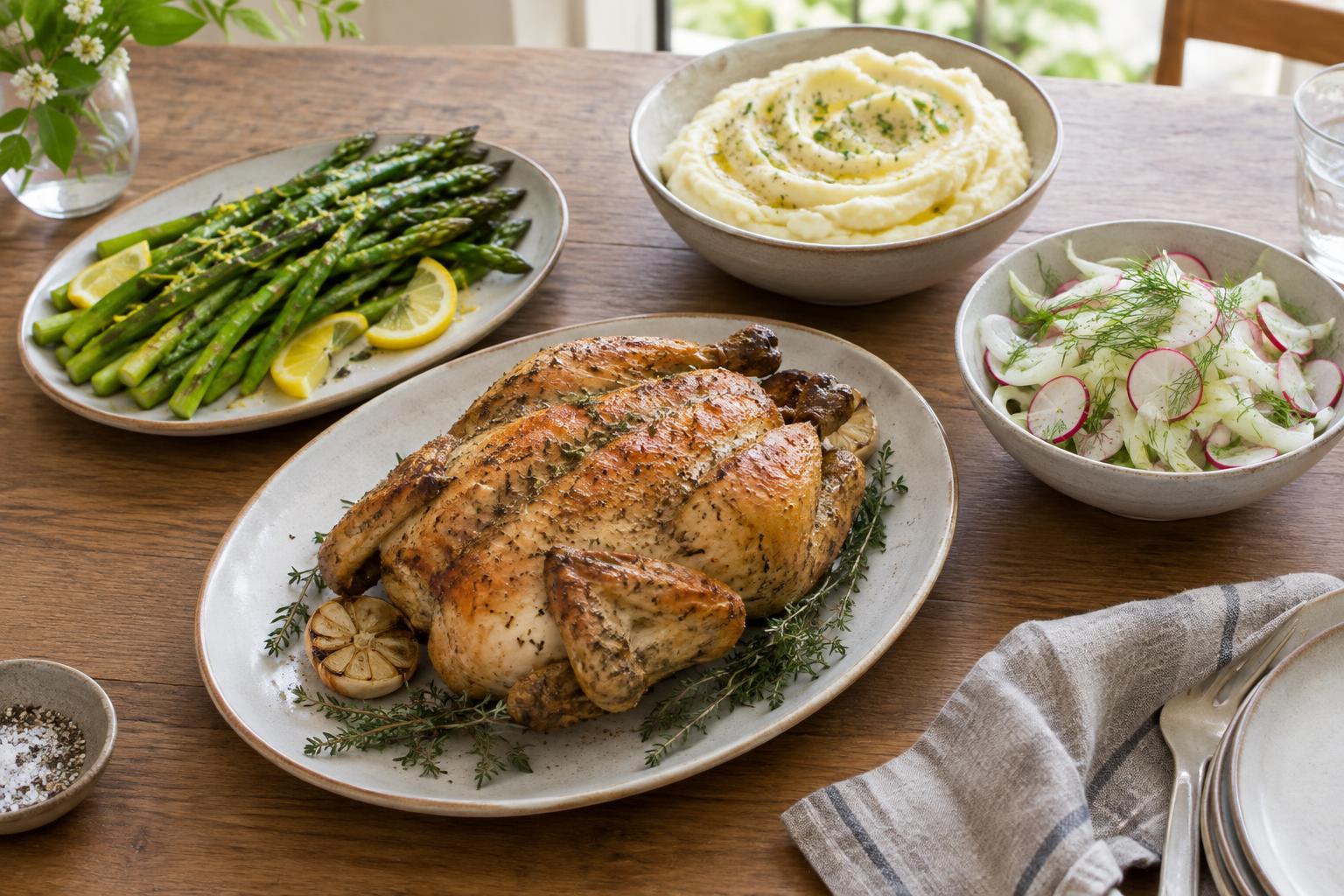
One way to plan is to assign roles rather than collect favorite recipes. A side might add freshness, provide something hearty, bring color, offer crunch or absorb sauce. For a roast chicken dinner, potatoes could handle the pan juices while a green salad adds a cool, crisp element. For a vegetable tart, a lentil salad might add substance without repeating the tart’s flaky, buttery texture.
Not every meal needs two or three sides. A generous grain salad with vegetables and herbs may do the work of both a starch and a fresh accompaniment. A main course built around beans, grains or pasta may need only one well-chosen vegetable. Thinking in roles helps prevent a table full of dishes that are individually appealing but repetitive together.
Let the season guide the details
Seasonal ingredients can make the choice easier without dictating the whole menu. In warmer months, raw or briefly cooked vegetables, tender herbs and tart dressings often provide welcome contrast to grilled or roasted mains. In cooler months, roasted roots, braised greens and warm grain salads can sit comfortably beside slow-cooked dishes. Use what looks and tastes good where you shop, then choose a preparation that fits the main.
Seasonality is also about mood and effort. A long-cooked centerpiece can feel more lively with a quick salad, even in winter. A summer meal does not have to be entirely cold: warm corn, sautéed squash or grilled peppers can pair well with a chilled sauce or crisp greens. The most helpful question is whether the side brings something the main is missing.
Plan for the kitchen as well as the plate
A menu should be practical to serve. If the main needs the oven at a high temperature until the last minute, choose sides that can be made on the stovetop, served at room temperature or prepared ahead. If the main requires close attention in a pan, finish the sides early. A delicious pairing loses some of its appeal when every dish demands the same burner just before dinner.
For an easy final check, picture the whole plate and the last ten minutes of cooking. Are there different textures and enough freshness? Is there a sensible way to serve any sauce? Can at least one side wait while the main rests or finishes? Answering those questions usually leads to a simpler, more generous meal—one in which the sides support the main without disappearing beside it.