Give the appetizer a different job
An appetizer does not need to match the main course ingredient for ingredient. Its job is to welcome diners into the meal: offer an appealing first bite, establish a sense of occasion and leave room for what follows. When the first course repeats the main course’s dominant flavors or format, both dishes can feel less distinctive. A mushroom tart before mushroom pasta, for example, may be delicious twice, but it gives the meal little chance to change direction.
Start by identifying what the main course already promises. Is it rich or light, crisp or soft, mild or strongly seasoned? Then choose a starter that provides something missing. Before a creamy pasta, a small salad with bitter greens and a bright dressing can bring freshness. Before a simply grilled fish, a warm vegetable dish can add depth without competing with the fish. Think of the two courses as parts of one experience, not separate favorites placed side by side.
Use contrast without creating a clash
Contrast is often the easiest way to avoid repetition. If the main course is slow-cooked and tender, consider an appetizer with crunch, such as crisp vegetables with a dip or a lightly dressed slaw. If the main is roasted and deeply browned, a cool starter can offer a pleasant change in temperature. A bright, acidic opening may also make a rich dish feel more inviting when it arrives.
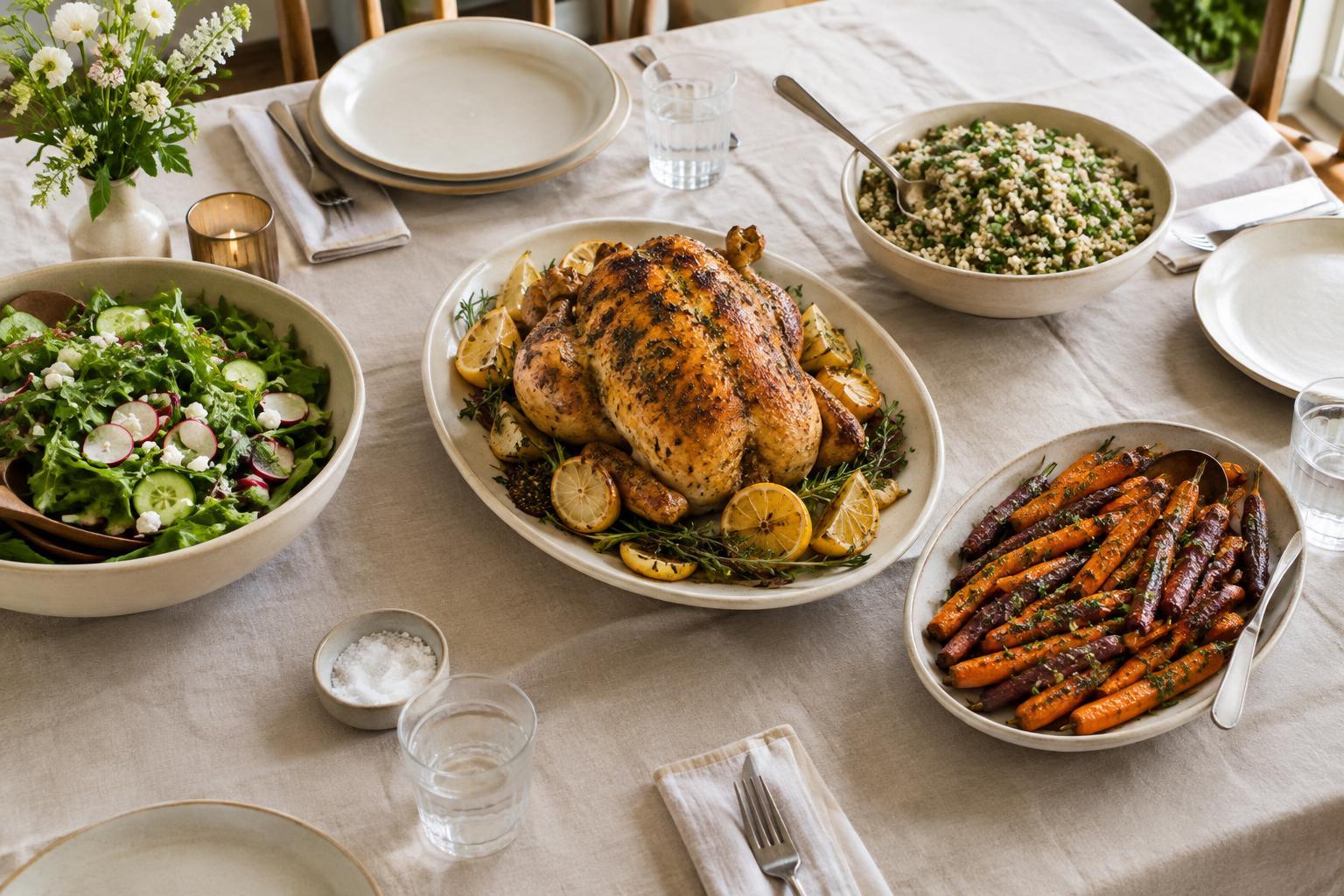
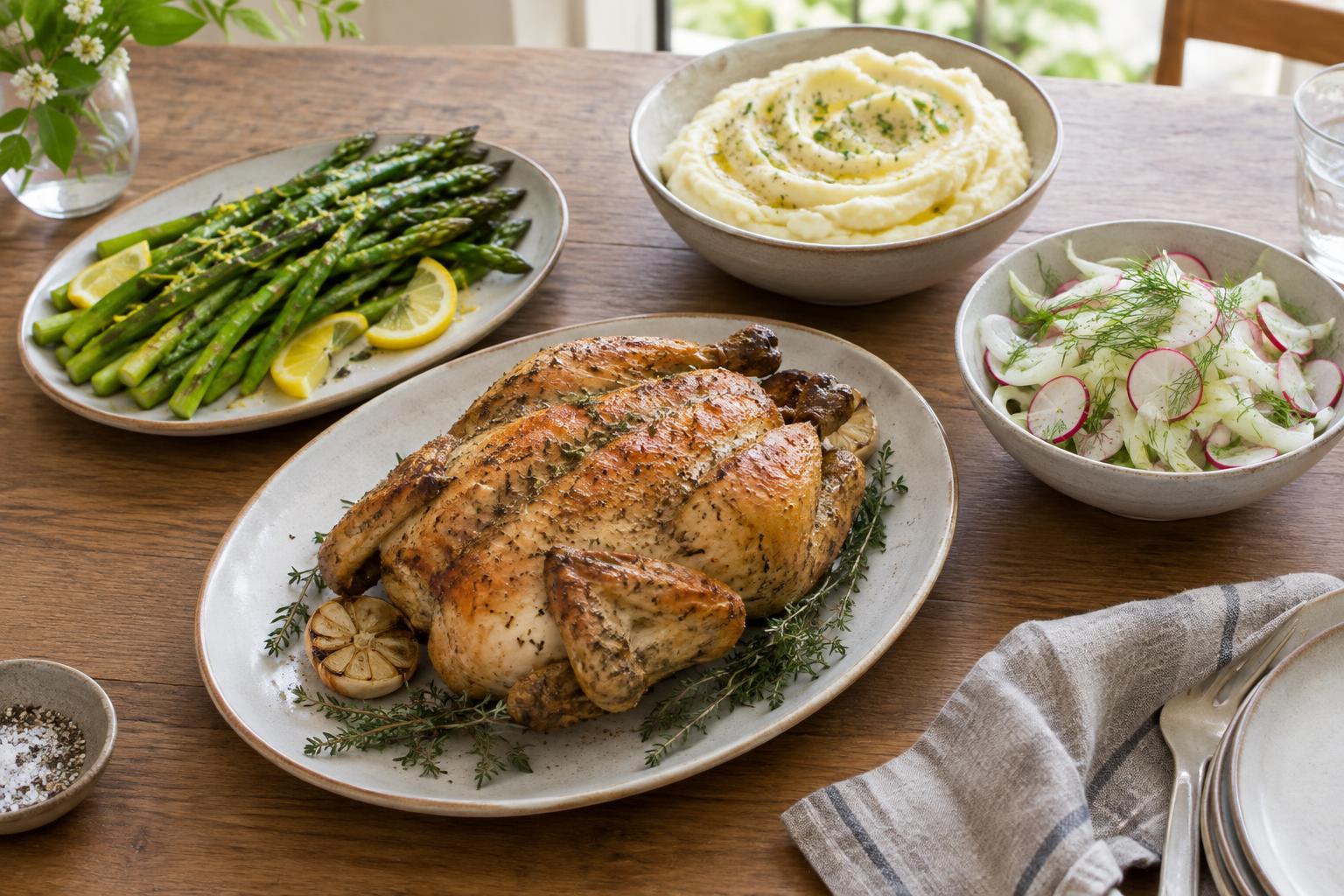
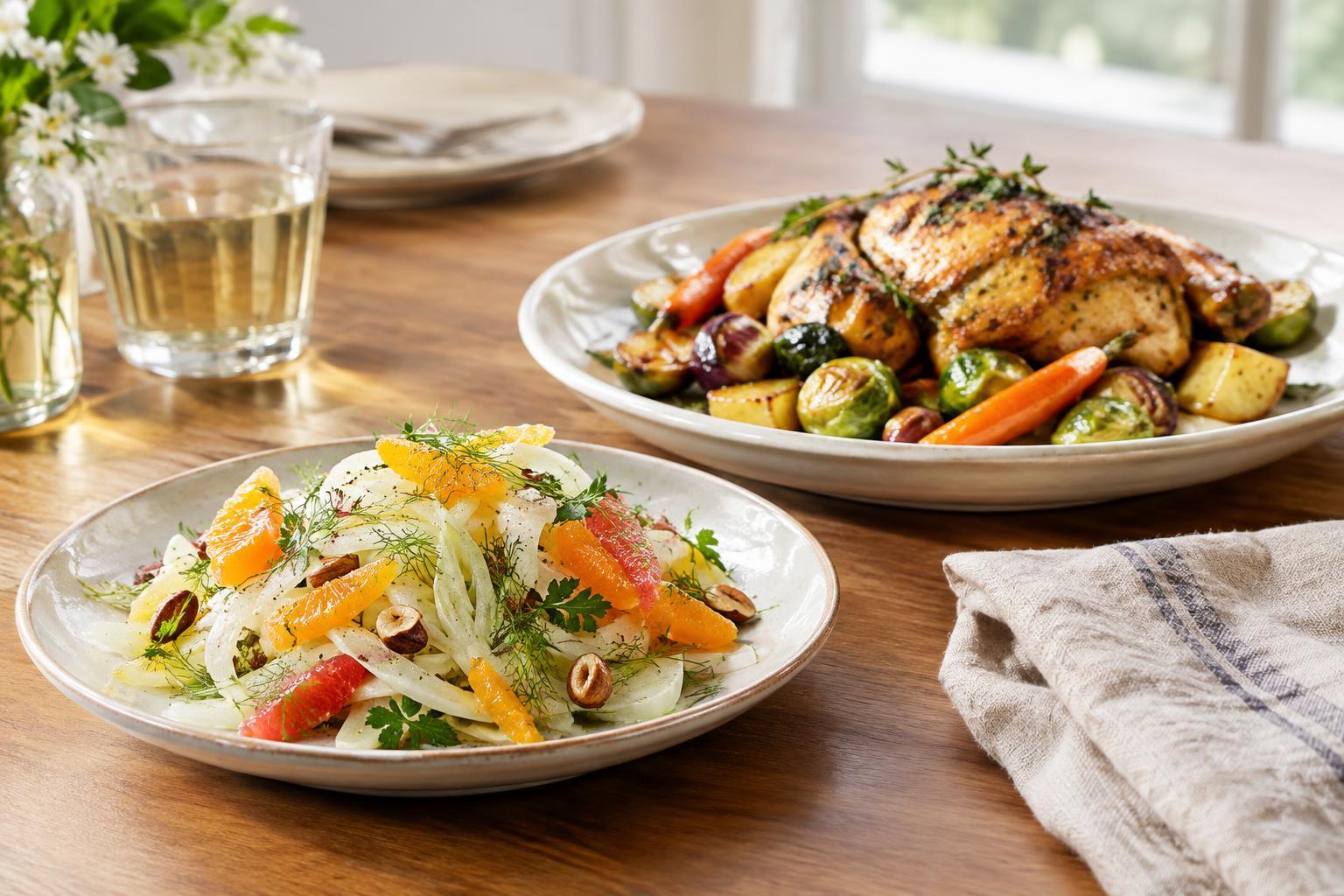
Contrast works best when there is still a thread connecting the courses. That thread might be a shared seasonal ingredient, a similar level of seasoning or a simple cooking style. A citrus-dressed fennel salad can precede roasted chicken without tasting like an unrelated meal. By contrast, a heavily spiced, sweet starter followed by a delicate main may make the second dish seem muted. Aim for a change of pace, not a contest for attention.
Watch for hidden repetition
Repeating the main ingredient is only one way a menu can become monotonous. Two dishes can feel alike because they rely on the same sauce, garnish or texture. A creamy soup followed by a cream-based main may feel heavy even if the featured vegetables and proteins differ. Fried bites before a breaded cutlet can create the same problem. Notice the supporting details as well as the names of the dishes.
Bread and starch deserve a quick check, too. If the main course centers on risotto, potatoes or a substantial pastry, an appetizer built around toast or dough may leave little room for variety. That does not mean every starter must be a salad. Marinated vegetables, a modest serving of seafood, a clear broth or a few well-seasoned beans can each open a meal in a different way. The useful question is whether the first course adds a new sensation.
Match the portion to the meal ahead
An appetizer should suit the size and pace of the main course. Before a generous roast or a filling baked dish, a few bites may be enough: perhaps a small bowl of olives and vegetables or a shared plate of dressed tomatoes. Before a lighter main, a more substantial first course can help the meal feel complete. This is especially useful when the main is built around vegetables or a simply prepared piece of fish.
Consider how diners will eat the starter. A shared plate encourages a relaxed beginning, but it should be easy to divide. Individually served appetizers make portions clearer and can be helpful when guests have different preferences. If you are cooking at home, choose a starter that does not demand last-minute attention at the same time as the main. A dish that can be dressed or plated just before serving often makes the transition between courses smoother.
Build the menu backward
When planning, settle on the main course first and describe it in a few plain words: “hearty, savory and soft,” or “light, crisp and lemony.” Use those words to guide the appetizer. For the hearty main, look for something fresh and modest. For the light main, a warmer or more savory opening may fit. If several options sound good, imagine eating the two dishes in order rather than judging each on its own.
Finally, leave space for the people at the table. An appetizer that can be adjusted for dietary needs, served without fuss and enjoyed at an unhurried pace is often more valuable than an elaborate pairing. The goal is not a rigid rule about which foods belong together. It is a meal with a clear progression: an opening that sparks appetite and a main course that still feels worth anticipating.