Start with the shape of the meal
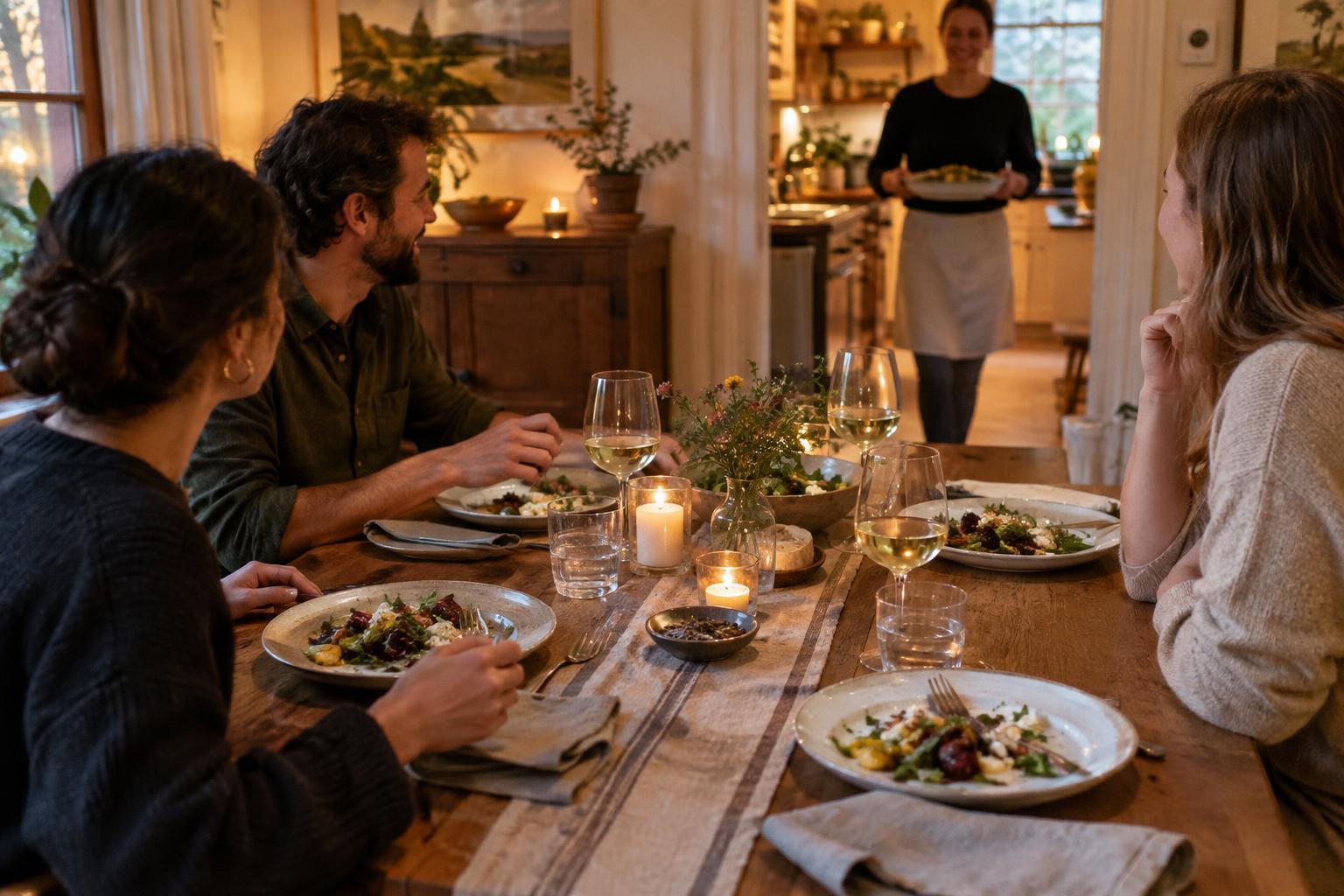
Family-style dining invites guests to serve themselves from shared platters and bowls. The format can make a meal feel relaxed, but it also creates a planning question: how much variety is enough? A useful goal is to give each guest more than one appealing way to build a plate without making every dish compete for attention.
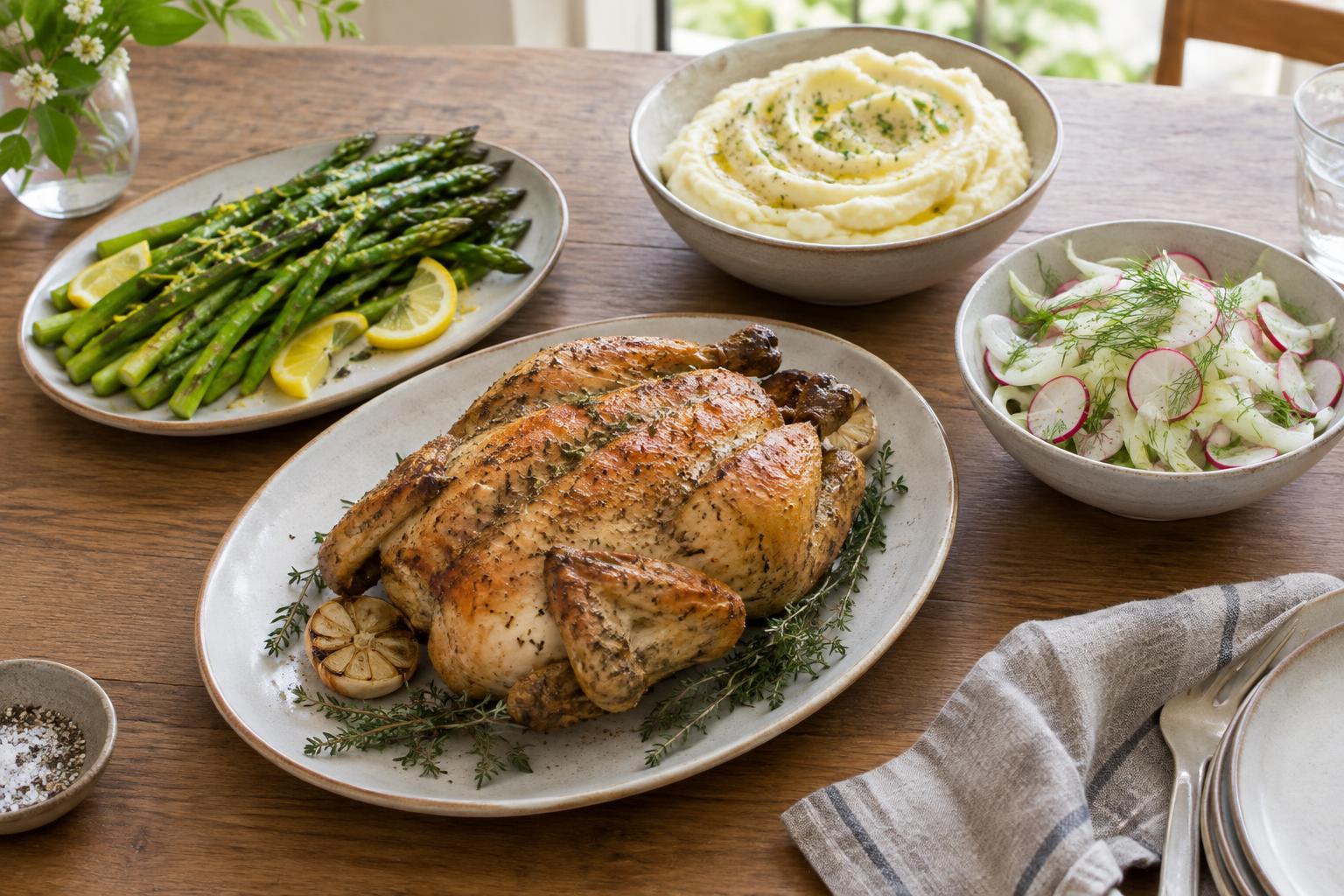
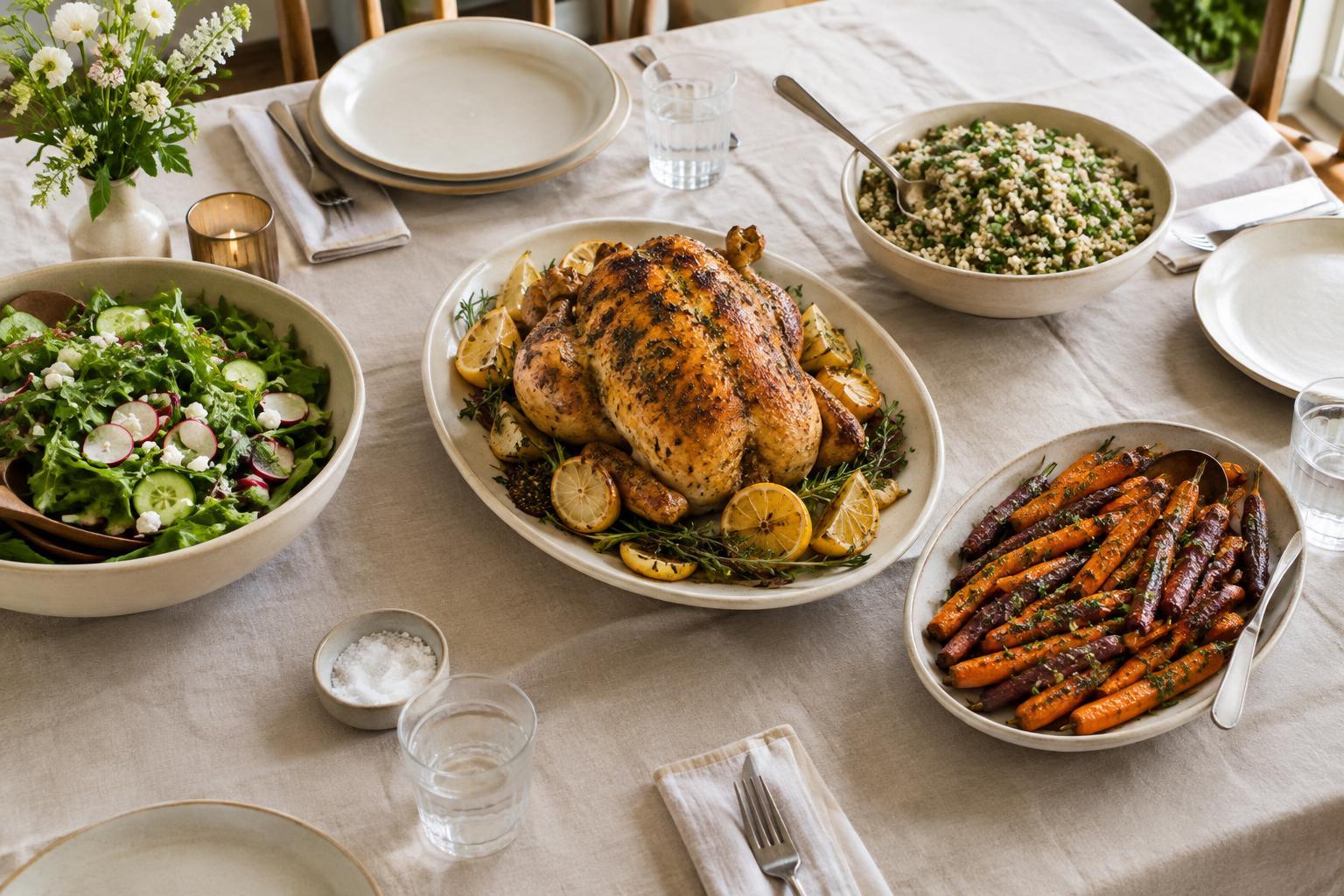
Begin with an anchor, such as roast chicken, baked fish, a bean and vegetable stew, or a substantial grain dish. Then add sides that do different jobs. One might be crisp and fresh, another warm and comforting, and a third sharp or tangy enough to brighten richer bites. This approach offers more range than preparing several similar mains. For a smaller gathering, an anchor, two sides, bread or rice, and a simple condiment may be plenty. For a larger table, consider an additional substantial dish rather than multiplying minor sides.
Build contrast, not a collection of favorites
Before choosing recipes, describe each possible dish by its dominant qualities: rich or light, soft or crunchy, mild or bold, hot or cool. If the main is creamy and slow-cooked, a lemony salad or quickly cooked greens can provide relief. If the anchor is a boldly spiced vegetable dish, a plain grain and a cool yogurt-style sauce can give guests control over each bite. Repeating an ingredient can make a menu feel cohesive, but repeating the same texture and seasoning can make it feel flat.
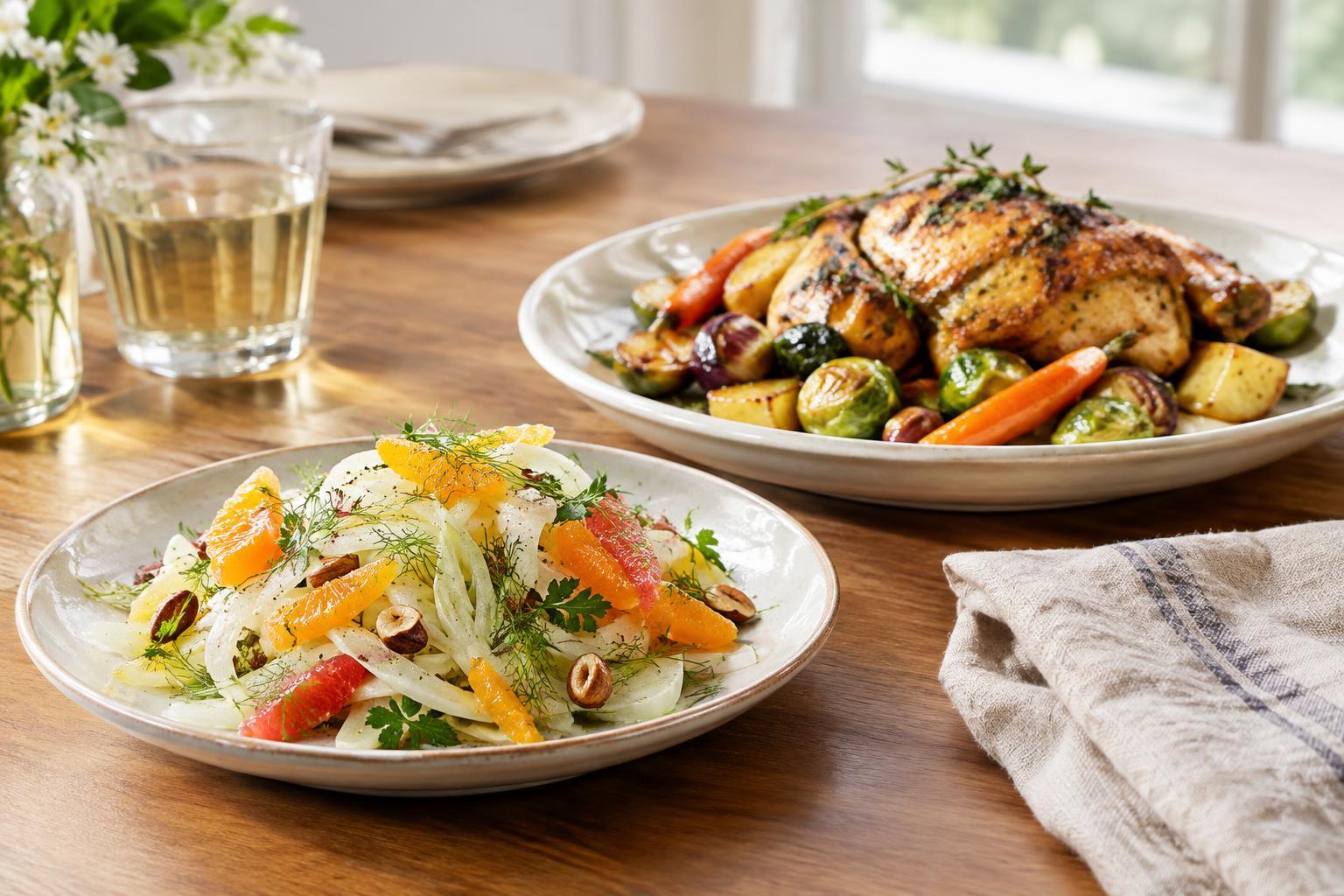
Sauces and finishing touches are an efficient way to offer choice. A platter of roasted vegetables can sit beside herbs, a citrus dressing, or toasted nuts served separately. Guests can adjust their plates, and anyone avoiding an ingredient can leave that topping off. Keep the base dishes distinct enough to stand on their own; condiments should add options, not rescue an otherwise unfinished menu.
Make room for different appetites
Variety also means that guests with different appetites can assemble a satisfying meal. A salad alone may not be enough of an alternative to a meat-centered main. If you know that some guests prefer not to eat meat, give them a substantial option with beans, lentils, eggs, cheese, tofu, or another suitable centerpiece. Pair it with shared sides so it feels like part of the same meal rather than a separate plate.
Ask about important dietary needs when inviting guests, then check the ingredients in sauces, dressings, garnishes, and prepared products as well as the obvious main dishes. When needs are unclear, avoid assuming that a dish will work for everyone. Serving toppings separately and labeling dishes in simple terms can help guests choose comfortably. Variety is most useful when people can tell what is on the table and reach enough food without having to negotiate for it.
Pair dishes with the pace of serving
A good family-style menu works in the kitchen as well as on the plate. Choose dishes with different last-minute demands: perhaps one oven-cooked anchor, a salad dressed just before serving, and a grain that can rest covered. If every component needs the same burner or must be eaten the instant it is ready, the host may spend the meal managing pans instead of joining the table.
Think about what happens after the platters arrive. Cut or portion the main so it is easy to share, provide a serving utensil for each dish, and place sauces where more than one person can reach them. Very large platters can be awkward on a crowded table; two smaller bowls of the same side may circulate more easily. Refill from the kitchen if space is limited. The aim is not a perfectly arranged spread but a meal guests can serve without interrupting one another.
Use a simple menu as a final check
Imagine a menu of herb-roasted chicken, a warm lentil and roasted carrot dish, crunchy greens with a bright dressing, and bread. The chicken and lentils offer two substantial paths through the meal. The greens contrast with the warmer dishes, while bread helps gather juices and dressing. A sauce or garnish on the side adds flexibility without requiring another full recipe.
Read your proposed menu the same way a guest might encounter it. Is there something substantial for each person? Do the dishes offer contrasting temperatures, textures, or flavors? Can most of the work happen before people sit down, and will the food be easy to pass? If the answers are yes, resist adding a dish just to make the table look fuller. Enough variety is the point at which everyone can make a good plate and still recognize the meal as a whole.