Build a sequence, not a schedule
Pacing a multicourse meal is less about serving at exact intervals than giving each course a purpose. A small opening bite welcomes guests without filling them up. A starter introduces the meal, the main course provides its center, and dessert offers a change of mood. Three courses can feel complete; adding more is worthwhile only when each addition brings something distinct.
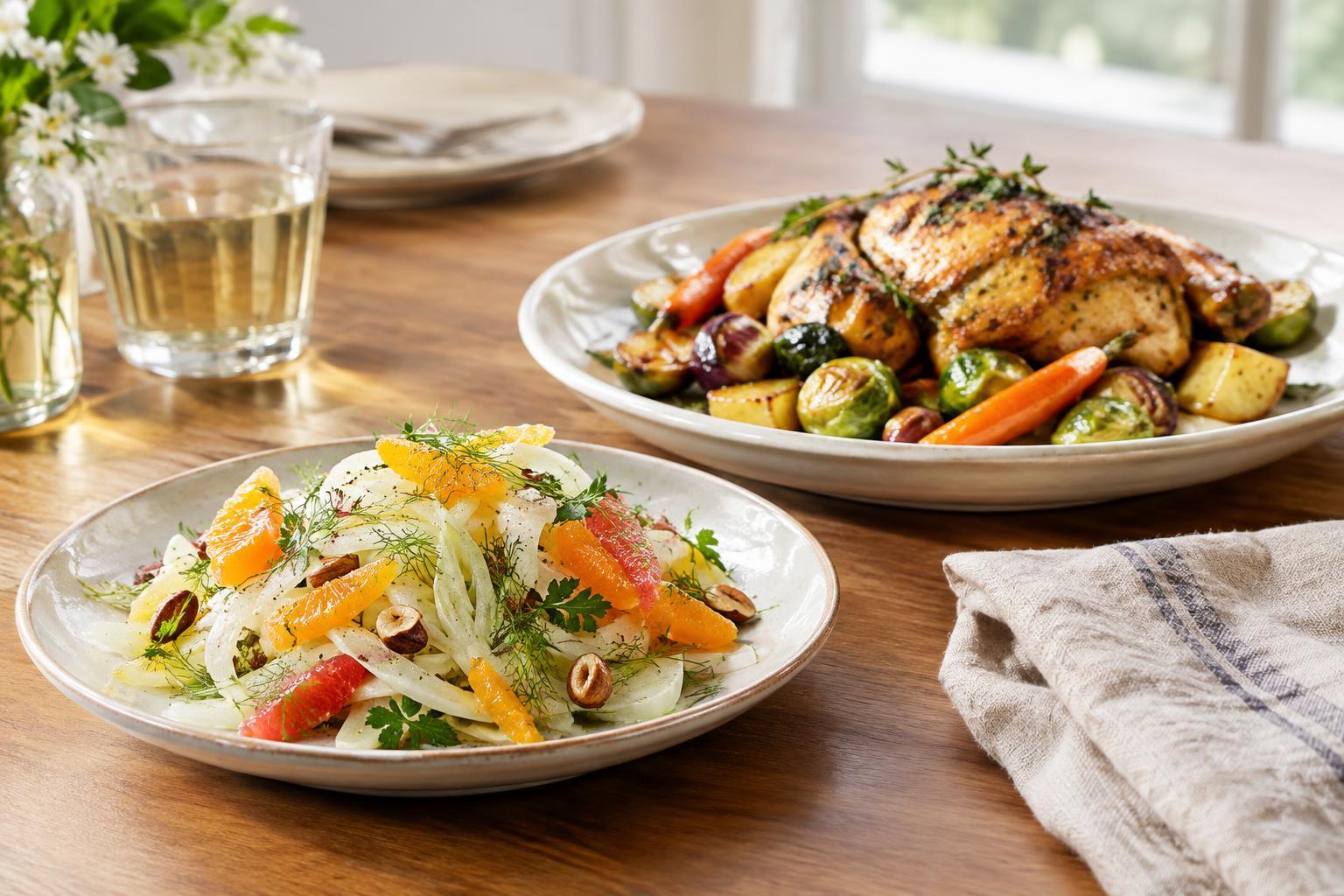
Look at the whole menu before settling on individual dishes. Several rich courses in a row may feel heavy, even if each one is delicious on its own. Contrast can come from texture, temperature, portion size or flavor: a crisp vegetable starter before a slow-cooked main, for example, or a fresh fruit dessert after a creamy sauce. Keep earlier portions modest so guests can enjoy what follows.
Plan around the work that must happen last
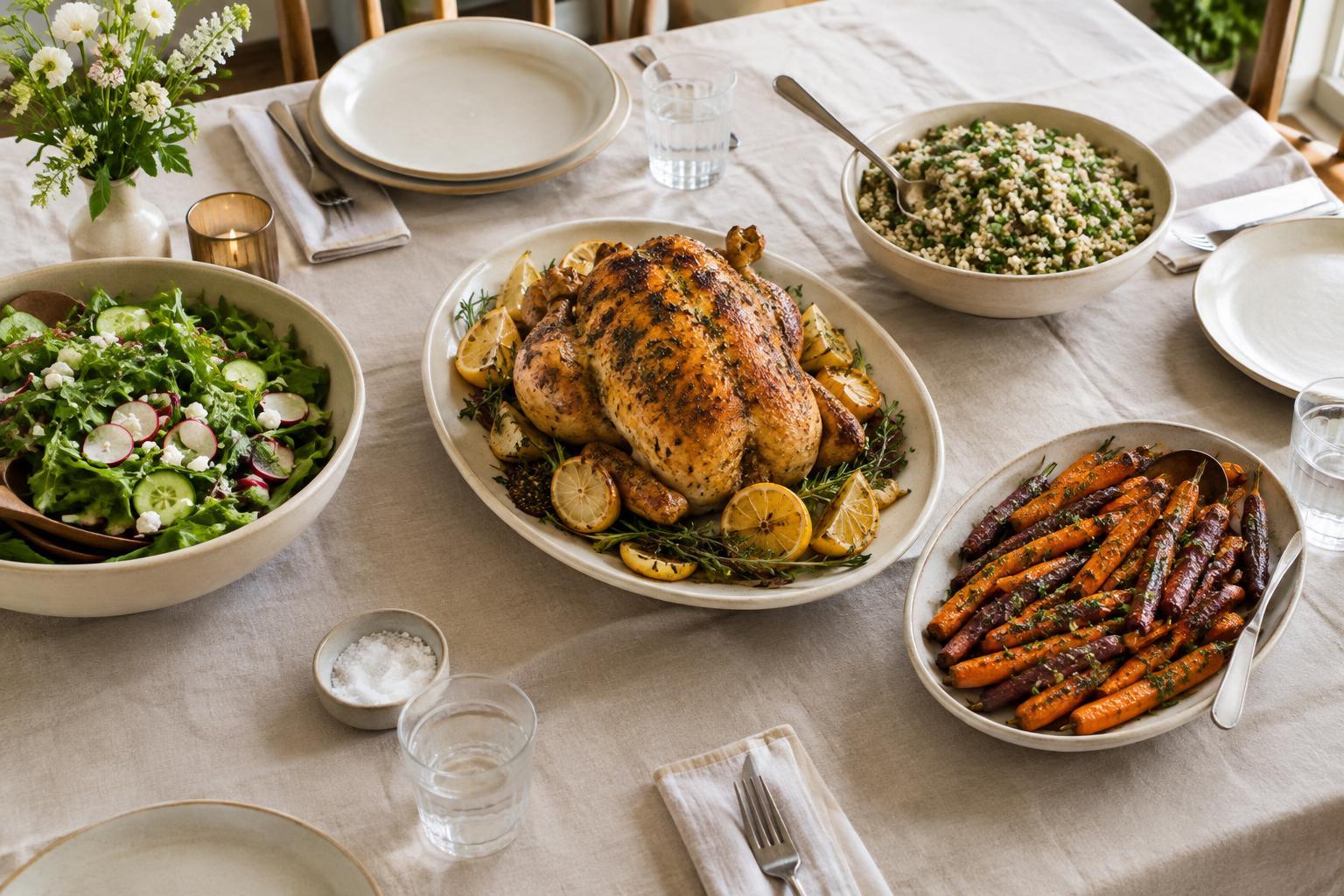
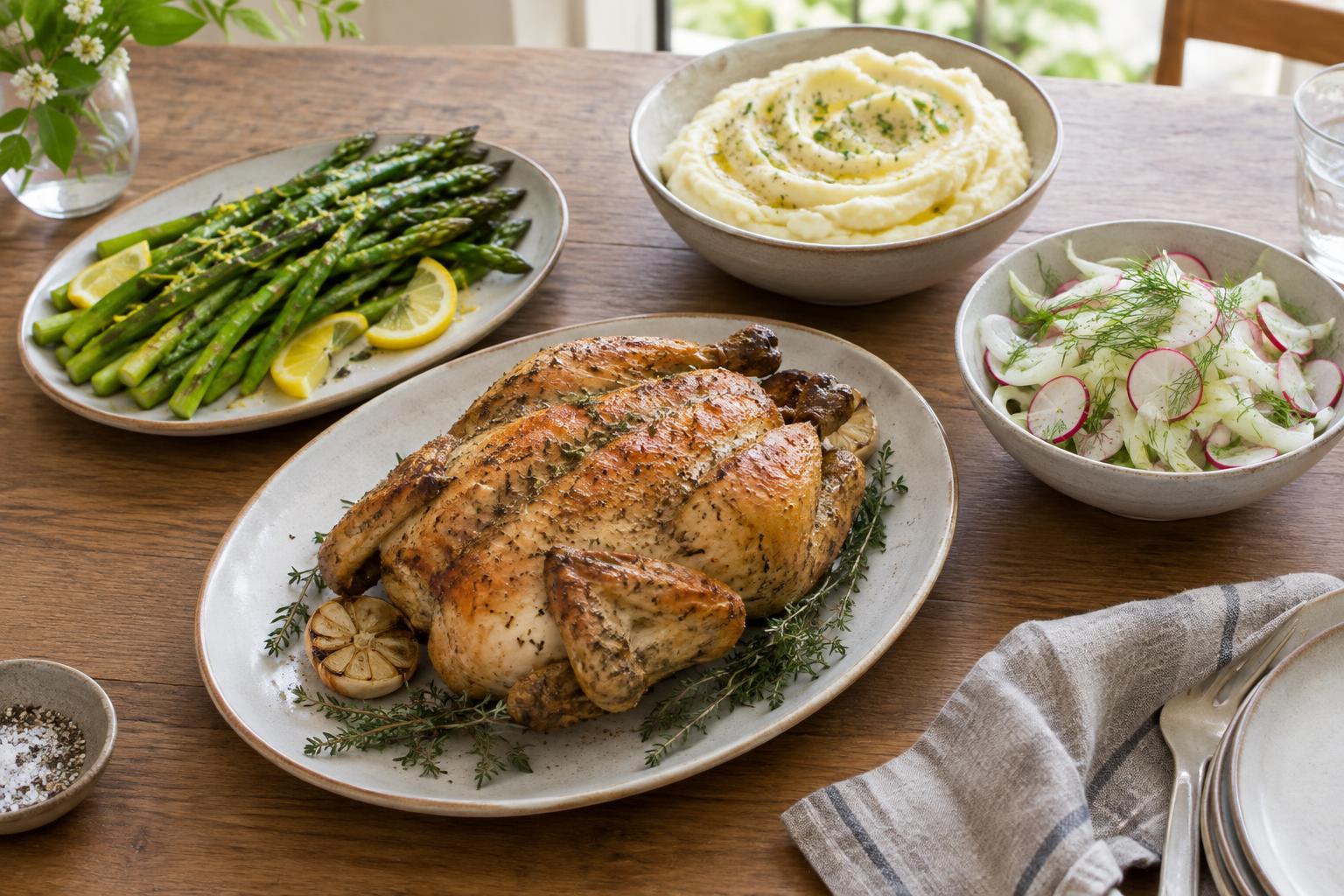
The easiest meal to pace is one that does not require you to cook every course from scratch while guests wait. Choose a mix of dishes that can be prepared ahead and dishes that benefit from a final touch. A chilled starter, a main that holds well and a dessert ready to serve leave more room for conversation than three courses demanding precise last-minute attention.
Write down the final actions for each dish: warming plates, dressing a salad, finishing a sauce or adding a garnish. Then consider where those actions fit into the meal. If the main needs a short spell of focused work, serve a starter that guests can eat comfortably without your immediate attention. Give yourself a little more time than you think you need, rather than promising a course the kitchen cannot yet deliver.
Use the table as your cue
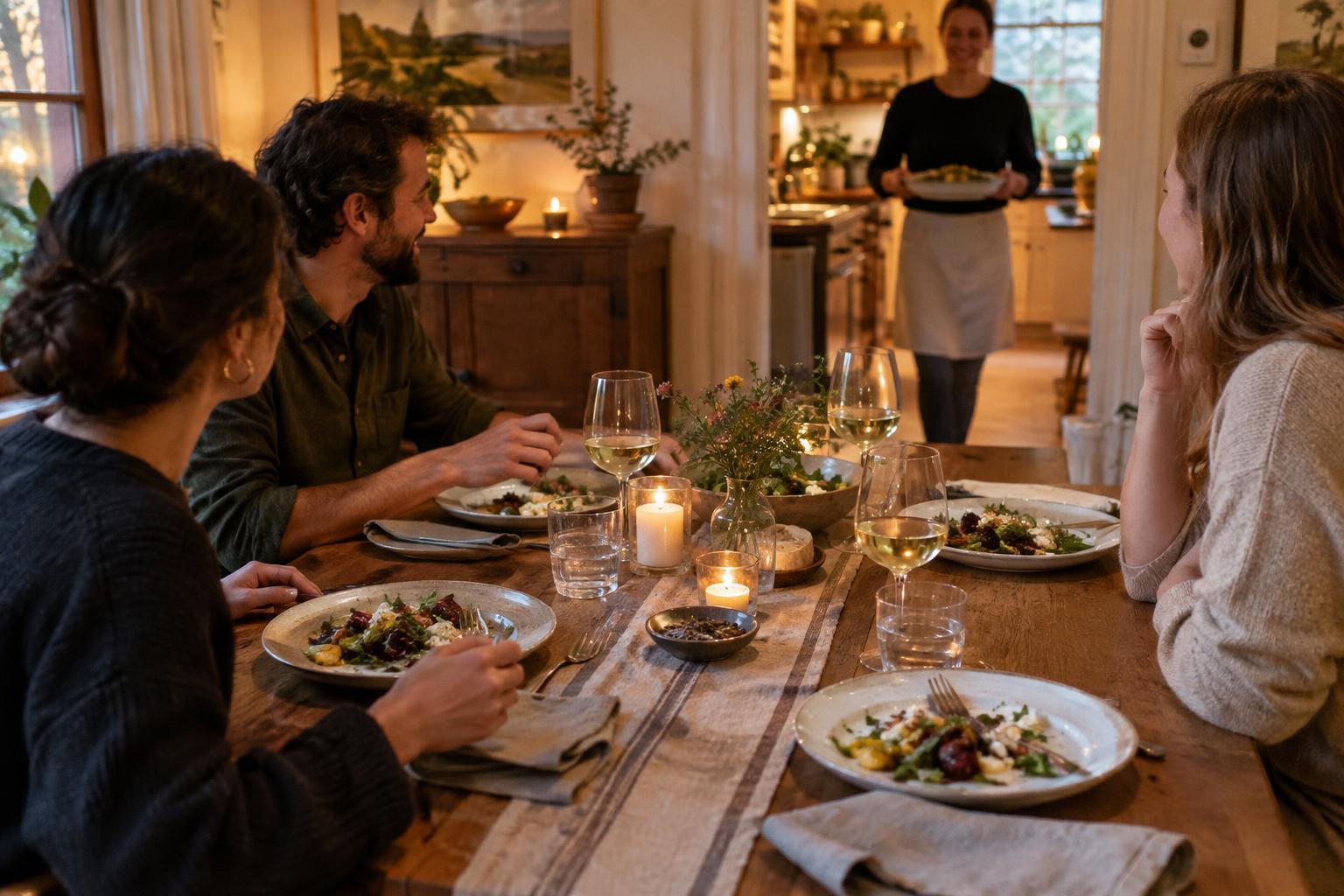
Before clearing, notice whether guests are still eating or talking over their plates. Someone who eats slowly should not have to rush because the next dish is ready. Likewise, a long pause after everyone has finished can make the meal lose momentum. Clear when the table seems ready, then allow a natural breath before bringing out the next course.
Small signals help without turning dinner into a formal production. You might say that the main course will follow shortly, or offer more water while you finish it. If guests are absorbed in conversation, there is rarely a need to interrupt them for the sake of your original plan. If they seem ready to move on, keep the transition simple. The aim is to make the evening feel cared for, not timed.
Make room for drinks and dietary needs
Drinks can follow the shape of the menu without requiring a different pairing for every plate. Keep water easy to reach throughout the meal, and offer appealing nonalcoholic choices whether or not you are serving wine or other alcoholic drinks. A refreshing drink with a rich course, or a warm drink with dessert, can be as useful a pairing principle as matching particular flavors.
Ask about dietary needs before planning the menu, not as the first course reaches the table. When possible, choose dishes that everyone can share, or prepare an alternative that arrives alongside the corresponding course. This helps each guest take part in the same rhythm of the meal. Clear communication about ingredients matters more than a complicated substitute.
Let the ending feel unhurried
Dessert does not have to appear the moment the main-course plates disappear. A short pause gives guests a chance to settle, especially after a substantial dish. If dessert is light, that break may be brief; if it is rich, guests may welcome more time. Let their appetite guide you, and avoid leaving perishable food out while you wait.
Once dessert is served, the structure of the meal can loosen. Offer tea or coffee if you like, but there is no need to treat them as another course with a deadline. Good pacing leaves space for the part of dinner that cannot be planned: the conversation. A manageable menu and a flexible host do more to create that space than a perfectly timed serving chart.