Start with the room, not a seating chart
Before assigning seats, walk through the space as a guest would. Can someone reach each chair without asking others to stand? Will a person seated near the kitchen hear conversation over the work of serving? Notice doors, drafts, bright lights, and any place where a chair blocks a natural path. A beautiful arrangement will not feel generous if guests have to squeeze past one another all evening.
Leave room for chairs to move back and for people to get up without interrupting the table. If space is tight, consider serving from a sideboard or kitchen rather than placing every dish in the center. Check the view from each seat, too. A chair facing a wall or tucked behind a tall centerpiece can make its occupant feel left out, even when the table looks balanced from above.
Choose a layout that suits the gathering
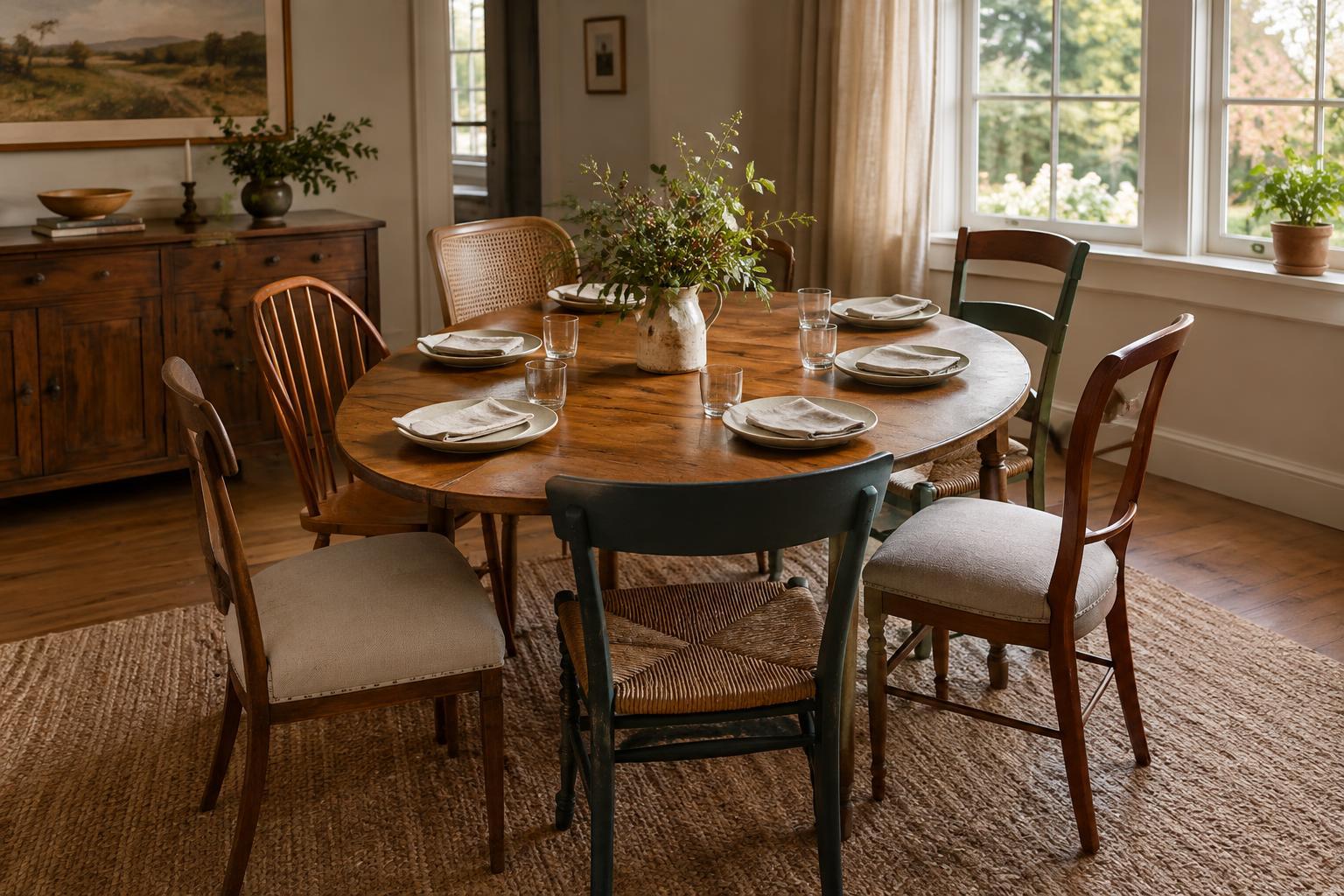
Round tables encourage a shared conversation because guests can usually see more faces without turning far. Rectangular tables often make smaller conversations easier, especially when the group is large. Neither shape is automatically better: the most useful choice is the one that fits the room and lets people speak comfortably at a natural volume.
For a casual meal, you may not need assigned places at all. If you expect guests to choose their own seats, arrange chairs so the comfortable ones are not clustered at one end. For a more structured gathering, place cards can spare people the awkwardness of deciding where to sit. Treat the plan as a helpful starting point rather than a rule that cannot change when guests arrive.
Seat for connection without putting anyone on display
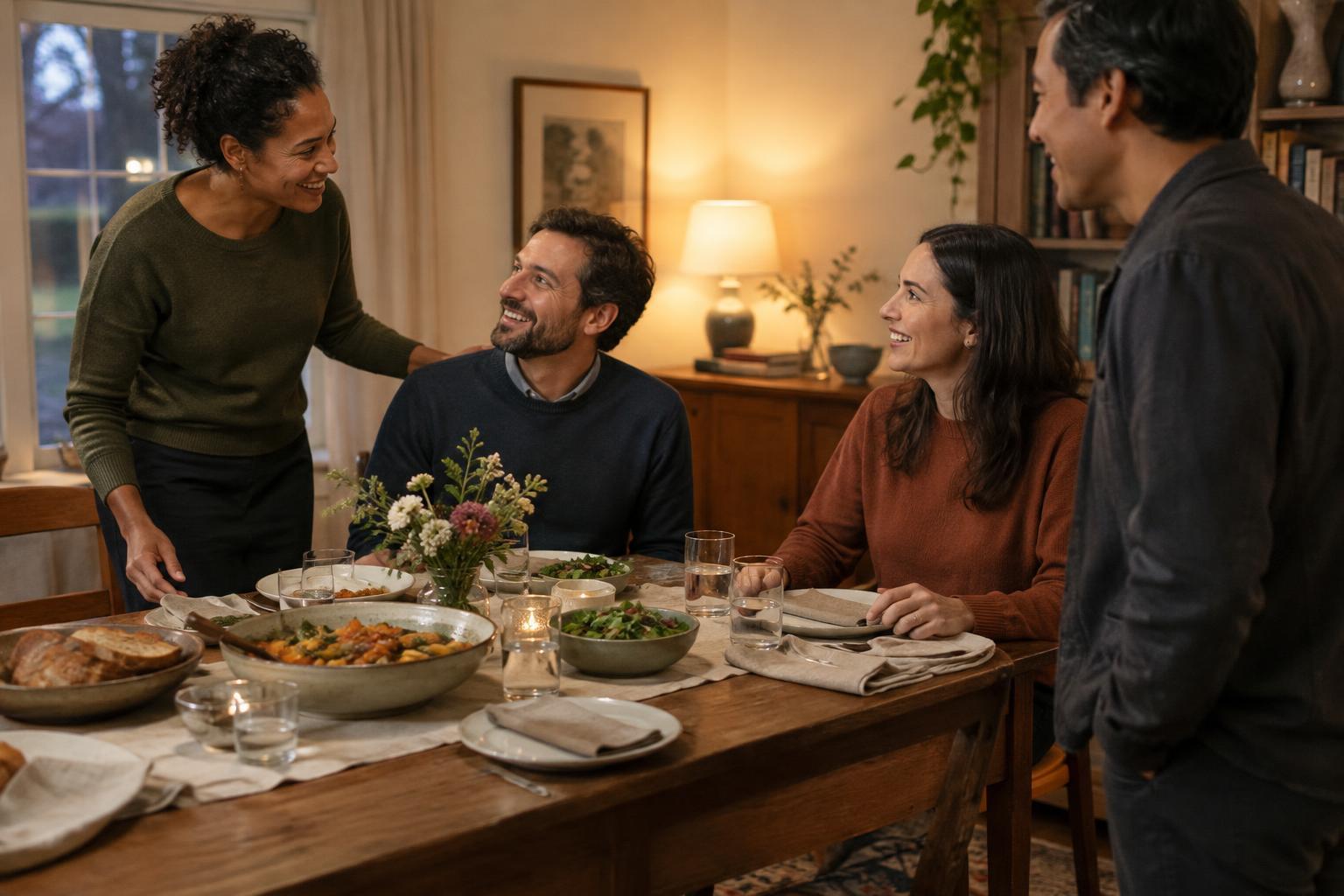
A good seating plan gives people an easy way into conversation. You might place a newcomer near a welcoming guest who enjoys introducing others, or seat people with a shared interest close enough to talk. Avoid assuming that guests with one thing in common must spend the whole meal together. A mix of familiar faces and possible new connections often feels more relaxed.
Think about who can comfortably speak across the table and who may prefer a conversation with the person beside them. If one guest tends to lead every discussion, seating them beside another engaged conversationalist may distribute the energy more evenly. Give quieter guests room to participate without making them responsible for entertaining a whole end of the table. The aim is not to engineer every exchange, but to remove avoidable friction.
Make comfort part of the plan
Ask guests in advance whether a seating arrangement would help them feel comfortable, without requiring an explanation. Someone may need a chair with a back, space for a mobility aid, an easier route to the door, or a spot away from a speaker. A guest who finds it hard to hear in a noisy room may appreciate being seated away from the kitchen and near people they hope to talk with.
Small physical details matter over the length of a meal. Check that table legs do not crowd anyone’s knees and that chairs are reasonably steady. Keep candles, flowers, and serving pieces low enough for guests to see one another. If the table is crowded, bring out dishes in stages. Comfort includes the freedom to shift position, reach a glass, and join the conversation without negotiating an obstacle.
Leave room for the evening to change
Even a careful plan cannot predict how a group will settle. Guests may arrive with someone you did not expect, linger over appetizers, or discover that a different conversation is taking off. Have a spare place setting if practical, and avoid moving people publicly once they are seated unless they ask or a clear comfort issue arises.
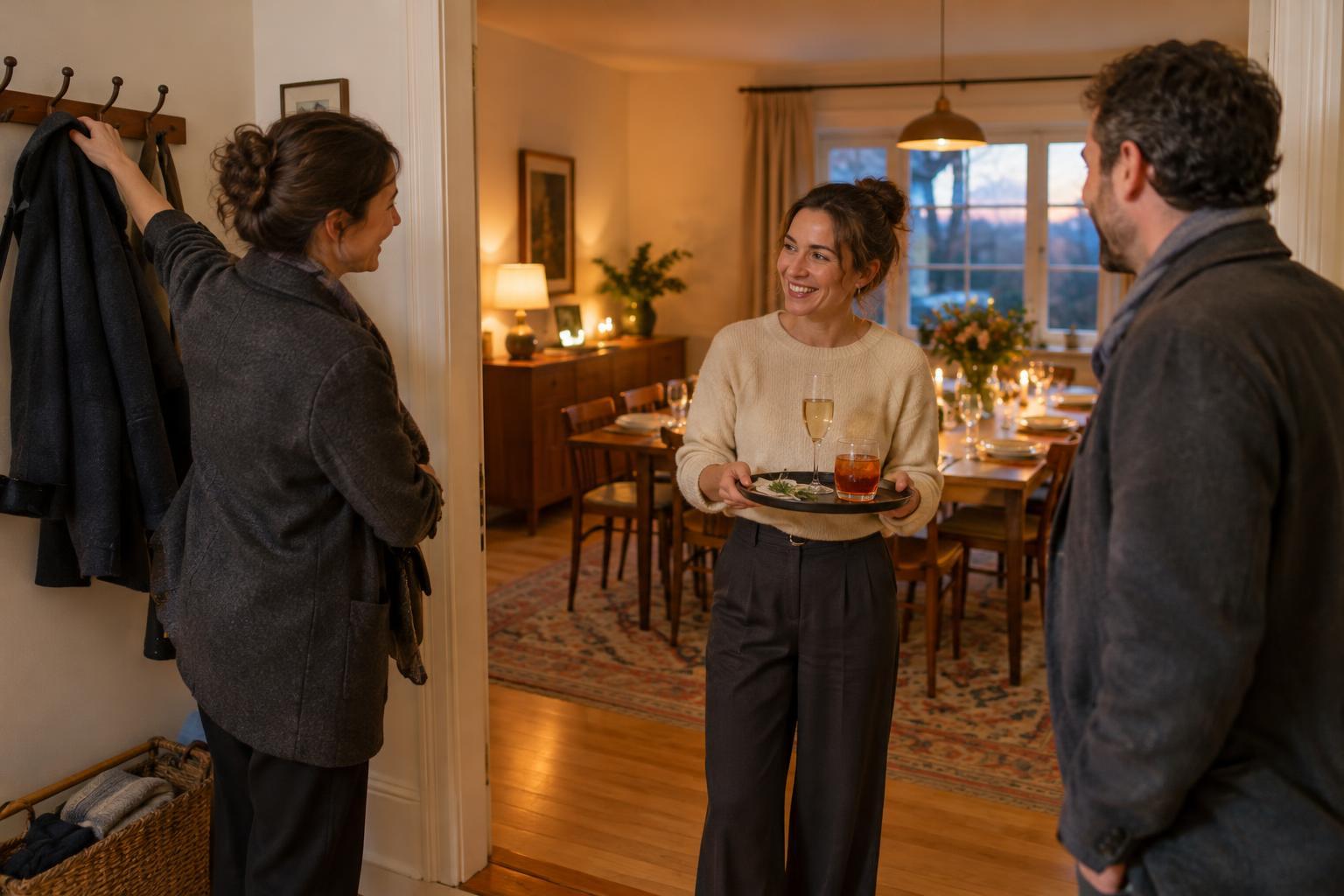
Seating also matters beyond dinner. A few chairs away from the table give guests somewhere to talk before or after the meal, while a clear route to water, coats, and the door helps everyone move at their own pace. The best arrangement is not the one that looks most formal. It is the one that lets guests relax, hear one another, and feel free to take part.