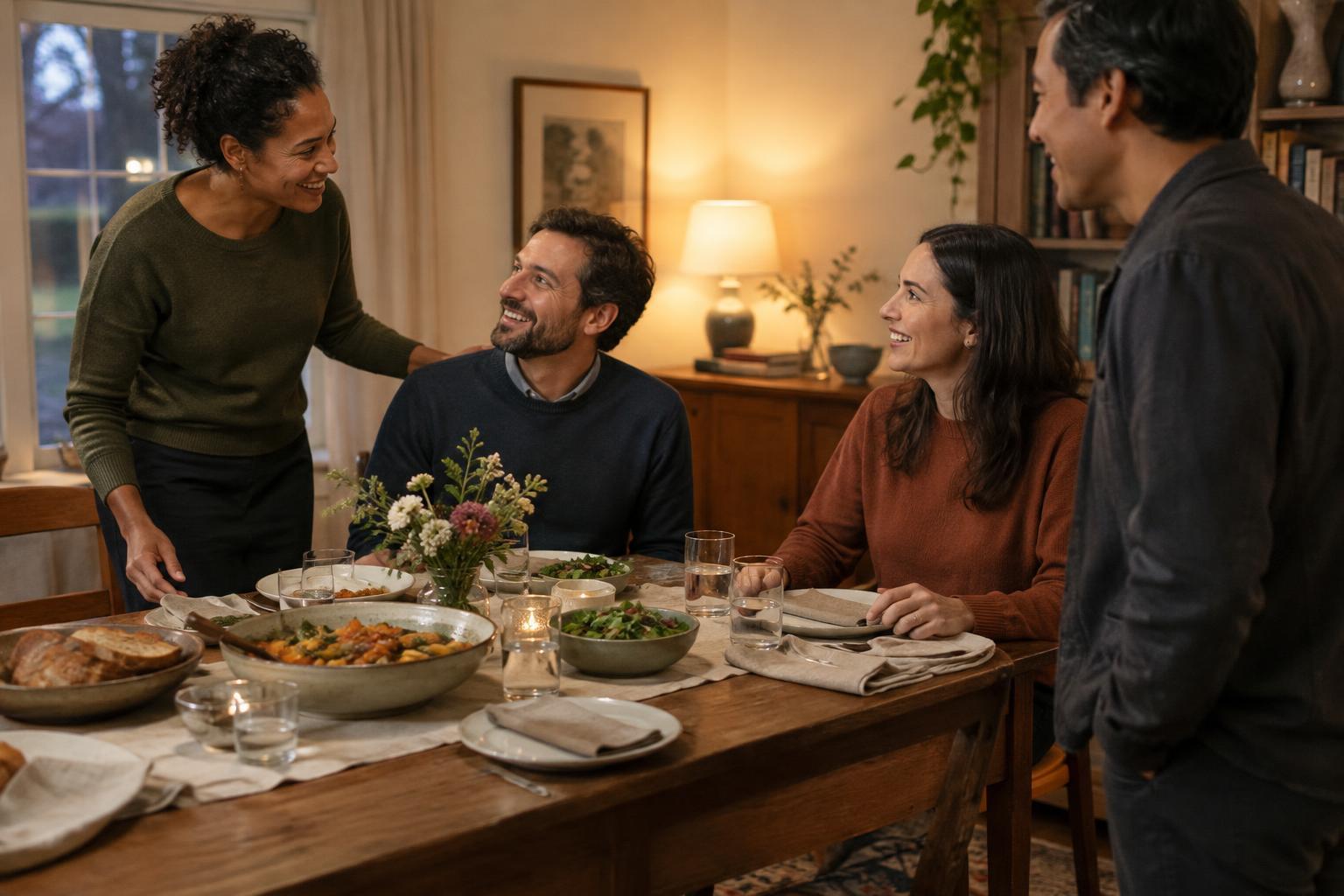
Start with a welcome, not a performance
Introducing guests is a small act of hospitality with an important purpose: helping people feel that they belong in the room. The best introductions are usually brief. Say each person’s name clearly, add a detail they would be comfortable sharing, and give them a possible point of connection. Then leave room for them to take the conversation where they want it.
Before guests arrive, it helps to think about who may be meeting for the first time. You do not need to plan everyone’s conversation, but you can recall a few easy subjects: a dish someone enjoys cooking, a neighborhood they know well, or a shared interest in gardens or books. Choose details you know are appropriate to mention. A guest’s work, family circumstances, or reason for attending may not be something they want announced.
Give names and a useful opening
A simple introduction might sound like this: “Maya, this is Luis. Luis has been experimenting with bread at home, and Maya brought the loaf we’re having tonight.” It gives both people a name to use and a natural subject, without requiring either of them to tell a story on command. If there is no obvious shared interest, the setting itself provides one: “You both asked about the herbs in the salad.”
Use the names people give you, and make an effort to pronounce them correctly. If you are unsure, ask rather than guessing repeatedly. Once you have made an introduction, pause long enough for a greeting. Rushing on to the next task can leave guests standing together without a chance to begin. At the same time, avoid supplying a long biography. Guests can decide for themselves what else they would like to share.
Bring newcomers into an existing group
Walking into a conversation already in progress can be harder than meeting one person at a time. When a new guest arrives, step into the group with them and briefly explain what people are discussing: “We were comparing favorite ways to cook squash.” Then introduce the people nearest to them by name. That bit of context gives the newcomer a way to join in, while sparing the group from having to restart its conversation.
If someone arrives while you are occupied in the kitchen, ask a willing guest to help welcome them. Give that person a genuine handoff rather than calling across the room: “Could you introduce Priya to the others by the window? I’ll be back in a moment.” It is better to connect a newcomer with one attentive person than to present them to a whole room and disappear.
Watch for guests left at the edge of a circle, but do not assume that everyone standing alone is unhappy. Some people enjoy a quiet moment. An invitation such as “Would you like to join us?” offers a choice without making their solitude seem like a problem.
Use the table to make conversation easier
Seating can support introductions without turning dinner into a social puzzle. If places are assigned, consider giving each guest at least one neighbor with whom conversation might come easily. There is no need to separate every pair of friends; a familiar face can help someone settle in. For a casual meal, you can simply guide arrivals toward an open spot and introduce them to those nearby.
Once everyone is seated, a short comment about the food can create a shared starting point: how a dish is served, what guests can add at the table, or why you chose a particular ingredient. Keep it light rather than asking each person to speak in turn. Questions that allow many kinds of answers, such as “What have you enjoyed cooking lately?” tend to feel more welcoming than questions that demand expertise or a clever response.
Let guests take it from there
A host can open a conversation, but does not have to manage every exchange. After making an introduction, stay for a moment if the guests seem uncertain. If they begin talking easily, you can move on. If the connection does not take, try a gentle change of subject or invite them into an activity, such as helping carry a platter to the table. Shared tasks can take pressure off finding the perfect thing to say.
As the evening continues, notice who has had a chance to speak and who might appreciate another introduction. The aim is not constant conversation or an instant bond between every guest. It is to make the first moments easier, respect each person’s pace, and create a table where people feel free to get to know one another.