Start the conversation before choosing dishes
An inclusive menu begins before anyone shops or cooks. Ask guests privately whether they have food allergies, which ingredients they need to avoid, and whether they have concerns about how food is prepared or served. An open question works better than a short checklist: a guest may need to avoid an ingredient you did not think to name. Give people room to explain their needs in their own words, and do not ask them to justify an allergy at the table.
Keep the distinction between an allergy and a preference clear without ranking either person’s importance. A preference may be accommodated with a simple swap; an allergy can also require attention to shared equipment, storage, and serving utensils. If a guest says that even a small amount of an ingredient is a concern, take that seriously. When you cannot meet a stated need confidently, say so early, while the guest still has time to make their own plan.
Build the menu from flexible components
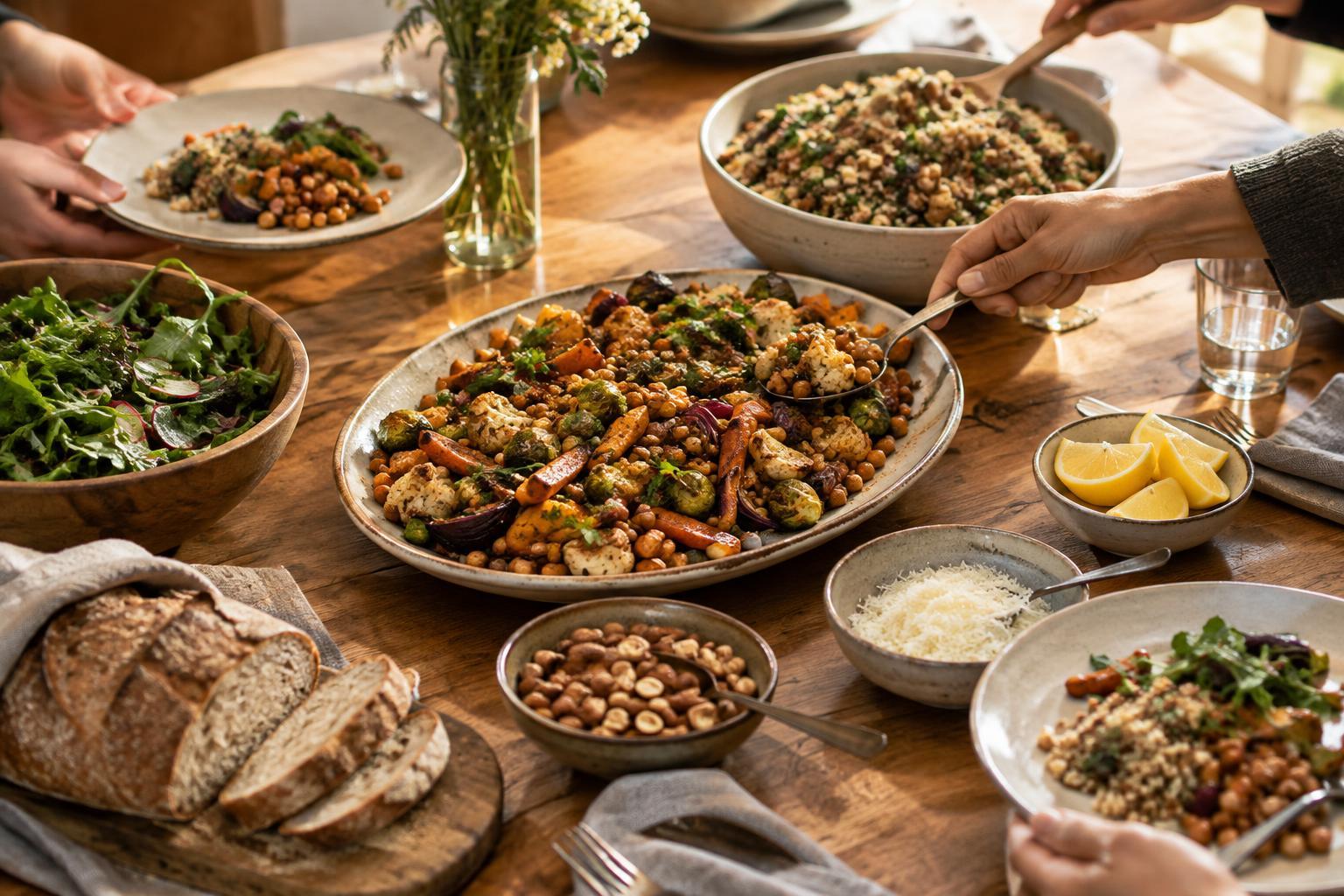
Instead of making several nearly identical versions of one complicated dish, start with components that can be combined in different ways. A meal might center on simply prepared vegetables, a grain, and a choice of protein or legumes, with sauces and toppings served separately. This gives guests more control and makes the ingredients in each part easier to explain. It also creates a generous meal for everyone, rather than a single conspicuous “special” plate.
Think about common allergens while designing the meal, not after the recipes are fixed. Milk, eggs, wheat, soy, peanuts, tree nuts, fish, shellfish, and sesame appear in many familiar dishes, including sauces, dressings, baked goods, and garnishes. A simple recipe is not necessarily free of these ingredients: bread crumbs may be in a topping, for example, while sesame may be in a dressing. Read the labels of packaged ingredients each time you use them rather than relying on memory.
Keep the pleasure of the menu in view. Color, texture, acidity, herbs, and contrasting temperatures can make a dish feel complete without a crowded list of ingredients. A crisp vegetable alongside something warm and substantial offers a more satisfying pairing than an elaborate garnish added at the last minute. Choose substitutions for how they cook and taste, as well as for what they omit.
Plan for cross-contact, not just ingredients
Leaving an allergen out of a recipe is different from preventing it from reaching the finished food. Cross-contact can happen through cutting boards, pans, strainers, counters, hands, or utensils. Shared fryers and bulk bins can present similar questions outside the home. Before cooking, consider whether you have the space, equipment, and time to prepare the meal in a way that meets the guest’s stated needs.
Clean work surfaces and equipment thoroughly, wash hands between tasks, and use separate utensils for dishes that need to remain apart. Keep ingredients in their original packaging until you have checked the labels, and avoid casual substitutions after you have discussed the menu with a guest. At serving time, give each dish its own utensil and watch for toppings or shared spreads moving between plates. These steps support careful preparation, but they should not be presented as a guarantee that a dish is safe for every person with an allergy.
Make descriptions as useful as the dishes
A good menu description helps a guest decide what questions to ask. Name the main ingredients and any sauces, coatings, or garnishes rather than relying on broad labels such as “allergy-friendly.” If you offer a variation, describe the actual change: “served without the yogurt sauce” is clearer than “dairy-free option” when other components still need checking. Keep ingredient packages or recipe notes available so that you can answer questions without guessing.
The same principle applies to pairings. A sauce on the side, a separately served garnish, or a choice of bread can preserve flexibility without disrupting the meal’s rhythm. But do not suggest that removing a topping resolves every allergy concern. If you are uncertain about a packaged product or a shared preparation area, acknowledge the uncertainty plainly.
Serve with care and leave room for choice
On the day of the meal, tell guests which dishes were prepared with their needs in mind and invite them to check any details before serving themselves. Do this discreetly when possible; hospitality does not require announcing someone’s allergy to the room. If a dish changes unexpectedly, let the affected guest know before it reaches the table.
An inclusive menu is not one that claims to work for everyone. It is one that treats accurate information, preparation, and guest choice as part of the meal. When the food is appealing and the communication is straightforward, guests can spend less time deciphering the menu and more time enjoying the company.