Start with the guest, not the substitution
When a vegetarian guest is coming to dinner, the simplest plan is often to make most of the meal something everyone can enjoy. A good menu should feel complete before any optional meat is added. That approach gives the host fewer dishes to manage and lets the vegetarian guest share in the main event rather than receive a last-minute replacement.
Before planning, ask what your guest eats. Some vegetarians eat eggs and dairy; others avoid one or both. It is also worth asking about allergies and whether shared cooking surfaces or utensils are a concern. A brief question is more useful than assuming that a dish labeled “vegetarian” will work for every guest. Once you know the boundaries, choose a menu built around ingredients and flavors you would be pleased to serve to anyone.
Build a satisfying shared center
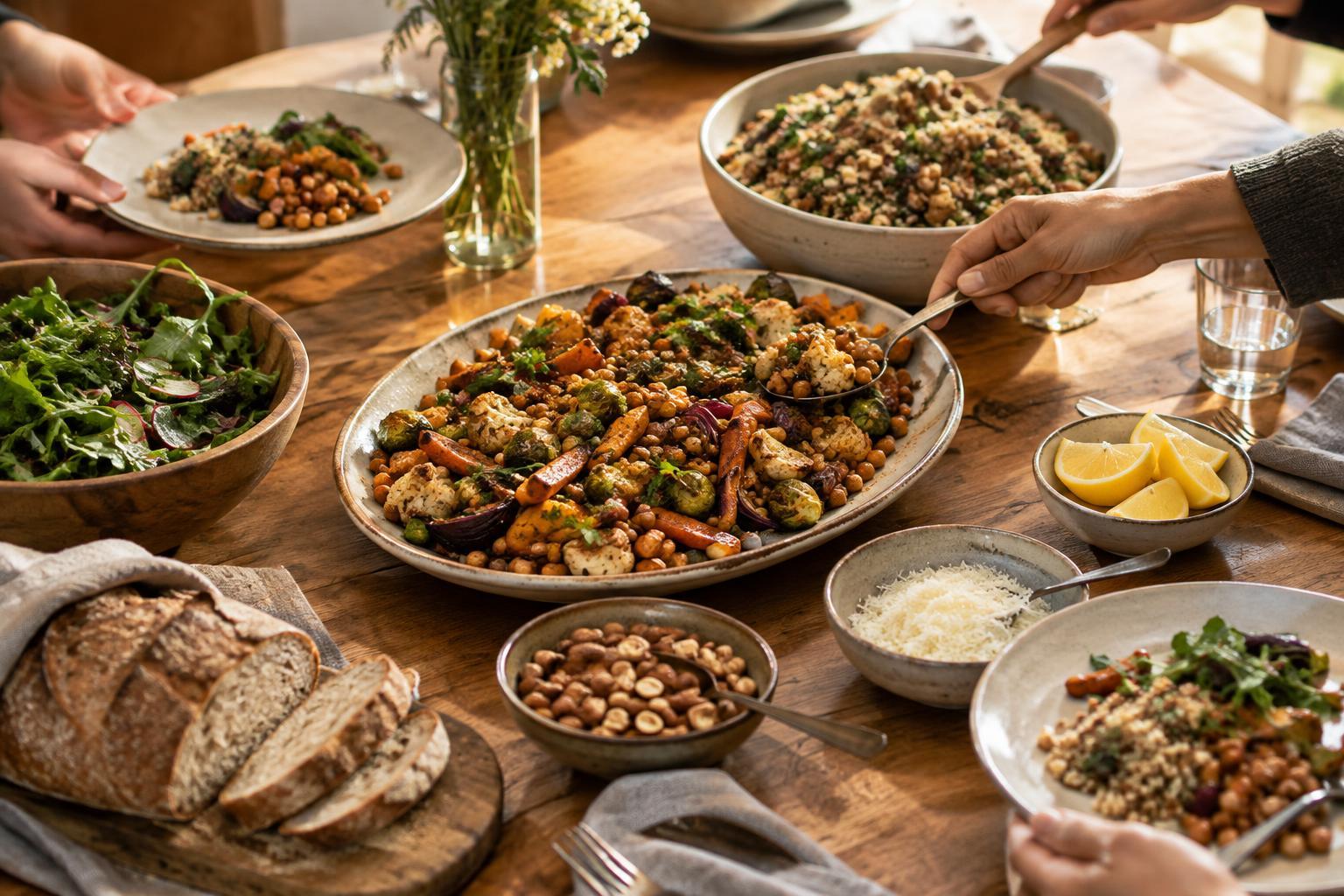
Pick one substantial dish as the anchor: a mushroom and lentil ragù over pasta, a vegetable and bean gratin, a chickpea stew with rice, or roasted squash with a hearty grain salad. Beans, lentils, eggs, cheese, tofu, nuts and seeds can each add substance, depending on your guests’ preferences. Texture matters too. Crisp roasted vegetables, toasted breadcrumbs or a handful of herbs can make a soft, comforting dish feel lively.
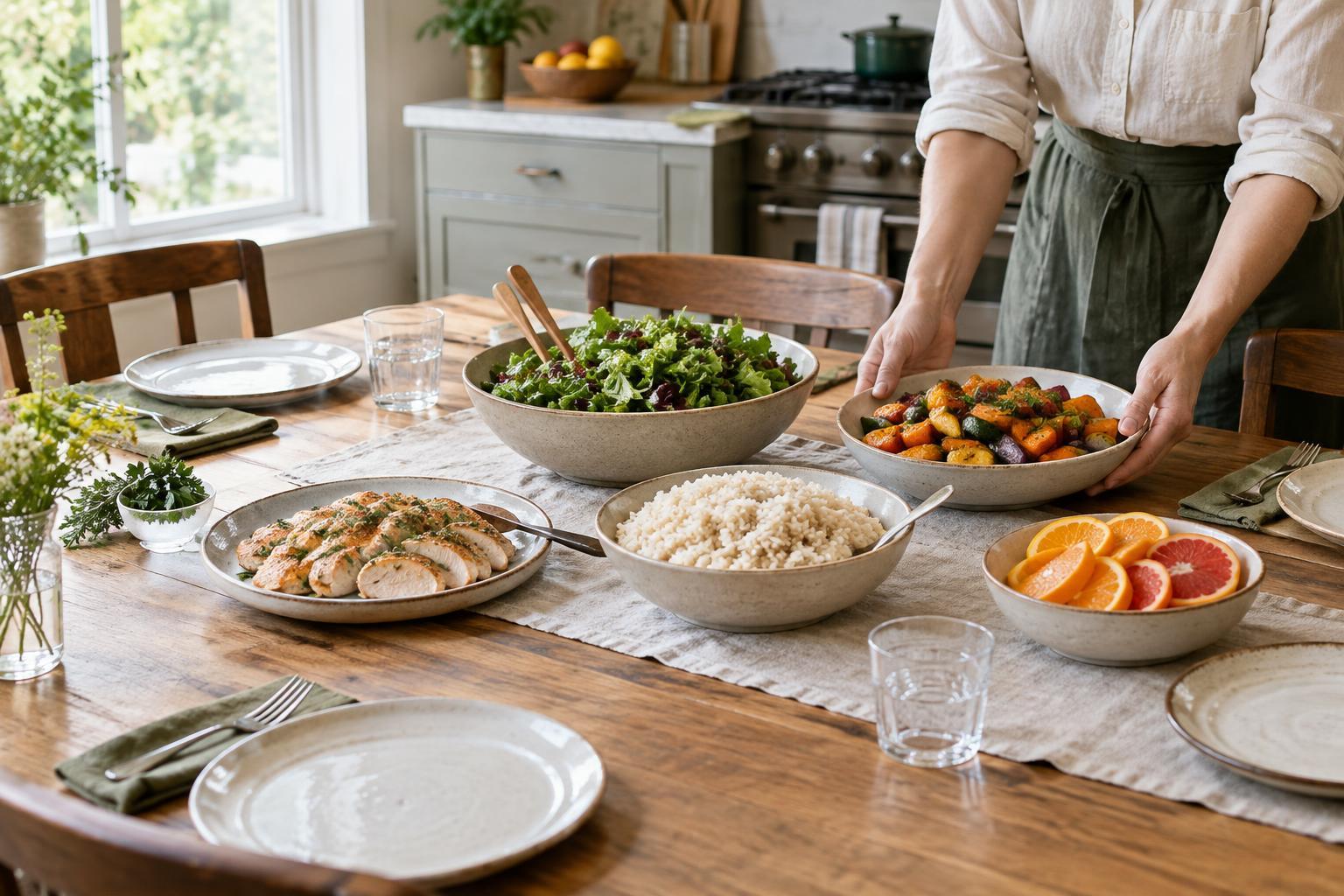
Then choose sides that support the anchor without repeating it. A rich gratin might welcome a sharp green salad; a warmly spiced stew might pair well with a cool cucumber dish. Aim for contrast in temperature, acidity and crunch rather than a large number of courses. If you want to serve meat, prepare it as an optional addition that stands on its own, such as sliced roast chicken offered beside the shared dishes. This keeps the vegetarian plate intentional, not incomplete.
Check the quiet ingredients
The most common menu surprises are not usually the vegetables. Stock, sauces and finishing ingredients deserve a second look. Use vegetable stock in a shared soup or risotto, and keep bacon, anchovies, fish sauce or meat-based drippings out of dishes meant for everyone. Some cheeses are made with animal-derived rennet, so check the label or choose a cheese you know meets your guest’s preferences. Gelatin may also appear in desserts that otherwise seem suitable.
Think through preparation as well as the ingredient list. A separate spoon for an optional meat topping prevents it from drifting into the shared dish. If a guest has told you they need separate equipment, plan for that specifically rather than guessing what will be acceptable. None of this needs to become a complicated announcement at the table; a little attention before cooking makes serving feel relaxed.
Make the menu flexible at the table
A flexible menu works best when the shared dish has plenty of flavor on its own and additions are genuinely optional. For a pasta dinner, for example, serve a tomato-and-lentil sauce over the pasta, with herbs, chili flakes, grated cheese and a crisp salad nearby. Put any meat topping in a separate serving bowl. Guests can finish their plates to taste without asking for a different meal.
The same idea applies to drinks and dessert. A bright sparkling water with citrus can sit comfortably alongside wine or other beverages, while a fruit dessert can be served with cream or yogurt on the side if dairy preferences vary. Pairings need not follow rigid rules: look for balance. Something crisp can refresh the palate after a rich main, and something gently sweet can round out a savory, herb-forward meal.
Cook in a sequence that keeps hosting easy
Choose dishes with at least one make-ahead element. A stew or sauce can often be prepared earlier, leaving only a grain, pasta or final roast to cook close to dinner. Wash salad greens, mix a dressing and arrange toppings before guests arrive. If you are making an optional meat dish, give it its own pan, utensils and serving plate from the start.
Before serving, take one last look at the vegetarian plate as a whole. Does it have a generous portion of the main dish, a satisfying side and access to the same appealing garnishes as everyone else? If so, there is no need to call attention to what it lacks. The best adapted menu feels like one dinner: thoughtfully planned, easy to share and welcoming to the people around the table.